
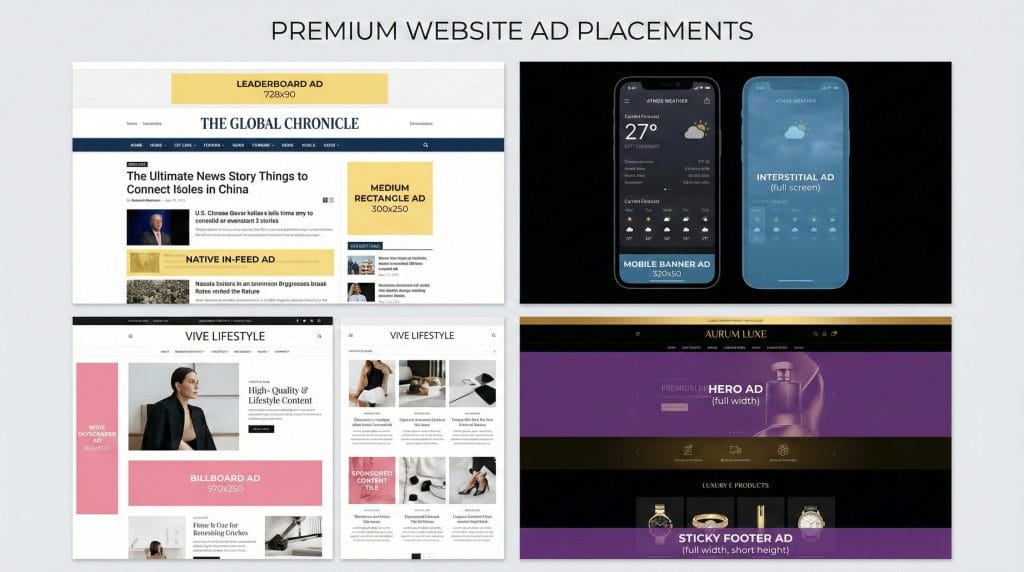
We hear this objection regularly, and it always comes from the right place.
"Native ads feel deceptive. We don't want to trick anyone."
It's a principled concern. And it's built on a genuine misconception about what native advertising actually is, and what it isn't.
The deception in advertising doesn't live in the format. It lives in the intent. A banner ad that screams irrelevant offers at someone who never asked for them is far more disrespectful of a reader's time and attention than a well-crafted native piece that teaches them something genuinely useful. One interrupts. The other integrates.
Native Ads Feel Deceptive. Here's Why That Instinct Is Wrong, And What Ethical Native Looks Like
Native advertising done right isn't a trick. It's the highest form of respect for your audience, because it earns attention rather than demanding it.
The conflation of native advertising with deception usually traces back to the worst examples of the format: clickbait headlines that overpromise, landing pages that hard-sell without delivering on the content's premise, and advertorials that masquerade as journalism without disclosure.
Those examples are genuinely deceptive. But they are a failure of intent and execution, not a failure of the format itself.
Native advertising, by definition, is content that matches the form and function of the platform it appears on, delivered in the editorial style, visual language, and informational register of the surrounding content. The FTC requires clear disclosure. The format requires relevance. The intent, when done correctly, is to provide value first and introduce a product or solution as the logical next step.
In 2026, users have developed what researchers call banner blindness, a subconscious filtering mechanism that causes most people to ignore anything that visually resembles a traditional display ad. Native advertising is not a workaround to that filter. It's a direct response to it: if interruptive advertising has lost the right to attention, the only path back is to earn it.
The line between a deceptive ad and an ethical native piece comes down to a single question: does the content bridge the reader from where they are to somewhere genuinely useful, or does it bait them into a hard sell they didn't consent to?
A sensationalist headline is designed to generate a click regardless of relevance. The reader arrives to find a landing page with no connection to the promise made by the headline,just a sales pitch dressed up as content. The experience produces immediate regret, high bounce rates, and lasting damage to brand credibility.
This is not native advertising. This is clickbait with a sponsored label.
An educational or entertaining piece mirrors the editorial style of the publication it appears in. A how-to guide on a marketing blog. A data-driven analysis on a business news platform. A practical checklist on an industry trade site. The content teaches something real, and the product or service is introduced as the logical tool for implementing what was just learned.
The reader doesn't feel tricked. They feel helped. And when they feel helped by a piece of content, the brand that created it earns a level of trust that a banner ad could never buy.
This is the fundamental operating principle of native advertising at its best: the product is the conclusion the content earns, not the premise it forces.
Your native ad should be visually and tonally indistinguishable from the organic editorial content surrounding it, same fonts, same layout structure, same voice register, same informational density. This is what makes it native.
But it must always carry a clear, visible disclosure: "Sponsored," "Pushed," or "Paid Partnership." This is not optional, and it is not a conversion killer. For high-quality brands delivering genuine value, transparency consistently increases engagement rather than reducing it. Readers who know it's sponsored and click anyway are self-selecting as an interested audience. That's a more qualified click than one generated by obscuring the source.
The ethical line is clear: match the aesthetics of the platform, never the implied editorial independence of the publication.
A native ad should be 80% education, 20% pitch. If the ratio inverts, if the content is primarily promotional with a thin educational wrapper, the reader feels the bait-and-switch. Trust collapses. The bounce is immediate.
The test: if a reader closes the tab without converting but still feels they learned something useful, the native ad succeeded in its primary function. It built brand credibility, demonstrated experience, and created a positive association that will influence future purchase decisions even without an immediate conversion.
This is the long-game mechanics of native advertising that most brands miss when they try to force direct-response outcomes from a format designed for trust-building. The conversion follows the trust. The trust requires genuine value delivery first.
What 80/20 looks like in practice by brand type:
Native advertising only works when the topic of the ad aligns with the intent of the reader in that environment. An enterprise software ad placed in a celebrity gossip feed is not native advertising, it's a mismatch that produces irrelevance, low engagement, and wasted spend regardless of how well the content is written.
Contextual harmony means understanding not just the demographic of the platform's audience, but the cognitive state they are in when consuming that content. A reader on a trade publication is in problem-solving mode. A reader on an entertainment site is in discovery mode. A reader on a local news platform is in community-awareness mode.
Each state calls for different content framing, different offer structures, and different definitions of what "value" means in that moment. Getting this right is what separates native advertising that performs from native advertising that exists.
Banner blindness is not a trend. It is a permanent adaptation. The average digital user has been exposed to thousands of interruptive ad formats and has developed automatic filtering mechanisms that render most display advertising invisible before conscious attention is even engaged.
Native advertising doesn't fight that filter. It bypasses it entirely, by presenting content that belongs in the environment the reader chose to be in. It respects their attention by adding to the experience rather than interrupting it.
That is not a trick. That is the most ethical value exchange in digital advertising: useful content in exchange for a moment of consideration.
What is native advertising and how does it work? Native advertising is paid content that matches the visual style, tone, and format of the editorial environment it appears in. It works by providing genuine value to the reader, educational, entertaining, or problem-solving content, while disclosing its sponsored nature. The product or service is introduced as a logical conclusion rather than a forced sales pitch.
Is native advertising deceptive? Native advertising is not built-inly deceptive. The FTC requires clear disclosure labeling such as "Sponsored" or "Pushed." Deception occurs when clickbait headlines lead to misleading landing pages, a failure of intent, not format. Ethical native advertising delivers on the promise of its headline and provides genuine value before introducing a product.
What is the difference between native advertising and content marketing? Content marketing is typically owned media, blog posts, videos, and resources published on a brand's own channels. Native advertising is paid media, sponsored content placed within a third-party publication's editorial environment. Both prioritize value delivery, but native advertising reaches audiences who have not yet discovered the brand organically.
What is banner blindness and why does it matter for advertisers? Banner blindness is a user behavior pattern in which people subconsciously filter out visual elements that resemble traditional display advertising. Research consistently shows that standard banner ads are ignored by a real majority of viewers before conscious attention is engaged. Native advertising bypasses this filter by matching the editorial format of the surrounding content.
How do you measure native advertising performance? Native advertising performance is measured through engagement metrics (time on page, scroll depth, content completion rate), downstream conversion tracking (UTM-tagged links, landing page visits, lead form completions), and brand lift indicators (return visits, branded search volume increases). Direct-response conversion rates should be evaluated alongside trust-building metrics rather than in isolation.
The most deceptive thing you can do is interrupt someone with an irrelevant ad they never asked for. Native advertising earns the click. That's not a trick,it's the standard every ad should be held to.
