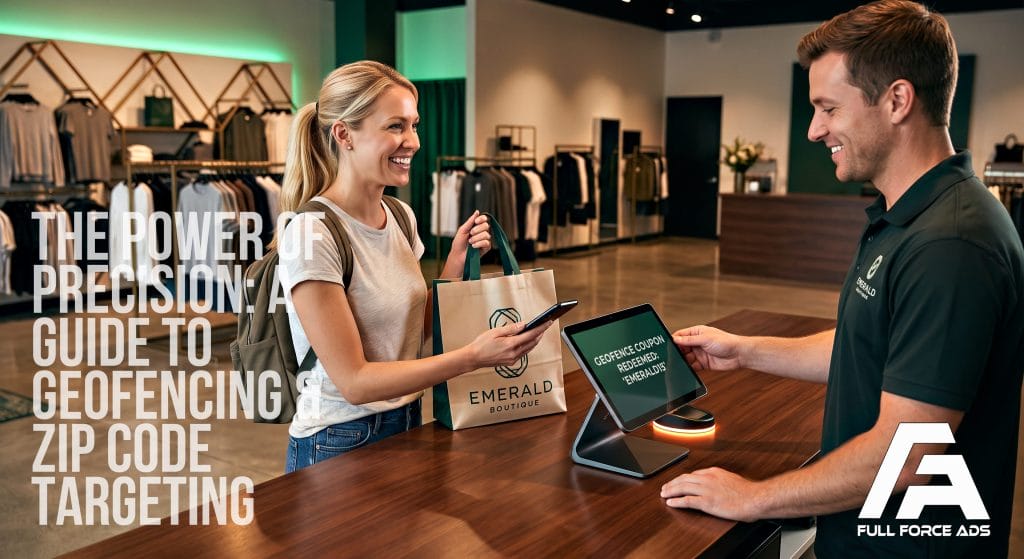
In the ever-evolving world of digital advertising, geofencing has emerged as one of the most powerful and precise targeting methods available to marketers. By creating virtual boundaries around specific geographic locations, businesses can deliver highly relevant messages to consumers exactly when and where it matters most.
Our approach elevates this location-based strategy by pairing real-time geofencing with a robust database of targeted audiences segmented by ZIP codes. This combination allows brands to connect with their audiences with unprecedented precision, driving foot traffic, increasing engagement, and delivering measurable returns on investment (ROI).
Geofencing advertising is a location-based marketing technique that uses GPS, RFID, Wi-Fi, or cellular data to create a virtual perimeter around a specific geographic area. When a mobile device enters or exits this predefined boundary, it triggers a targeted action, such as a display ad, push notification, social media ad, or email.
While traditional geofencing looks at where a device is right now, our strategy incorporates who owns the device. By cross-referencing real-time location data with a curated database of targeted ZIP codes, we don't just target anyone who walks into a boundary. Instead, we serve ads to high-value audiences who live, work, or shop within specific, economically or demographically qualified zones. This ensures your ad spend is never wasted on random foot traffic.
The mechanics behind geofencing rely on a combination of hardware, software, and audience data working seamlessly together:
The process starts with mapping, using mapping software to define the geographic coordinates of a target area and draw a digital polygon around it, whether that's a storefront, a competitor's lot, or a stadium. On top of that, we layer in ZIP code databases, filtering the audience by historical purchasing behavior, demographic profiles, or residential data tied to those specific areas. From there, the geofencing platform monitors opted-in devices within its network, and when a device from the targeted ZIP code database crosses the boundary, it triggers the predefined ad in real time.
The most direct use is store visit targeting, placing a geofence around your own retail location to pull in nearby shoppers and drive foot traffic. Competitor conquesting takes a more aggressive approach: geofencing competitor locations to intercept their customers with a better offer. Event-based geofencing works for concerts, conferences, sports events, or trade shows where your ideal audience is already gathered. And ZIP code-based geofencing focuses on where your customers live, letting you deliver hyper-local messaging to specific neighborhoods identified in the audience database.
Hyper-Local Relevance: Delivering messages contextually relevant to a consumer's immediate environment vastly increases conversion rates.
Filtering geofences through a ZIP code database means ads only reach consumers who fit your actual buyer profile, which cuts wasted spend. Messages land at the precise moment a consumer is in position to make a purchase decision, when they're most likely to act. You can also track the direct connection between digital ads and physical store visits, giving you a clear, closed-loop read on ROI. And because you're only paying for impressions served to the right people in the right places, the budget goes further.
| Industry | How They Use It |
| Retail & Dining | Driving foot traffic, promoting flash sales, and conquesting rival locations. |
| Automotive | Targeting consumers on competitor lots or focusing on ZIP codes with high lease-end rates. |
| Real Estate | Geofencing open houses, new developments, and specific neighborhoods to capture local buyers/sellers. |
| Healthcare | Promoting local clinics or urgent care facilities to residents in specific target ZIP codes. |
Fence size matters more than most advertisers realize: too large and relevance suffers, too small and you miss reach, match the radius to how far people actually travel to visit that location. Whatever the size, the creative needs to earn the interruption. Generic ads get ignored, so use time-sensitive, specific offers that create real urgency. And because geofencing runs entirely on opted-in location data, privacy compliance isn't optional, campaigns must stay within regulations and be upfront about how location is being used.
Geofencing only reaches users who've enabled location services, which limits the addressable pool compared to other channels. Frequency also needs careful management, push the same ad too hard and you'll annoy the people you're trying to reach. GPS accuracy is the other variable: tall buildings and indoor environments can skew location data, which is exactly why layering in ZIP code database infrastructure helps keep targeting consistent even when the signal isn't perfect.
Geofencing advertising represents a paradigm shift in how brands connect with consumers in the physical world. By bridging the gap between digital data, like targeted ZIP code databases, and real-world behavior, businesses can open unprecedented relevance and engagement. The key to success lies in balancing location precision with audience data, resulting in smart, sophisticated campaigns that deliver genuine value to the consumer and measurable growth to your business.