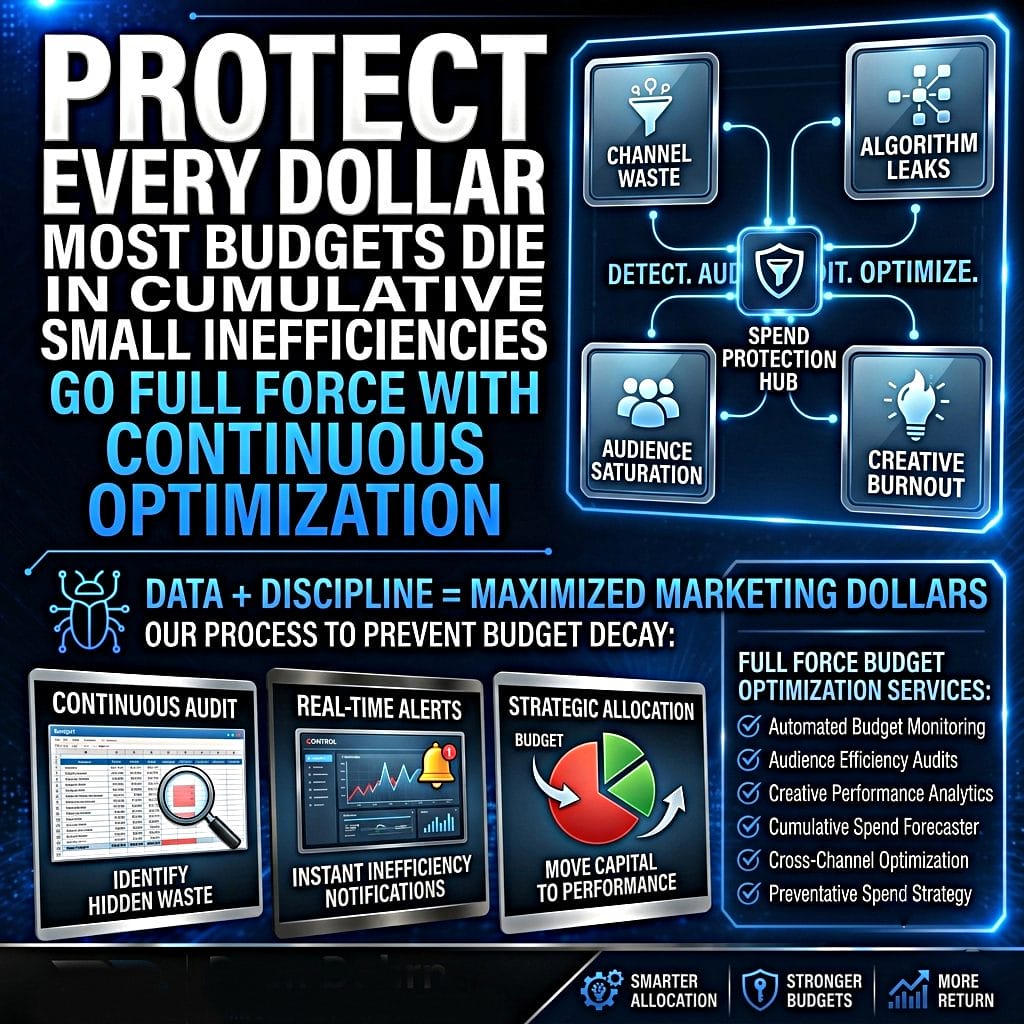
They leak. You launch, impressions climb on a dashboard, and you sit there waiting for revenue that the chart seemed to promise. Later you find out a chunk of that spend went to banner ads served to bot traffic, and another chunk paid for radio heard by people who live 40 minutes past your delivery radius.
Your buyer isn't sitting in one channel waiting for you either. Podcast on the drive in, industry app over lunch, Hulu after dinner, news feed in bed at 11pm. Same person, four screens, four moods. Treat each of those as its own little experiment and you'll pay four times to reach one customer.
Marketing teams grew up in silos, and most still work that way. Somebody runs Meta. Somebody else runs Google. A local buyer handles TV and radio and reports on a different calendar than everyone else. The predictable result is a customer who gets hit six times in a day by ads that don't sound like they came from the same company, and three reports that disagree about who deserves credit.
Sequencing is what silos can't do. Your buyer catches the video on the living room screen Tuesday night, gets a mobile ad Thursday while she's a mile from your door, then runs into a native placement inside a trade article that weekend. Nothing about that is louder than a fragmented campaign. It's just in order.
You can assemble that across five vendors. People do it. They also spend their Fridays reconciling numbers that will never agree, which is a strange use of a marketing salary.
Streaming TV is the living room. On Hulu or Roku, people mostly sit through the spot instead of skipping it, so completion rates hold up in a way pre-roll rarely matches. Pre-roll and mid-roll video across the web trade some of that attention for actual measurement: you see who watched to the end and who clicked through.
Audio is the odd one, and probably the most underrated. Spotify and podcasts reach people while they drive, cook, and lift weights. Nobody is looking at a screen during any of that, which is exactly the point.
Then there's the connective tissue. Mobile placements and location triggers put you in front of somebody who is already nearby and already hungry, or already shopping. Display holds your name in front of people between the bigger moments. Native sits inside the article layout, which is the only format that works when your product needs a paragraph of explanation before anyone cares.
For years the choice was linear TV or direct mail, and neither was good. Linear cost real money and most of the audience lived nowhere near your delivery zone. Direct mail was cheap to print, easy to throw out, and impossible to trace back to a single order.
Connected TV is television with a zip code attached. A one-location spot buys the same broadcast-quality placement a 40-unit chain buys, and pays only for households that could plausibly order.
In practice that means drawing a three-mile boundary around the store, or picking the zip codes where the household income matches your ticket. High-definition food video does its work during the exact hour people are arguing about dinner. Streaming also picks up the households that cut cable in 2019 and haven't looked back. Put a delivery deal or a seasonal item on the end of the spot, then follow the same household onto their phones with mobile retargeting a day later.
Channels decide where you show up. Targeting decides who sees it, which matters more. A gorgeous video ad shown to someone with no budget and no intent is still a wasted impression, just an expensive one.
Geofencing draws a boundary around a specific building and collects the mobile device IDs that walk into it. A gym owner puts fences around the three competing clubs across town. A B2B team fences the convention center for the four days of a trade show and keeps advertising to those devices afterward.
Addressable targeting takes your CRM list, matches it to physical addresses, and serves video and display to the connected devices inside those houses. Search and contextual retargeting works the other side: it picks up people searching your category, follows them onto other sites, and drops ads next to articles about the thing they were searching for. Site retargeting handles the ones who already came to your site, looked around, and left, which is almost always the cheapest group to win back.
Full Force Ads does the planning, the buying, and the reporting across streaming TV, audio, mobile, display, and video. One team, one set of numbers, no dozen-network negotiation.
The targeting side runs on geofencing, addressable lists, and search intent, and the weekly report tells you what each channel did, which locations produced, and how many conversions came out the other end.
No long-term contract. No spend minimum. Campaigns are live in five to seven business days.
It starts with a conversation about what a customer currently costs you and which geography actually matters, which is usually smaller than people expect. From there a strategist builds the channel mix around the goal, not around whatever inventory is convenient to sell. The build goes live inside seven days, and once it's running, media buyers move budget between channels daily based on what the numbers do.
That last part is where most of the performance comes from. A campaign that launches well and then sits untouched for a quarter is just a nicer-looking version of the problem you started with.