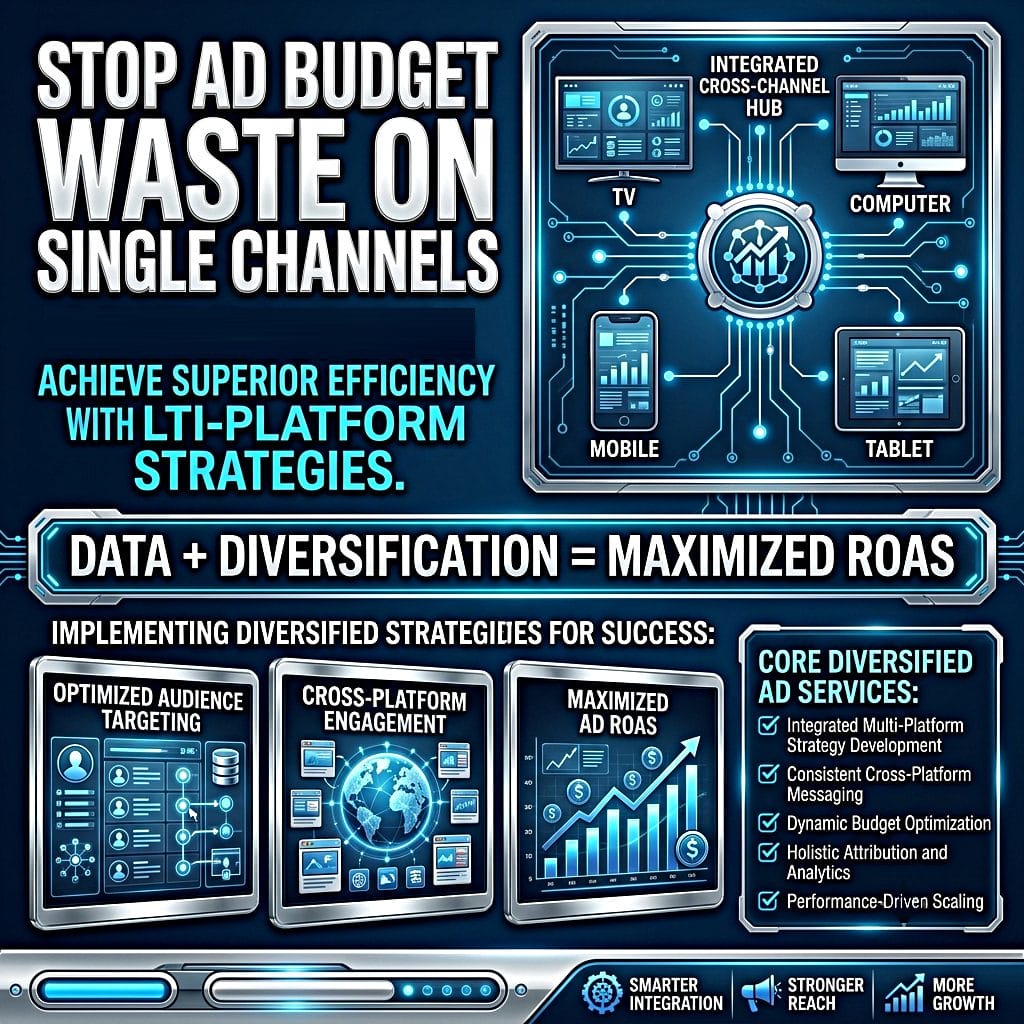
A homeowner in Salt Lake City has a game on Hulu and a phone in her hand for most of it. She is not thinking about channels. Nobody is.
The budget usually is, though. Search lives at Google, social lives at Meta, display lives with whoever sold the banners last, and each one bills for reaching the same woman. Three platforms count her, none of them talk, and by the end of the quarter the cost per customer is a number somebody backed into.
We buy all of it from one place. That is most of the pitch.
Why cross device works better than frequency
There is a point where the same banner on the same app stops building anything and starts costing goodwill. Everyone has hit it. What does not happen at that point is people thinking, this brand is everywhere.
Change the surface and the effect flips. A spot she cannot skip on Hulu, then a native unit on a site she reads at lunch. Same budget, and now it looks like a company with weight behind it.
Search picks up people who already know what is wrong. Programmatic gets to them before that, which is the harder and more useful half of the job.
The inventory
One platform, every channel below.
Connected TV puts you on Roku and Hulu with a spot nobody can skip, targeted by household rather than by DMA. You are not paying to reach the whole valley to talk to 4,000 homes in it.
Pre roll and in article video on high traffic sites earns its money whenever the service needs sixty seconds of explaining. Anything with an install, a financing option, or a process people misunderstand.
Streaming audio on Spotify and podcasts owns the commute, the gym, and the yard work. Screen free hours, and almost nobody in local advertising bids on them.
In app mobile with GPS coordinates is what connects a click to somebody walking through a door.
Display and native fill the space between the bigger moments. Native takes the shape of whatever site it sits on, which is the only reason people still read it.
Case study: regional plumbing contractor
"Water heater replacement" costs north of $150 a click in a major metro. Most of those clicks read the page, decide to get a second quote, and never call. The contractor is paying full price for the ones that leave.
One regional shop went after that traffic instead of bidding harder for new traffic.
He cut a 15 second spot about same day water heater replacement and ran it on connected TV and pre roll against homeowners in a short list of ZIP codes, all pointed at one landing page. When someone left without booking, the site tag put that device ID into a retargeting pool.
The following two weeks looked like this. Days one through three, mobile banners with $250 off install. Days four through seven, the TV spot recut around customer reviews. Days eight through fourteen, plain reminders.
None of it is clever. It just stays in front of a homeowner who has already told you she has a problem, during the window where she is calling two other plumbers. He kept closing installs, and the ones that came back through retargeting cost a fraction of the $150 clicks that started them.
Targeting
Geofencing draws a line around a physical place. A competitor's parking lot, a trade show floor, a hospital campus. Phones that cross it can be served video and banners, and we can keep reaching those devices for 30 days after they leave the property.
Addressable starts with street addresses. Send your customer file, or a purchased list, and the platform turns those addresses into boundaries and delivers TV and banner ads to devices inside those specific homes. It is the closest thing to direct mail that reports back.
Search retargeting picks up people who typed a keyword or a competitor's name, then follows them onto the news and industry sites they read next.
Contextual reads the page, not the person. Financial planning software beside a tax strategy article. Patio furniture beside a kitchen remodel piece. Useful when the audience data is thin or the category is sensitive.
Matching the goal to the channel
| Objective | Channels | What we report on |
|---|---|---|
| Local awareness | Geofencing, mobile | Foot traffic |
| Competitor conquesting | Competitor geofencing, addressable | Store visits |
| Executive authority | Streaming TV, video | Video completion rate |
| Website traffic | Display, search retargeting | Cost per click |
| Lead retargeting | Site retargeting, short video | Cost per acquisition |
| Database marketing | Addressable, streaming TV | Conversions |
Two ways to work with us
Managed service is us building and running it. TV and digital execute through the same system, so the reporting reconciles. You get weekly numbers with foot traffic and conversions in them, campaigns launch within seven business days, and nothing you sign locks you in for years.
FullForceAds.app is the self serve version. Upload creative, set a daily cap, draw the geography, launch. Built for contractors, local operators, and in house teams who would rather not sit through a media plan.
How it runs
First we go through the goals and whatever campaign history exists, including the stuff that did not work. Planners build the channel mix and split the budget against it. The technical side sets tracking tags and pushes live inside seven business days. From there it is bid adjustments and moving money toward whatever is actually producing, which is where most of the value comes from anyway.
Getting started
Your buyers are on a TV, in headphones, and on their phones, usually within the same hour. Take a look at the platform, or book a strategy call and we will tell you which two channels we would start with.