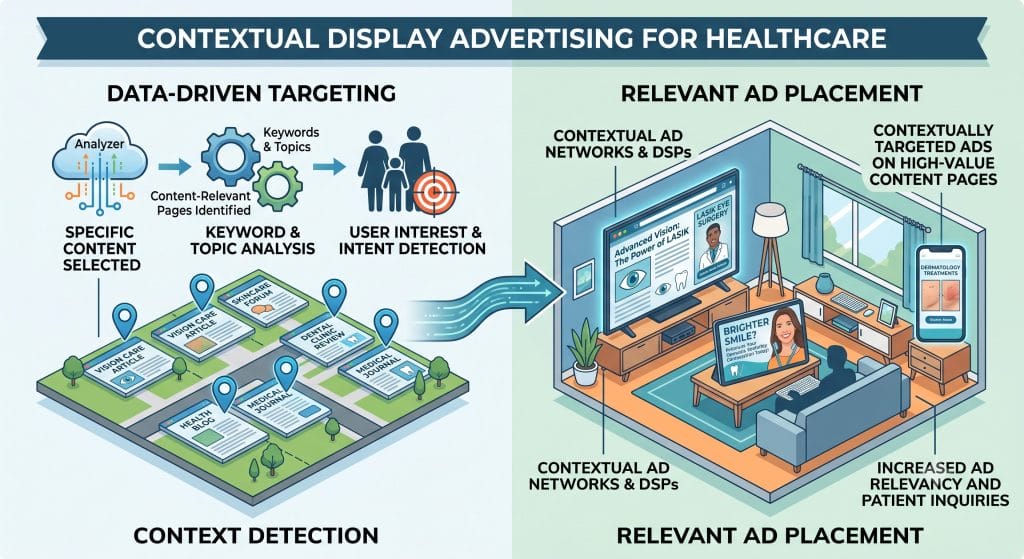
Healthcare brands partnering with a digital advertising agency in Sandy Utah face a big shift. For years, medical marketing relied on tracking pixels, third-party cookies, and retargeting tags to find patients online. If someone browsed a cardiology clinic page, a tracking code captured their device details, and ads followed them across the web.
That setup is dead.
Strict enforcement from the U.S. Department of Health and Human Services (HHS) Office for Civil Rights (OCR) changed how health systems handle digital media. Under current HIPAA guidance, transmitting individually identifiable health information (IIHI)—such as pairing an IP address or device ID with a visit to a page about a specific medical condition—to external ad platforms without a Business Associate Agreement (BAA) violates federal privacy law.
Major ad networks refuse to sign BAAs for standard ad tracking. As a result, hospitals and specialty clinics across Salt Lake County, Chicago, and nationwide have had to rip tracking scripts off their websites to avoid legal action.
Removing pixels created a real problem for growth teams: How do you reach patients online when traditional tracking is illegal?
The answer is contextual display advertising.
Contextual display advertising places ads based on the specific content of a webpage rather than the browsing history or identity of the reader.
Instead of tracking a person across the web because they visited a specialty care page two days ago, contextual ad platforms analyze the text, topics, and sentiment of the page being read right now. If an article covers joint pain treatments, the ad system places an ad for an orthopedic clinic on that exact page.
At FullForceAds, we built our ad platform, FullForceAds.app, around this principle. We do not need to know who the reader is, where they shopped yesterday, or what medical history they have. We only care about what they are reading at this moment.
| Feature | Behavioral Targeting (Old Way) | Contextual Targeting (HIPAA-Safe) |
| Targeting basis | Past user browsing history, IP address, device ID | Active page content, article topic, text context |
| Data collection | High (Requires tracking pixels and user profiles) | Zero personal data or health history collected |
| HIPAA compliance risk | High (Exposes IP address and health intent to third parties) | None (No personal identification happens) |
| Reliance on cookies | Depends heavily on third-party tracking cookies | Completely cookie-free by design |
| User intent match | Based on past actions that might be outdated | Based on real-time reading interest |
If you are planning your next content marketing campaign, explore how FullForceAds can help you set up compliant display campaigns without sacrificing reach.
Traditional tracking tags are dangerous because they automatically transmit user IP addresses alongside specific page URLs back to advertising networks.
When a patient visits a webpage titled "Early Signs of Heart Failure," the browser executes the pixel script embedded on that page. That script grabs the visitor's IP address, device parameters, and exact URL, sending it straight to external servers.
From an enforcement standpoint, combining an IP address with a specific medical URL creates Individually Identifiable Health Information (IIHI). Federal regulators treat this data as Protected Health Information (PHI). Because standard ad networks refuse to sign a Business Associate Agreement (BAA) to process that data, every pageview recorded by those pixels becomes an unpermitted disclosure under HIPAA.
Health systems that left tracking tags on their clinical pages have faced severe regulatory scrutiny and class-action lawsuits. Removing those tags was necessary, but it left marketing teams without a clear way to target potential patients.
If your team needs to update its media strategy, talk with our digital advertising agency in Sandy, Utah at FullForceAds to audit your current tracking setup.
Contextual targeting ensures HIPAA compliance by shifting ad placement criteria from user identity to publisher context.
Here are three reasons why contextual ad networks operate cleanly within federal privacy rules:
Our dedicated platform, FullForceAds.app, serves display banners across digital publishing networks while keeping your organization clear of privacy liabilities.
Contextual advertising offers three primary benefits for healthcare organizations: immediate user relevance, protection against cookie deprecation, and total brand safety control.
First, contextual ads capture high intent at the exact moment of interest. A person reading an article titled "How to Manage Chronic Knee Osteoarthritis" is focused on joint pain right now. Delivering a display banner for a local orthopedic group on that page puts your brand in front of an attentive reader without needing to track them across the web.
Second, contextual targeting is future-proof. Mainstream web browsers continue to restrict third-party cookies and cross-site tracking tools. Because contextual placement relies on page text rather than cookies, your campaigns continue running smoothly regardless of browser privacy updates.
Third, modern contextual tools give you granular brand safety. Through FullForceAds.app, healthcare marketers set strict negative semantic filters. Your cardiology campaigns can appear next to articles about heart-healthy diet plans while automatically avoiding news reports about emergency room accidents or medical malpractice lawsuits.
Ready to build an ad campaign that respects patient privacy? Connect with our team at FullForceAds to get started.
Launching a compliant contextual campaign requires adjusting your targeting logic, refining your geographic filters, and securing your landing pages.
Follow these four steps to run high-converting, privacy-safe display advertising:
If your team is planning content marketing or agency thought leadership initiatives, work with FullForceAds to build campaigns that drive real patient appointments.
Can healthcare providers still use display advertising?
Yes. Healthcare providers can run display advertising safely by using contextual ad targeting instead of behavioral tracking pixels. Contextual ads match banner graphics to the content of the article being read, avoiding the collection of patient IP addresses or health history.
Does contextual display advertising require a Business Associate Agreement (BAA)?
No. Contextual ad placement relies on analyzing public publisher website content rather than tracking private user data or patient site visits. Because no Protected Health Information (PHI) or IP data is collected or shared, media purchases on contextual networks do not require a BAA.
How does FullForceAds handle location targeting for regional health systems?
FullForceAds uses macro-level geographic filters—such as MSAs, counties, and zip code groups—within our proprietary platform, FullForceAds.app. This ensures your ads show only to users within your service area without installing tracking pixels on clinical pages.