The architecture of modern digital dominance: beyond search enclosures and gated inventory
Most growth strategies break down at scale because companies confuse buying ad placements with building demand.
For years, marketing leaders relied on a simple playbook: pump money into two or three major ad platforms, accept rising cost-per-click rates, and assume the platform algorithms would figure out the rest. That approach is getting harder to justify. As those channels become crowded, expensive, and opaque, teams are looking for alternative ways to reach people directly without giving up control over their spend.
Capturing a market means reaching your audience across all the screens they use throughout the day. That includes streaming television, podcasts, mobile apps, traditional web display, and news feeds. Managing these channels through a single system works better than juggling separate vendors for each one.
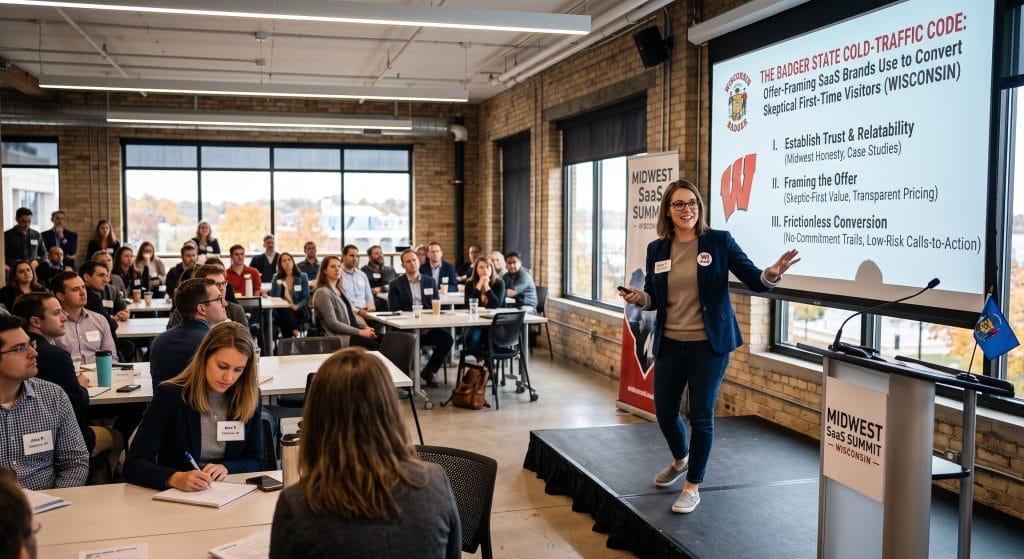
The Badger State Cold-Traffic Code refers to an offer-framing framework rooted in Midwestern business culture—where pragmatism, risk-aversion, and deep skepticism toward superficial hype reign supreme.
When converting cold B2B traffic, flash-in-the-pan software startups often default to Silicon Valley tropes: ambitious claims like "Disrupting enterprise workflows overnight" or high-pressure friction mechanics like "Book a mandatory 30-minute demo." First-time visitors from pragmatic Midwestern markets bounce off these pitches immediately.
The Badger State Code breaks through cold traffic by stripping away fluff and deploying three structural offer pivots.
Instead of abstract value statements, Midwestern-targeted SaaS landing pages present concrete proof immediately below the main headline.
Midwest decision-makers are notoriously allergic to artificial scarcity ("Only 3 seats left for this webinar!") and high-friction gates.
Cold traffic rarely converts on "Contact Sales for Pricing." The Badger State approach demystifies cost structures upfront.
Full Force Ads, an independent agency based in Sandy, Utah, builds consolidated media setups for companies that need transparent, scalable growth. Running campaigns through a unified platform eliminates duplicate audience reach, maintains consistent messaging, and keeps media costs clear.
Here is how organizations structure their ad setups to reach new audiences, capture existing demand, and protect their margins across digital channels.
Part 1: Channel diversification and cross-screen strategy
When someone closes their laptop, they do not stop consuming media; they just change devices. A customer might check news on a tablet in the morning, listen to a podcast on the way to work, use a desktop browser during the day, and watch a streaming show in the evening.
Older strategies treat each of these moments as unrelated events. A consolidated approach connects them into one process. Through Full Force Ads, brands handle campaigns across six main channels from one dashboard.
Streaming TV (Connected TV / CTV) puts your brand on large home screens. Showing targeted, unskippable video on services like Roku, Fire TV, Hulu, and smart TV apps brings the visual weight of television into a measurable format. Unlike traditional TV buys, CTV limits wasted impressions by serving ads only to households that fit your target profile.
Digital video captures attention using sight and sound. Running pre-roll, mid-roll, and outstream video across news sites and apps builds early awareness. High completion rates make digital video a reliable starting point for multi-step campaigns.
Audio streaming offers direct access during screen-free time. Running ads on Spotify, Pandora, podcast networks, and online radio lets you speak to listeners while they exercise, drive, or work. Audio builds brand recognition that reinforces what users see on screens.
Mobile devices remain the main way people interact with digital content. In-app placements, mobile web ads, and location-based options deliver timely messages directly to phones, connecting online intent with physical locations.
Display banner campaigns across major websites provide broad visibility at predictable costs. Beyond basic reach, display ads work well as a retargeting layer to keep your offer in front of prospective buyers while they browse the web.
Native ads match the look, feel, and tone of the sites where they appear. By fitting into editorial layouts, native placements avoid ad fatigue and tend to draw higher click-through rates from readers who are already focused on long-form content.
Part 2: Targeting structure
Media channels determine where your creative shows up. Targeting determines whether those impressions lead to actual revenue or waste budget.
Rather than relying on broad, pre-packaged audience lists that drive up costs without showing clear return, targeted setups apply data filters across every active channel.
Geofencing: mapping physical intent Geofencing turns foot traffic into digital audience segments. By drawing custom borders around specific locations, such as competitor stores, trade shows, industry conferences, or specific business parks, you can capture device IDs and show ads to those visitors on their personal devices later.
Addressable targeting: direct-to-household precision Addressable targeting connects physical mailing lists to digital ad networks. By taking customer or prospect addresses, addressable systems match home locations to IP networks and device IDs. This lets you serve video, display, and audio ads to verified households without paying for out-of-market impressions.
Search retargeting: capturing active intent Search retargeting lets you reach people based on what they search for online. Instead of waiting for users to land on your site, you can serve display, native, or video ads as soon as they search for terms related to your products, industry, or competitors.
Site retargeting: bringing visitors back Most first-time website visitors leave without taking action. Site retargeting follows interested users across the web and shows relevant ads while they read news, check articles, or stream videos, keeping your business top of mind until they are ready to buy.
Contextual targeting: matching content and mindset Contextual targeting reads the text and topics of a web page in real time. Placing ads next to articles directly related to your offerings reaches people while they are actively reading about your industry.
Part 3: Practical channel setups
Effective marketing operations do not turn on every channel at once without a clear goal. Campaign structures match specific business needs and buying behaviors.
Here are standard channel combinations for common goals:
Part 4: The B2B cold-traffic process
To see how combined targeting turns unfamiliar prospects into sales leads, consider how growing B2B software and services companies approach competitive regional markets.
When regional B2B brands try to scale cold outreach, they often run into the same problem: buyers are practical, skeptical of polished claims, and slow to trust new vendors. Blasting standard display banners at these groups usually leads to high bounce rates and wasted ad spend.
To solve this, teams use a three-stage cold-traffic approach built on independent ad infrastructure:
Stage 1: establishing context before pitching Instead of sending aggressive sales messages to cold contacts, campaigns launch through Native Ads placed inside industry news outlets and regional business publications. The content reads like an educational case study detailing real operational metrics, focus points, and practical results.
Stage 2: combining location and search data At the same time, the team sets up two data layers. Geofences go live around target commercial centers and industry expos. Search retargeting runs alongside it, tagging devices that search for relevant software, logistics, or commercial service terms.
Instead of hitting these devices with generic banner ads, the platform delivers short Streaming TV ads in the evening and concise Digital Audio spots during morning commutes. The message addresses the same problem introduced in the Stage 1 native article.
Stage 3: verified addressable follow-up Once prospects interact with the content, their physical address data connects to Addressable Targeting systems. The business then serves clear display and video offers that include demo requests, pricing outlines, or case studies tailored to their region.
This integrated sequence replaces broad, untargeted ad spend with a steady series of touchpoints, helping companies build trust and reduce customer acquisition costs before a sales rep makes the first call.
Part 5: Service options: managed services or self-serve software
A key decision for growing companies is choosing between full operational support and direct software access.
Full-service management For organizations that want to focus internal resources on core operations, product development, and sales, Full Force Ads provides end-to-end agency management. Our team handles market research, media planning, account setup, channel balancing, creative optimization, and performance reporting. You get the output of a dedicated ad team working as an extension of your business.
Self-serve access via FullForceAds.app For internal marketing teams, media buyers, and agencies that prefer direct control, we offer FullForceAds.app. The platform gives in-house teams direct access to set up, run, and adjust campaigns across Streaming TV, video, audio, mobile, display, and native channels. You keep full control over budgets, audience parameters, geofence boundaries, and performance metrics through one central interface.
Part 6: Why companies choose Full Force Ads
Digital advertising involves plenty of complex systems, unclear markups, and scattered reporting tools that make it hard to tell what actually drives revenue. Full Force Ads was started in Utah to give businesses a straightforward, accountable way to buy and manage media.
One partner for all channels Managing separate vendors for streaming TV, audio networks, banner networks, and mobile campaigns takes unnecessary time. We plan, run, and measure all active channels from one system.
Targeting focused on practical outcomes We avoid chasing empty metric counts. By applying geofencing, IP address matching, search retargeting, and contextual filters, campaigns focus strictly on verified prospect groups.
Clear operational data No hidden costs or lumped-together metrics. Clients receive regular reports showing exactly where ads ran, which channels generated engagement, and how users responded.
Flexible terms Growth plans need room to adjust. We build media strategies around your budget, offering flexible terms without locking businesses into rigid, long-term contracts. You adjust spend based on actual results.
Fast campaign deployment Opportunities move quickly. While traditional agencies can take weeks to approve media plans, Full Force Ads builds, targets, and launches campaigns within 5 to 7 business days.
Part 7: Onboarding process
Switching your ad spend to an independent cross-screen system is straightforward and built to save time.
The process starts with a brief intro call to go over your business model, customer profiles, competitive space, and revenue targets. From there, our strategists review your market and put together a channel mix and targeting setup tailored to your budget and goals.
Once approved, campaign assets are formatted, targeted, and launched. Most custom setups go live across selected channels within 5 to 7 business days. We monitor performance logs and user activity regularly, adjusting budget delivery, tweaking geofence boundaries, and refining placements to maintain steady returns.
Taking control of your growth
Relying entirely on overcrowded ad networks means accepting higher costs and lower returns over time. To expand market share, companies need a clear, multi-channel strategy that reaches buyers across the devices they use every day.
Whether you choose full-service agency management or hands-on platform control through FullForceAds.app, Full Force Ads delivers the technology, data precision, and network access needed to scale predictably.
Explore our channels and targeting capabilities at Full Force Ads Advertising Solutions, or schedule an initial strategy call to get started.