The digital advertising playbook is hitting a wall. For over ten years, brands could throw money at Google and Meta and reliably grow their business. Today? Rising CPMs, broken attribution thanks to privacy updates, and overcrowded feeds are eating up return on ad spend across the board.
If you want sustainable growth now, you have to look past those walled gardens. That means setting up programmatic, multi-channel campaigns that meet people wherever they happen to be spending time, whether that is on connected TVs, podcasts, mobile apps, or niche media sites.
Full Force Ads, an ad agency based in Utah, connects audience targeting with multi-channel media buying. Instead of locking your budget into standard social or search platforms, we use programmatic infrastructure to run unified campaigns across every screen your customers use.
Whether you want our team to manage your strategy end-to-end or prefer to run campaigns yourself through FullForceAds.app, you can finally move away from black-box ad networks.
Nobody spends their entire day inside one app. A typical day might start with a podcast on the morning drive, turn into mobile browsing at lunch, shift to streaming TV after dinner, and include a few product searches scattered throughout. Treating these platforms as disconnected silos leads to people seeing the exact same ad ten times, broken frequency limits, and wasted spend.
Full Force Ads runs your media buying through a single engine across six main channels: Streaming TV (Roku, Fire TV), Video (pre-roll, mid-roll), Audio (Spotify, radio), Mobile (in-app, web), and Display and Native ads across the web.
Connected TV (CTV) and Over-The-Top (OTT) platforms have changed how households watch television. Streaming TV gives you the visual presence of classic TV ads, but with digital targeting and attribution attached. Through Full Force Ads, brands run unskippable spots on platforms like Roku, Amazon Fire TV, Hulu, and major streaming apps to reach specific target households.
Digital video reaches beyond living room screens into pre-roll, mid-roll, and outstream placements across publisher sites and mobile apps. Motion and sound make video one of the most reliable ways to show product demos, founder stories, and customer testimonials. We place video inventory dynamically so completion rates and viewability stay high on brand-safe sites.
Audio gives you a direct line to audiences during moments when they are not staring at a screen, like commuting, working out, or cooking. On digital radio, podcasts, and streaming platforms like Spotify and Pandora, audio ads stick with people. Including audio in your mix reaches listeners during quiet moments, setting up visual retargeting later on mobile and web channels.
Mobile devices are still where most daily decisions happen. We run targeted mobile campaigns inside apps, on mobile websites, and across location-aware app environments. Our infrastructure relies on granular, privacy-compliant signals to reach people right when they are ready to act.
Display ads handle much of the day-to-day retargeting workload. Banners across curated sites and apps keep your brand visible after someone leaves your page. When paired with top-of-funnel channels like CTV and Audio, display ads give interested buyers an easy way to click through and convert.
Native advertising matches the visual format and tone of the surrounding site. By fitting into publisher feeds and article streams, native ads get better click-through rates and cause far less ad fatigue than standard banners. They work especially well for long-form content, advertorials, and higher-ticket B2B offers.
Check out our Full Force Ads Advertising Solutions to see how these channels fit together.
Channel selection determines where your ad appears; targeting technology determines who actually sees it. Buying broad, unrefined impressions is the fastest way to burn through a marketing budget. Full Force Ads layers location data, first-party signals, and CRM data to narrow in on high-value buyers.
| Targeting solution | Core data source | Primary use case |
| Geofencing | Precision GPS / Location Data | Competitor targeting, live event capture, driving store visits |
| Addressable | Physical Mailing Lists & CRM Data | Household-level device matching, direct mail coordination |
| Site Retargeting | First-Party Pixel / Visitor Signals | Re-engaging web visitors, reducing cart abandonment |
| Search Retargeting | Intent Keyword History | Reaching active buyers before they choose a competitor |
| Contextual | Page Content Analysis | Brand safety, privacy-first targeting without cookies |
Location-based geofencing
Geofencing turns real-world movement into digital audience segments. Using location signals, we draw virtual boundaries around physical locations, like competitor storefronts, industry trade shows, auto dealerships, or local events.
When a potential customer enters that boundary with their phone, our system logs their anonymized device ID. You can serve them ads on the spot or retarget them for up to 30 days across their household devices, including their living room TV.
Addressable audience matching
Addressable targeting connects physical address lists to digital ad delivery. You can upload customer CRM files, prospect lists, or direct mail addresses right into our system.
The platform maps those physical street addresses to specific IP blocks and connected devices in the home. That allows you to run tailored campaigns across Streaming TV, Display, and Video that reinforce physical direct mail or sales calls.
Site and search retargeting
Most people do not buy on their first visit to your site. Site retargeting tracks people who browsed your pages, checked pricing, or left items in a cart, serving them follow-up ads as they read news or browse other sites.
Search retargeting goes a step further by reaching people based on what they searched for on search engines. That lets you reach active buyers while they are still researching options, before they land on a competitor's site.
Intelligent contextual alignment
As third-party cookies fade out, contextual targeting keeps your campaigns running smoothly. By scanning the text, video, and audio on a webpage, contextual tools place your ads next to related topics. This respects user privacy while putting your message in front of people who are already reading about your industry.
Which media channels and targeting options you choose should depend entirely on what you are trying to accomplish. Here are common campaign setups for specific business goals:
Playbook A: Local foot-traffic acceleration
Playbook B: Aggressive competitor conquesting
Playbook C: Omnichannel enterprise re-engagement
Managing ad campaigns across separate, disconnected platforms creates blind spots and wastes administrative time. Full Force Ads gives you a single partner to handle campaign planning and execution.
Unified programmatic efficiency
Instead of juggling five different dashboards, platform contracts, and account managers, Full Force Ads puts campaign planning, creative deployment, and cross-channel optimizations under one roof. That removes data silos and keeps your target audiences synced across screens.
No black-box metrics
Clear reporting is essential if you want to know where your money is going. Full Force Ads sends clear weekly reports showing where your ads actually ran down to the domain name, along with foot-traffic data, device breakdowns, and conversion numbers.
Agility without contract lock-in
Good results should keep a client around, not a long contract. Full Force Ads operates without strict spend minimums or long multi-year agreements. Most campaigns launch within 5 to 7 business days after creative sign-off, making it easy to adjust your media strategy whenever your market changes.
While enterprise brands often prefer our fully managed agency service, internal growth teams often want direct control over their media spend. We built FullForceAds.app, our self-serve digital ad platform, for teams that want on-demand execution.
FullForceAds.app gives in-house teams, boutique agencies, and media buyers direct access to our programmatic inventory and targeting tools:
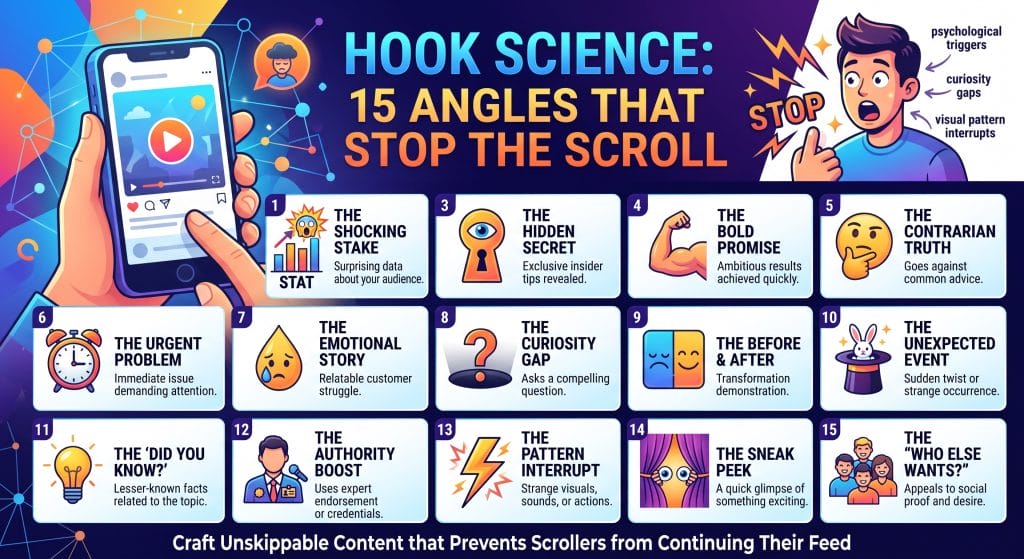
Smart media buying gets your ads in front of the right audience, but your creative determines whether anyone actually stops to look. In fast-moving digital feeds, getting someone to stop scrolling takes a clear understanding of visual pattern interrupts and human psychology.
Here are 15 creative angles designed to grab attention across video, native, and display placements:
Switching from legacy ad networks to precision programmatic buying takes a clear, step-by-step approach. Full Force Ads breaks onboarding into four straightforward phases:
Scaling your ad performance means breaking away from overcrowded, black-box ad networks and taking direct control over your multi-channel media strategy.
By combining Streaming TV, Video, Audio, Mobile, Display, and Native ad placements with precise location geofencing, addressable matching, search retargeting, and contextual placements, Full Force Ads gives you a complete setup built for growth.
Whether you partner directly with our agency team or run campaigns yourself on FullForceAds.app, you can expand your reach, connect with high-intent buyers, and scale your spend with full transparency.
Ready to take your digital advertising strategy further? Learn more about our programmatic capabilities at Full Force Ads Advertising Solutions or schedule your strategy discovery call today.