Digital advertising hit a wall. For over a decade, brands dumped billions into walled gardens, settling for rising acquisition costs, murky metrics, and ad formats consumers actively ignore. The issue is simple: your buyers do not spend their lives inside a single social feed or search bar. They stream content on living room TVs, listen to podcasts on morning commutes, read industry sites during work hours, and carry smartphones into retail stores.
To reach high-intent audiences today, brands need to show up across these screens without treating every channel as a separate project.
Headquartered in Utah, Full Force Ads operates as an independent ad tech platform. Instead of acting as a traditional agency tied to third-party ad networks, the company runs its own system to deliver targeted ads across the open web.
Whether managed through full-service strategy or accessed directly through the self-serve platform at FullForceAds.app, the goal is the same: move past standard digital ad fatigue and build a predictable channel for targeted outreach. You can look over their full setup at Full Force Ads Advertising Solutions.
Media execution works best when the format fits the user's actual habits. When visual elements, sound, and context line up, people remember the message.
Full Force Ads runs campaigns across six core digital channels:
          ┌─────────────────────────────────────────┐
          │      FULL FORCE ADS AD PLATFORM         │
          └────────────────────┬────────────────────┘
                               │
┌──────────────┬──────────────┬───┴──────────┬──────────────┬──────────────┐
│              │              │              │              │              │
┌────▼─────┐  ┌─────▼────┐  ┌──────▼─────┐  ┌─────▼─────┐  ┌─────▼─────┐  ┌─────▼─────┐
│ Streaming│  │   Video  │  │   Audio    │  │  Mobile   │  │  Display  │  │  Native   │
│    TV    │  │ (Pre/Mid)│  │ (Podcasts) │  │(Location) │  │  (Banner) │  │ (In-Feed) │
└──────────┘  └──────────┘  └────────────┘  └───────────┘  └───────────┘  └───────────┘
Reaching premium channels matters little if the ad lands in front of the wrong user. Full Force Ads applies audience targeting over media inventory so impressions reach relevant prospects.
| Targeting Solution | Strategy Core | Primary Use Case |
| Geofencing | Virtual perimeters around physical locations (competitors, venues, trade shows). | Pulling foot traffic from competitors; event targeting. |
| Addressable | Map physical address lists (CRM data) to matching IP networks and devices. | Account-Based Marketing (ABM); pairing with direct mail. |
| Site Retargeting | Track non-converting visitors and re-engage them across other sites. | Bringing warm leads back to finish key actions. |
| Search Retargeting | Target users based on terms searched across major search engines. | Reaching intent before competitors do. |
| Contextual | Match ad placement to article text and overall page topics. | Aligning messaging with relevant, brand-safe content. |
Geofencing sets digital boundaries around physical locations, including competitor storefronts, convention centers, dealerships, or specific neighborhoods. When target consumers cross into the perimeter with a mobile device, the system captures their device ID to serve location-triggered ads during the visit and up to 30 days afterward.
Addressable targeting connects offline customer lists to online media. By taking physical address files (such as customer databases or direct mail lists), the system maps those locations to household IP networks. This delivers targeted ads to connected TVs, tablets, phones, and laptops at those physical locations.
Multi-layered retargeting reaches users based on active interest:
Contextual targeting uses natural language processing to read page content for topic matching. Ads drop into articles, blog posts, and media tied directly to your product categories, reaching users while they read relevant material.
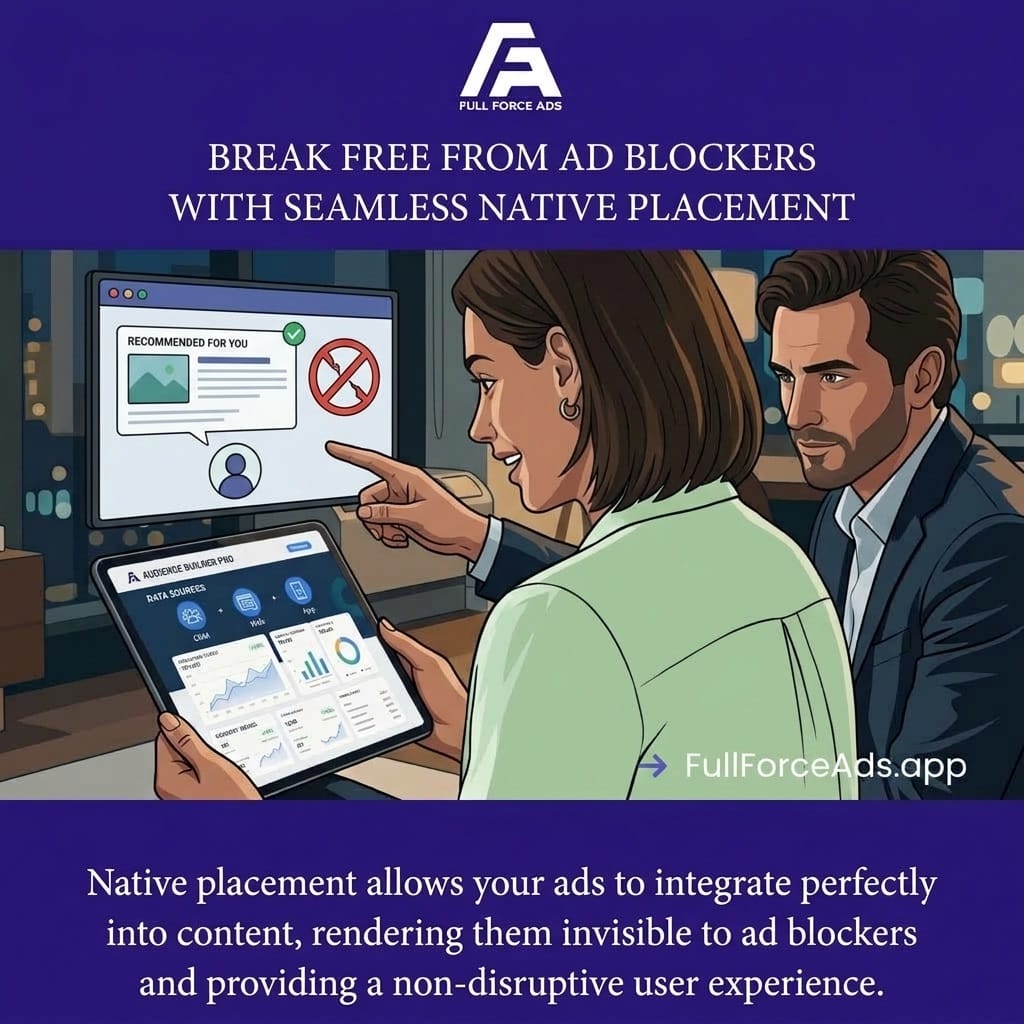
As display banners face rising ad-blocker use, native advertising has taken over a larger share of content-driven acquisition.
Native ads match the layout and flow of modern publishing sites. Rather than cutting off the user experience, they fit into the page structure to turn readers into site traffic.
TRADITIONAL DISPLAY ADS                NATIVE CONTENT PLACEMENTS
┌─────────────────────────┐            ┌─────────────────────────┐
│ [ FLASHY DISPLAY BANNER ]│            │ Headline Article Content│
│  "BUY NOW! 50% OFF!"    │     VS.    │ ----------------------- │
│ (High Bounce / Ignored) │            │ [ Sponsored Content ]   │
└─────────────────────────┘            │ "How Utah Brands Scale" │
                                       │ (High Trust / High CTR) │
                                       └─────────────────────────┘
For performance marketers, growth teams, and agencies needing direct campaign controls, Full Force Ads built FullForceAds.app. This self-serve ad platform lets teams launch and manage custom native campaigns without extra steps.
Growth teams use FullForceAds.app because native creative runs inside organic content feeds, bypassing ad-blocking extensions. The platform lets internal teams launch, monitor, and adjust targeted native campaigns directly from one dashboard. Marketers can test multiple headlines, images, and body copy to let the system shift budget toward top placements. It also gives direct control over ROI metrics, letting teams tune device bidding, adjust keywords, and track conversion numbers to keep customer acquisition costs in line. Setup is quick, moving an account from registration to live campaign delivery within minutes.
Whether scaling a direct-to-consumer store, promoting high-ticket B2B content, or executing regional campaigns, FullForceAds.app gives direct access to programmatic inventory.
Different business goals need different combinations of media formats and targeting layer setups. Below are common campaign structures used on the platform:
| BUSINESS GOAL | STRATEGIC CHANNEL & TARGETING MIX |
| Local Awareness | Geofencing + Display + Mobile In-App |
| Conquest Competitors | Geofencing (Competitor Locations) + Addressable |
| Multi-Touch Brand Build | Streaming TV + Digital Audio + High-Impact Video |
| Drive High-Intent Traffic | Search Retargeting + Native + Contextual Display |
| Re-engage Cold Traffic | Site Retargeting + Video + Display Banners |
| ABM & Enterprise Sales | Addressable Household Lists + CTV + Native Articles |
Running campaigns across several channels does not need to mean managing multiple specialized agencies. Full Force Ads combines media strategy, multi-screen execution, and audience targeting under one operational workflow.
              TRADITIONAL APPROACH                                  FULL FORCE ADS DIFFERENCE
┌───────────────────────────────────────────────────────┐         ┌─────────────────────────────────────┐
│ • Vendor 1: Managed Search & Display                  │         │                                     │
│ • Vendor 2: Separate Streaming TV Agency              │   VS.   │ • Unified Channel Strategy          │
│ • Vendor 3: Geofencing Niche Vendor                   │         │ • Transparent Weekly Reporting      │
│ • Vendor 4: Self-Serve Native Tool                    │         │ • No Long-Term Locked Contracts     │
│                                                       │         │ • Fast 5-7 Day Campaign Launches    │
│ RESULT: Siloed Data, Fragmented Reports & High Fees   │         │                                     │
└───────────────────────────────────────────────────────┘         └─────────────────────────────────────┘
Full Force Ads handles cross-screen outreach from Streaming TV down to local mobile geofencing through a single platform, cutting down vendor management overhead. Instead of optimizing around simple vanity metrics, campaigns use location data, addressable mapping, search intent, and native context so impressions go to verified target groups. Reporting dashboards provide direct placement and audience data showing where ads ran and how conversions tracked. Budget terms stay flexible so media spend scales without forced long-term lock-ins. Campaign launches take 5 to 7 business days, letting teams deploy campaigns quickly.
Onboarding with Full Force Ads follows four steps:
STEP 1                STEP 2                STEP 3                STEP 4
┌─────────┐           ┌─────────┐           ┌─────────┐           ┌─────────┐
│ Discovery│   ───>   │ Custom  │   ───>   │  Fast   │   ───>   │ Optimize│
│   Call  │           │ Strategy│           │ Launch  │           │ & Report│
└─────────┘           └─────────┘           └─────────┘           └─────────┘