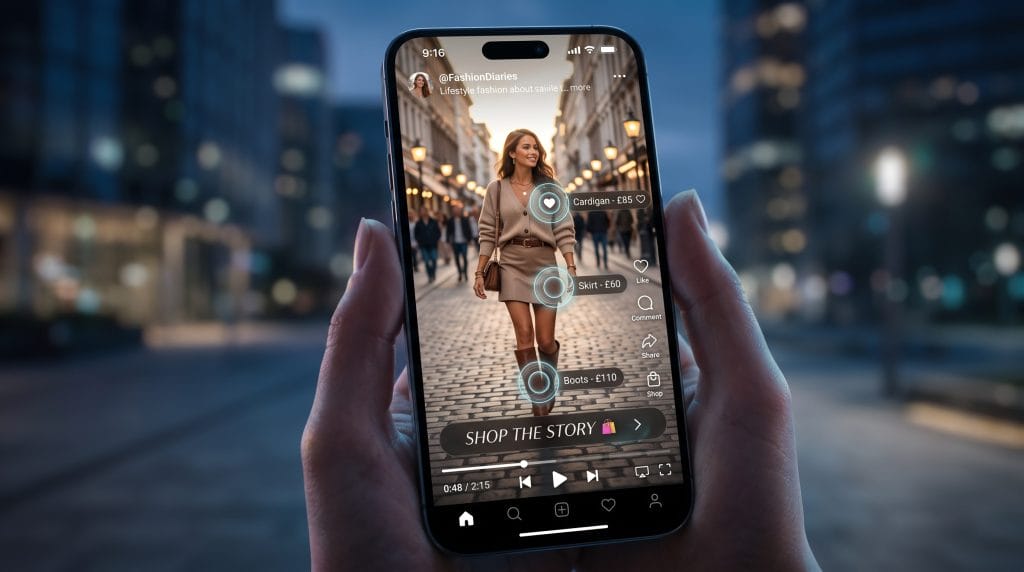
Digital marketing shifted the moment buying things stopped requiring extra steps. Nobody wants to see a product in a feed, close the app, open Safari, search the brand name, and manually key in a credit card anymore. Discovery and purchase happen in the same breath now.
Native video sits right in the middle of that shift. It is just video tailored to match the look, shape, and pace of whatever feed it lives in. When it works, it turns a passive scroll into a sale before the viewer even realizes they were pitched.
Here is how to make it actually work on an operational level.
Static banners and pop-ups are basically invisible now. Everyone has developed automatic blind spots for anything that looks like an ad banner.
Native video gets around this by fitting in instead of jumping out. It uses the same aspect ratio, frame rate, and general style as the organic posts around it. Since most feed videos auto-play on mute, you rely on immediate movement within the first second to catch an eye before the thumb flicks past. Placed inside a news feed or a social stream, the video naturally picks up the credibility of the site it sits on.
The fastest way to kill a video ad is to make it look like a commercial in the first three seconds. The moment a user sees a glossy logo reveal or hears a voiceover setup, they swipe.
If you want people to stick around, break the clip into three quick phases:
First, hook them in the first three seconds. Use a sudden movement, a strange visual, or a quick human interaction. Ditch the animated company logos, title screens, and long intros.
Next, spend the next ten seconds on the problem. Show something annoying, relatable, or familiar. Low-fi footage that looks like it was shot on a phone almost always outperforms polished agency creative here.
Finally, introduce the product as the fix in the last fifteen seconds. Show it working in real time, show what it does, and give a plain direction on what to click next.
A solid video gets people interested, but bad landing pages and long forms kill the actual sale.
Watch your page load speeds, keep your live inventory synced so you never feature out-of-stock SKUs, and always add captions. Most people watch these videos with the volume set to zero.
A video that prints money on TikTok will bomb on a news site because the mindset of the person watching is entirely different.
On social platforms like Meta or TikTok, people scroll fast and make impulse buys. Use vertical 9:16 video, keep the editing tight, make it look like user-generated content, and send them straight to a native in-app store.
On editorial sites and news feeds, readers are in a slower, more attentive mindset. Standard 16:9 or square videos with cleaner production and more informative breakdowns fit better here. Route those clicks to clear product pages or detailed reviews rather than a quick impulse checkout.
Native video is not just a top-of-funnel awareness tool anymore. When you combine simple video storytelling with an easy path to check out, it becomes a direct driver for revenue.
Marketing executives keep running into the same wall. They dump most of their ad money into search and social, then watch as click costs rise, returns drop, and their ads get lost in crowded feeds.
The problem is simple: people do not spend their lives inside a single search bar or social app. They stream shows on Roku and Hulu, listen to podcasts on Spotify during their commute, read industry news on their laptops, and check mobile apps throughout the day. If your ads only live in two or three walled gardens, you are missing huge chunks of the actual customer journey.
Full Force Ads, based out of Utah, builds programmatic ad campaigns that reach people across all those screens. Instead of locking you into one platform, they run media across streaming TV, digital audio, geofencing, addressable household targeting, and native video.
Performance marketing works best when you reach people across several touchpoints instead of hammering a single feed. Search ads pick up demand that already exists, but actual growth comes from building demand before someone ever types a phrase into Google.
       TRADITIONAL AD MODEL vs. OMNICHANNEL PROGRAMMATIC

   [ Conventional Silos ]           [ Full Force Ads Ecosystem ]
   ┌────────────────────┐           ┌──────────────────────────┐
   │  Search Keywords   │           │  Streaming TV (Connected)│
   ├────────────────────┤           ├──────────────────────────┤
   │  Social Media Feed │     vs.   │  Digital Audio / Podcasts│
   ├────────────────────┤           ├──────────────────────────┤
   │  Basic Web Display │           │  Hyper-Local Geofencing  │
   └────────────────────┘           ├──────────────────────────┤
                                    │  Addressable Household   │
                                    └──────────────────────────┘
Relying on one or two channels leaves obvious vulnerabilities:
An open programmatic approach ties connected TV, mobile, video, display, and native placements together, giving you access to high-traffic publisher sites without walled-garden restrictions.
Campaigns work better when your ad matches what the user is doing at that moment. Mixing formats keeps your brand visible without relying on a single ad type.
| Channel | What It Does |
| Streaming TV | Puts unskippable video ads on living room TVs |
| Pre-roll video | Runs video spots before web content loads |
| Digital audio | Reaches listeners during commutes, workouts, and errands |
| Mobile in-app | Delivers location-based ads inside mobile apps |
| Display banners | Handles retargeting and maintains basic impression volume |
| Native media | Places content-style links directly inside publisher article feeds |
Connected TV puts digital targeting onto big living room screens. You can run targetable, unskippable video ads on Roku, Fire TV, Hulu, and Apple TV. Instead of buying whole ZIP codes on broadcast TV, you target specific household demographics. Cross-device tracking then shows if a household that watched your TV spot later converted on a phone or laptop.
Audio reaches people during screen-free hours. Through Spotify, Pandora, digital radio, and podcast networks, ads go straight into car speakers and headphones while people drive, work out, or run errands. You can align spots with specific podcast categories or listener habits.
Sight, sound, and motion work faster than static images. These video spots run across major publisher sites right before, during, or next to related articles and video content.
People carry their phones everywhere. Mobile campaigns use app placements, mobile web pages, and location tracking to reach users while they are out in the real world.
Native ads look like recommended articles on major websites, acting as a bridge between top-of-funnel content and direct actions. Paired with standard display banners, they keep your brand visible as readers move around the web.
Getting on the right screen is only half the job. Putting the ad in front of the right person is what stops you from wasting money.
                        TARGETING ARCHITECTURE

      [ Physical World ]                 [ Digital Footprint ]
    ┌────────────────────┐             ┌──────────────────────┐
    │  Geofencing Locations              │  Keyword Search Retargeting
    │  Addressable Household Matching    │  Site Intent Retargeting
    └─────────┬──────────┘             └──────────┬───────────┘
              │                                   │
              └───────────────┬───────────────────┘
                              ▼
                 Unified Audience Profile
                              │
                              ▼
           High-Precision Programmatic Ad Delivery
Geofencing draws virtual boundaries around real-world places down to a few feet. You can target phones that walk into competitor locations, trade show halls, auto dealerships, or shopping districts.
                  GEOFENCING LOCATION TARGETING

       Competitor Store / Event Venue / Trade Show
     +-----------------------------------------------+
     |  [Virtual Geofence Boundary Defined]          |
     |      * Foot Traffic Visitor Enters *          |
     |        └─> Device ID Captured                 |
     +-----------------------------------------------+
                            │
                            ▼
     Ad Served Across Streaming TV, Mobile, & Web
     During and After the Location Visit
Once a device enters the perimeter, you can serve targeted ads to that phone for up to 30 days after the visit.
Addressable targeting connects offline customer data to digital devices. You can upload mailing lists, CRM data, or target account lists and match them directly to physical households. From there, ads run across every device in those homes, including smart TVs, phones, and laptops.
Keyword retargeting links search intent with general web browsing. When a user searches for specific terms, programmatic tracking picks up on that interest. You can then show them video, native, or display ads while they read articles across the web.
Site retargeting brings back people who visited your site but left without buying. Contextual targeting skips third-party cookies entirely, placing your ads on pages that match the exact subject matter of the article being read.
Different goals call for different mixes of channels and targeting layers:
| Business Goal | Channel Mix | Focus |
| Local market reach | Geofencing + Display + Mobile | Target foot traffic near physical locations and regional competitors |
| Competitor conquesting | Geofencing + Addressable | Target visitors at competitor locations and serve direct offers across their home devices |
| Brand authority | Streaming TV + Video + Audio | Build trust using living room TV spots and podcast placements |
| B2B account marketing | Addressable + Native + Search Retargeting | Serve content directly to target account lists and active researchers |
| Lead retargeting | Site Retargeting + Display + Video | Stay in front of previous site visitors until they convert |
Different teams need different levels of control over their media buys:
              FULL FORCE ADS DELIVERY ECOSYSTEM

     +-------------------------------------------------+
     |                 Full Force Ads                  |
     +------------------------+------------------------+
                              |
              ┌───────────────┴───────────────┐
              ▼                               ▼
    [ Managed Services ]            [ FullForceAds.app ]
    * Dedicated Planning            * Self-Serve Platform
    * Strategy & Setup              * On-Demand Campaign Launch
    * Ongoing Optimization          * Real-Time Analytics
    * Cross-Channel Analytics       * Flexible Budget Control
If you want an outside team to handle strategy, audience setup, and weekly optimizations, Full Force Ads operates as a managed partner out of Utah. Their team handles everything from initial planning and audience setup to bidding tweaks and attribution reporting.
If you have an in-house team that wants hands-on control, FullForceAds.app gives you direct access to the platform. You can launch campaigns yourself, upload addressable lists, set up geofence locations, adjust daily budgets on the fly, and pull placement data showing the exact publisher sites hosting your ads.
Moving to a programmatic media setup follows four main steps:
Native video places video creative directly inside publisher article feeds instead of interrupting the reader.
                   NATIVE VIDEO USER EXPERIENCE

    +-------------------------------------------------------+
    | Article Title: Industry Trends & Solutions            |
    |                                                       |
    |  [ In-Feed Native Video Player ]                      |
    |  +-------------------------------------------------+  |
    |  |  Non-Intrusive Video Plays Naturally In-Context |  |
    |  +-------------------------------------------------+  |
    |                                                       |
    | Paragraph: High-value contextual editorial copy...    |
    +-------------------------------------------------------+
Because the video sits smoothly inside news feeds and articles, it feels like part of the site rather than a pop-up ad.
Combining native video with geofencing or addressable lists gives you a straight path from top-of-funnel awareness to actual sales.
Relying on search and social alone caps your reach and inflates your costs. Actual growth requires stepping out into the wider web where your target audience spends their time: smart TVs, podcast feeds, news sites, and daily mobile apps.
Full Force Ads gives you the audience data and programmatic reach to build multi-channel campaigns. Whether you work with their Utah agency team or run campaigns yourself through FullForceAds.app, you can target specific audiences across every screen. You can review programmatic campaign options and book a strategy consultation on the Full Force Ads site.