The home services industry is changing at lightning speed. The U.S. plumbing sector is valued at over $191 billion, yet field business owners frequently face the same bottleneck: how to consistently attract high-ticket local jobs without overpaying for low-quality clicks.
For modern agencies and ambitious plumbing operators, generic marketing channels are no longer enough. Because 54% of homeowners hire a local plumber in under four hours during an active leak or emergency, capturing immediate local intent is top.
Our custom guide breaks down how executing digital advertising for plumbing businesses on our proprietary lead-generation network turns local searchers into high-paying appointments.
Direct Answer: Digital advertising for plumbing businesses is a hyper-targeted marketing method that utilizes paid local listings, contextual mobile ads, and geo-targeted placements to connect plumbers directly with high-intent homeowners during critical service events.
Unlike broad brand campaigns, professional plumbing ads must solve immediate, real-world problems. When a hot water heater bursts or a mainline back up occurs, consumers do not spend days researching options on social media. They need a highly rated local technician instantly.
Our proprietary ad ecosystem is engineered specifically to match these two distinct client behaviors:
Urgent emergency needs, like sewer backups or active water leaks, call for rapid-response click-to-call interfaces, while planned capital upgrades, such as whole-home repiping or tankless water heater retrofits, call for a different approach: detailed reviews, system pricing calculators, and guaranteed quality badges.
Direct Answer: Our proprietary local service advertising for plumbers bypasses standard bid auctions, featuring verified business profiles with real-time customer reviews and direct-to-dispatcher phone tracking. Advertisers pay strictly on a verified-lead model rather than simple, unverified clicks.
Rather than competing in crowded, expensive public search directories, our proprietary local search ad platform features key innovations that maximize conversion rates for local plumbing providers.
Every plumbing business running on our network must pass a rigorous screening process. Once approved, your listings display our custom Verified Provider Badge. This badge reassures homeowners that your licensing, background checks, and general liability insurance are up to date, improving conversion by up to 24%.
You're only billed when a user dials your tracking number or submits a direct booking request, and the automated system filters out wrong numbers, solicitations, and out-of-service-area inquiries so no budget goes to junk leads. Booking integrations connect directly with dispatch software, such as ServiceTitan or Housecall Pro, so bookings land right on your technicians' schedules.
Direct Answer: Plumbing demand is dictated by regional infrastructure age, weather extremes, and municipal water codes. Using state-specific GEO-targeted local ads allows agencies to focus ad budgets on the unique, high-yield plumbing needs of each region.
Texas plumbing demands fluctuate wildly between sudden winter freezes and intense summer droughts.
From Dallas to Houston, unexpected winter freezes cause rapid pipe expansion and catastrophic bursts, while hard water throughout central Texas causes scale buildup in tankless units. The right strategy runs automated weather-triggered campaigns: when temperatures drop below 32°F (0°C), the platform shifts budget to "emergency frozen pipe repair" keywords, and during summer, the creative pivots to water softeners and preventive scale flushes.
Florida’s geography exposes residential infrastructure to high humidity, high coastal water tables, and severe seasonal storms.
Salt air accelerates copper pipe corrosion along the coast, while heavy tropical storms overwhelm residential sewer systems. In Miami, Tampa, and Orlando, campaigns should center on high-ticket preventative work, sewer backup prevention, sump pump installations, and complete home repiping, while highlighting corrosion-resistant PEX piping across every creative asset.
California features some of the most stringent environmental regulations and highest municipal water rates in the nation.
Homes in Los Angeles, San Diego, and the Bay Area face strict conservation guidelines, and homeowners are actively looking for smart solutions to avoid expensive tiered water bills. Ad creative should focus on smart leak detection systems, like Moen Flo or Flume, and high-efficiency water heater conversions, while calling out localized municipal rebate eligibility on custom landing pages to lower the barrier to entry.
Direct Answer: Tracking plumbing marketing efficiency requires monitoring Cost Per Acquisition (CPA) and Return on Ad Spend (ROAS) using actual, invoiced job revenue rather than raw phone calls.
Use these standard formulas to analyze your campaign performance on our proprietary network:
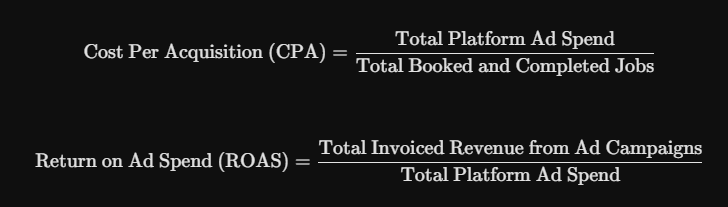
For example, let's look at a typical regional campaign run on our network:
| Metric | Performance Data |
| Monthly Ad Spend | $4,000 |
| Total Leads Generated | 80 high-intent inquiries |
| Booked Jobs | 40 completed service calls |
| CPA | $100 per booked job |
| Total Invoiced Revenue | $22,000 |
| Calculated ROAS | 5.5x |
With our proprietary platform's verified lead protections, agencies consistently observe CPAs that are $30\%\text{ to }40\%$ lower than traditional click-based models, driving superior overall profitability.
Failing to filter out negative keywords like "DIY plumbing repair," "free advice," or "plumbing supply store" wastes budget on non-buying traffic. If a web inquiry goes unanswered for more than five minutes, the close rate drops by over 80%, since homeowners in distress simply move down the list to the next provider. Sending high-intent clicks to a busy, generic homepage instead of a focused, service-specific landing page hurts conversion. And since more than 70% of local home service searches happen on mobile, a page without a sticky tap-to-call button loses callers who'd otherwise convert.
Integrate this structured LocalBusiness schema into your location-specific plumbing landing pages to help search engine crawlers index your business information accurately:
HTML
<script type="application/ld+json">
{
  "@context": "https://schema.org",
  "@type": "PlumbingService",
  "name": "Apex Plumbing Specialists",
  "image": "https://www.apexplumbingexample.com/assets/logo.jpg",
  "@id": "https://www.apexplumbingexample.com/#plumbing-service",
  "url": "https://www.apexplumbingexample.com",
  "telephone": "+1-800-555-0199",
  "priceRange": "$$",
  "address": {
    "@type": "PostalAddress",
    "streetAddress": "456 Flowline Blvd",
    "addressLocality": "Dallas",
    "addressRegion": "TX",
    "postalCode": "75201",
    "addressCountry": "US"
  },
  "geo": {
    "@type": "GeoCoordinates",
    "latitude": 32.7767,
    "longitude": -96.7970
  },
  "openingHoursSpecification": {
    "@type": "OpeningHoursSpecification",
    "dayOfWeek": [
      "Monday",
      "Tuesday",
      "Wednesday",
      "Thursday",
      "Friday",
      "Saturday",
      "Sunday"
    ],
    "opens": "00:00",
    "closes": "23:59"
  },
  "areaServed": {
    "@type": "State",
    "name": "Texas"
  }
}
</script>