The auto market is shifting fast. Electric vehicles are no longer a side project; they are the main focus across major product lines. But as Detroit carmakers pour billions into new battery tech, software, and factory upgrades, they keep running into the same simple problem: buyers have a lot of practical questions, and traditional ads are terrible at answering them.
An EV purchase is rarely impulse-driven. Buyers want to figure out range limits, total operating costs, cold-weather performance, tax credits, and home charger setups. A standard banner ad or a slick 15-second TV spot can build basic brand recognition, but it rarely gives a hesitant buyer enough detail to take the next step.
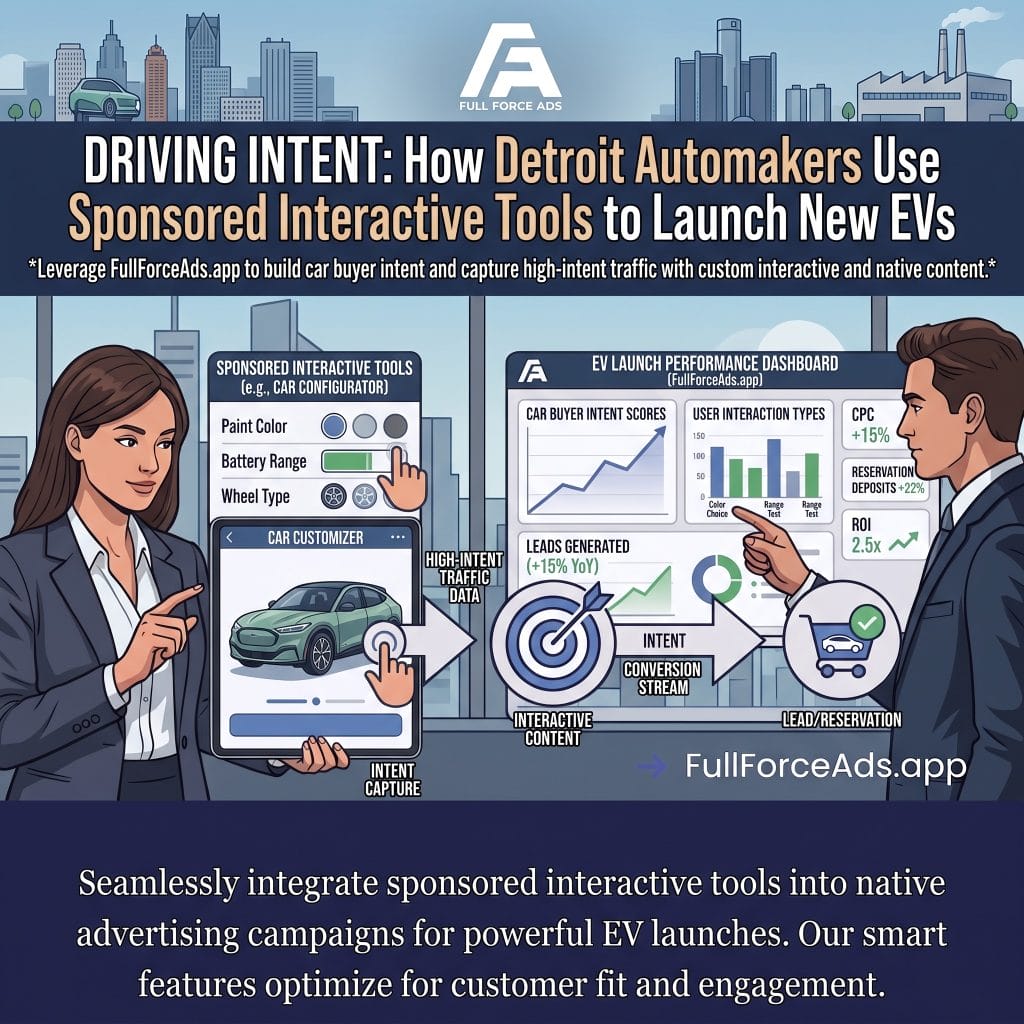
To get around this, automotive marketers are pairing native ads with interactive tools. By embedding range estimators, charging calculators, and vehicle configurators directly into news and lifestyle articles, carmakers can answer specific questions while readers are already in research mode.
Native ads work because they stay out of the way. Instead of interrupting someone with a pop-up, a native placement matches the design and tone of the publisher site.
If someone is reading an article about home energy, car design, or battery tech, a native ad feels like a logical next step rather than a pitch.
For automakers, this approach brings a few obvious benefits:
Selling an EV requires clear answers for specific situations. A driver in Michigan worrying about sub-zero battery loss needs totally different details than a suburban driver looking for a daily commuter car.
Interactive tools embedded directly in native ads give people quick, customized feedback.
| Tool Type | Primary Function | Core Buyer Benefit |
| Range Estimators | Enter daily commute, driving habits, and local climate. | Handles range anxiety before visiting a dealer lot by fitting their actual routine. |
| Savings Calculators | Plug in local gas prices, electricity rates, and potential tax credits. | Explains the financial pitch faster than a standard price tag. |
| Home Charging Guides | Walk buyers through garage setups, Level 2 costs, and utility rebates. | Makes the physical transition to electric feel far less complicated. |
An interactive tool only works if it gets in front of the right households. Getting a return on ad spend means reaching people who are actually in the market for a new car or live in areas with solid charging options. Automotive brands usually work with media execution partners to handle distribution across multiple channels at once.
An interactive widget is often just the initial touchpoint. To keep momentum going, marketers run coordinated campaigns across several channels:
Reaching active buyers takes targeted segmentation:
For regional dealer groups and agencies that want direct control over their media buys, modern programmatic tools offer flexible options.
Teams can opt for fully managed services with dedicated optimization, or run campaigns directly through self-serve platforms like FullForceAds.app. In a self-serve setup, buyers can:
Moving the auto industry toward electric vehicles requires more than high-level branding; it takes clear, accessible information. By placing interactive tools inside native editorial content, Detroit automakers can turn passive reading into real purchase intent.
Supported by precise targeting, multi-screen reach, and clear attribution, native interactive campaigns give buyers the practical answers they need while driving measurable results for manufacturers.