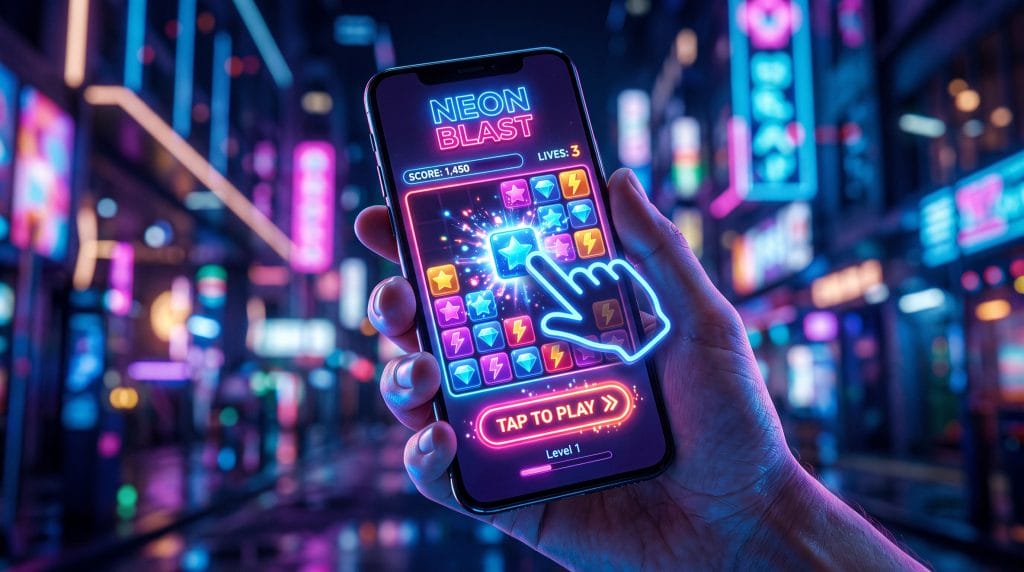
Passive Viewing is Hitting a Wall
Passive viewing is hitting a wall. Users routinely swipe past auto-playing video ads and ignore static banners, forcing mobile advertising to shift from demanding attention to inviting interaction.
Interactive HTML5 ads change how mobile marketing works. Turning ad placements into micro-experiences lets brands capture active focus, qualify user intent, and drive conversions before anyone lands on an app store page.
Traditional mobile funnels rely on passive consumption: play a 15-second video, hope for brand recall, and push for a click. Interactive formats flip this through a simple try-before-you-buy approach.
When users interact by solving a quick puzzle, customizing an item, or playing a mini-game, a few things happen.
Interactive formats demand motor control and immediate decisions, which cuts out the second-screening habit common with passive video. Because users choose to play, their clicks carry higher intent and lower post-click bounce rates. Experience-based interactions also improve memory retention, boosting overall brand recall.
A high-converting playable ad relies on a tight sequence because you have under 15 seconds to deliver your message.
You need immediate clarity. Show how to interact within two seconds using visual cues like a pulsing hand icon, directional arrows, or a prompt like "Swipe to Mix." Avoid complex tutorials. If it takes longer than two seconds to explain, the mechanic is too complicated.
The core interaction should be intuitive and responsive. The user performs a single action, like swiping or dragging, receives visual or audio feedback, and gets a micro-win. Keep the challenge easy enough to complete on the first try while keeping it engaging.
Once the loop ends, transition immediately to a clear call to action. The end card uses the momentum from the interactive loop to prompt actions like "Download Now," "Claim Discount," or "Explore Collection."
Non-gaming verticals are adopting interactive HTML5 formats to improve conversions across commerce, finance, and food delivery.
| Vertical | Interactive Concept | Core Objective |
| E-Commerce & Fashion | Virtual fitting / Style swipe: Users swipe to build an outfit, then view the curated look. | Product discovery and personalized intent |
| Fintech | Financial calculator / Goal runner: A mini-game where users collect savings while dodging debt obstacles. | Clarifying complex financial products |
| QSR & Food Delivery | Recipe builder: Users drag ingredients onto a crust or burger to unlock a promo code. | Appetite appeal and immediate coupon redemption |
Unlike passive video, which only tracks view duration and click-through rates, HTML5 units generate granular event data across the full touchpoint sequence:
$$\text{[Ad Impression]} \longrightarrow \text{[First Interaction Rate]} \longrightarrow \text{[Loop Completion Rate]} \longrightarrow \text{[CTA Click-Through Rate]}$$
Tracking these touchpoints gives creative teams clear visibility:
Creative teams can use these metrics to refine mechanics, adjust hook animations, and optimize calls to action.
People do not scroll past ads because they hate brands. They scroll because static ads take their time and give nothing back. Banners, auto-playing video clips, and feed promotions have worn audiences down. Relying on standard ad units means accepting shrinking returns, rising Customer Acquisition Costs (CAC), and low brand recall.
To fix this, businesses are changing how they run campaigns. The goal is no longer getting someone to watch an ad, but getting them to interact with it.
Interactive ads and gamified mobile placements handle this shift directly. By adding mini-games, fast choices, and touchscreen controls, interactive formats turn scrollers into participants, driving higher recall and lowering conversion costs.
Full Force Ads, an agency based in Utah, builds these interactive campaigns for brands across multiple channels. Instead of forcing you to deal with separate vendors, we combine channel strategy with targeted delivery. Whether you need fully managed campaigns or direct access through our self-serve tool at FullForceAds.app, our focus stays simple: getting more out of your ad spend through better execution.
Here is how playable mobile ads work, why gamification drives action, how targeting fits in, and how these setups work inside real campaigns.
A playable or interactive mobile ad is a light HTML5 unit placed inside standard ad spots. Instead of watching a 15-second video, users tap, drag, swipe, tilt, or solve a quick puzzle right on their screen.
These started as mini-demos for mobile app downloads, but e-commerce brands, car dealerships, healthcare providers, real estate groups, and consumer brands use them now too.
| Ad Path Type | Journey & Engagement Flow |
| Traditional | Impression $\rightarrow$ Passive View $\rightarrow$ Skip or Ignore $\rightarrow$ Low Recall $\rightarrow$ Low-Intent Click $\rightarrow$ Bounce |
| Interactive | Impression $\rightarrow$ Active Play $\rightarrow$ High Intent $\rightarrow$ High Conversion $\rightarrow$ Data Captured $\rightarrow$ Retargeting |
The layout depends on what you want the user to do:
Playable ads beat static banners and video units on click-through rates, time spent, and conversions because of basic user behavior.
With standard video, people look for the skip button right away. When an ad responds to touch, focus shifts to solving the task. Giving users control makes the interaction feel like a choice instead of an interruption.
Gamified ads rely on quick feedback. Clearing a level, opening a box, or getting an instant recommendation releases dopamine, creating a positive link with the brand before the user ever lands on the website.
High click-through rates on standard ads often lead to high bounce rates because people click by mistake. When someone spends 20 seconds playing through an ad before clicking through, they actually care about the product.
Interactive mobile ads work best as part of a broader media plan. Full Force Ads handles strategy, setup, and reporting across channels in one place.
Strong ad creative fails without the right audience. Channels determine where ads run; targeting determines who sees them.
Geofencing draws virtual boundaries around real locations like competitor sites, trade shows, stadiums, auto dealerships, or shopping centers.
Example: An auto group geofences competing dealerships. Mobile users inside those areas see an ad where they can configure a trim level and check trade-in values right on their phone screen.
Upload a CRM list, direct-mail file, or address list. We map those exact addresses and run interactive ads across devices tied to those homes.
Example: A remodeling contractor targets specific homeowners with an ad that lets them swap out kitchen countertops and cabinet layouts inside the unit.
People who leave your site without buying need another reason to come back. Site retargeting serves interactive units, like a spin wheel for discounts or a product selector, while past visitors browse other apps and sites.
Reach people based on terms they searched online. If someone searches for business software, an interactive assessment tool can appear inside a mobile or native ad space.
Place interactive ads next to related articles and videos. A nutrition brand can place a protein calculator inside health and fitness articles.
Different business goals require different channel combinations:
Interactive ads produce real engagement data rather than basic impression counts:
Clients receive weekly reports covering spend, ad locations, and engagement details so you know exactly where budget goes.
Full Force Ads operates as an agency partner with direct infrastructure access.
Passive ad formats struggle to deliver strong returns as attention shifts. Playable and interactive mobile ads give brands a way to make ad spend count by turning routine impressions into actual participation.
With targeted delivery, multi-channel reach, clear weekly reporting, and options for managed or self-serve execution, Full Force Ads gives businesses practical tools to grow. Check our Advertising Solutions or request a demo to see how interactive ads fit into your next campaign.