
Self-Serve →
Full Force Ads
Programmatic Advertising Blog >>
Seattle's Cookie Collapse (Washington): How Pacific Northwest brands are using contextual targeting to save performance.

Seattle's Cookie Collapse (Washington): How Pacific Northwest brands are using contextual targeting to save performance.

Posted on September 4, 2026

Digital advertising in the Pacific Northwest hit a wall when third-party browser tracking faded out. For years, independent bakeries, specialty food distributors, and hospitality groups across Seattle and Bellevue relied heavily on browser cookies to retarget site visitors and find local buyers. When those tracking signals disappeared, audience pools shrank overnight, acquisition costs jumped, and standard banner ads stopped working.

Rather than burning extra money on dying tracking methods, local businesses changed their setup. Working with programmatic ad options like Full Force Ads, regional marketing teams replaced cookie-based retargeting with contextual placement and precise physical location tracking.

Turning location and page context into real intent signals

When you cannot rely on browser history, page content and user location become your best signals. Instead of guessing who someone is based on old tracking scripts, modern programmatic strategies look at what someone is reading and where they physically go.

Washington brands rebuilt their media reach using four primary tactics:

  • Page-level contextual matching: Rather than tracking personal histories across the web, campaigns placed ads directly inside content related to regional dining, Pacific Northwest food blogs, local event guides, and specialty cooking sites. Ads appeared right when readers were engaged with relevant topics.
  • Building-level geofencing: Traditional geo-targeting draws a wide circle over an entire city or zip code, catching commuters and irrelevant traffic. Modern geofencing uses custom map polygons to trace the physical outlines of specific venues, like trade expos, food festivals, or competing retail spaces in Seattle and Bellevue. When a mobile device enters that drawn boundary, its anonymized ID is logged so the brand can deliver ads immediately and keep retargeting that device across personal screens for up to 30 days.
  • Addressable household matching: Instead of relying on digital tracking profiles, businesses match physical customer address lists to home IP networks. That allows video, display, and audio ads to reach smart TVs, laptops, and mobile phones inside target residences.
  • Conversion zone tracking: Real-world foot traffic connects directly to ad views. By setting up virtual conversion zones around physical store entrances, managers can track when a user who saw a digital ad actually walks through the front door.

Reaching people across every screen

Local buyers move across multiple screens every day. A decision-maker might listen to a streaming podcast during their morning commute, browse news articles on a phone at lunch, and watch a streaming show on a connected TV at night.

A single programmatic engine like Full Force Ads handles campaigns across all of those touchpoints without making teams juggle four or five different vendor dashboards.

ChannelFormat & placementStrategic role
Streaming TV (CTV)Unskippable 15s and 30s spots on Roku, Hulu, Fire TV, and PeacockBuilds strong local authority on the primary household screen.
Digital AudioPre-roll and mid-roll audio on Spotify, Pandora, and podcast networksReaches audiences during screen-free moments like driving or working out.
Mobile & In-AppInteractive banners and location-aware units on smartphonesCaptures attention on the device people check dozens of times a day.
Native ContentSponsored articles designed to fit the visual design of news sitesDelivers educational content with higher click-through rates.
DisplayWeb banners across brand-safe publisher networksMaintains local visibility and supports cost-effective retargeting.
Digital VideoPre-roll and mid-roll video across publisher sites and appsUses sight, sound, and motion to explain complex value propositions.

Goal-based campaign stacks for regional growth

No single setup works for every objective. Combining channels based on actual targets helps regional businesses run cost-effective campaigns:

  • Local market growth: Pair hyper-local geofencing around target commercial hubs with display and mobile banners to build saturation.
  • Competitor conquesting: Draw geofences around competing locations to reach active shoppers while they evaluate alternatives, then show follow-up video and display offers over the following days.
  • B2B and account targeting: Use addressable matching to upload target corporate client lists, serving custom messaging across office connected TVs and mobile devices.
  • Lead generation: Combine search retargeting with native ad placements on high-authority news sites to capture informed leads.

Managed services vs. self-serve control

As programmatic options grow, teams usually decide between outsourcing media management or running campaigns directly:

  • Fully managed services: For business owners and marketing teams that want direct access to programmatic inventory without managing daily bidding rules, Full Force Ads acts as a complete strategic partner. Strategists build, run, and optimize campaigns end-to-end, and provide white-label reporting for digital agencies.
  • Self-serve platform: For internal media buyers and agencies with in-house campaign experience, FullForceAds.app offers direct self-serve access. Teams set up audiences, upload creative assets, control real-time bids, and manage multi-channel campaigns on their own schedules.

Connecting ad views to real-world revenue

Evaluating performance requires looking past surface metrics like impressions and simple clicks. Modern programmatic strategies track video completion rates to confirm how many users watch full 15- or 30-second spots. They use conversion zones to measure physical store visits generated by digital ad exposures, and apply frequency caps across household devices to avoid ad fatigue.

By moving past third-party cookies and using focused page context alongside location intelligence, Pacific Northwest brands have rebuilt their campaign reach, lowered acquisition costs, and linked digital ad spend directly to store foot traffic.

Schedule a demo with Full Force Ads to see how contextual programmatic campaigns can work for your business.
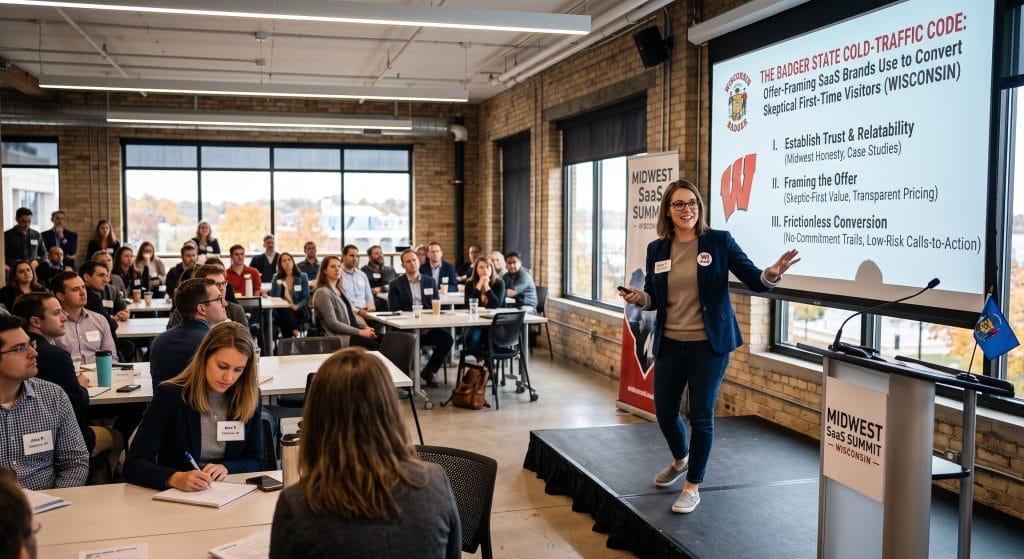
The Badger State Cold-Traffic Code (Wisconsin): The specific offer-framing Midwest SaaS brands use to convert skeptical first-time visitors.
FULL FORCE ADS
Our team is made up of seasoned members of the digital media community devoted to supporting our clients.
Sandy, UT
800-685-5776
cross linkedin facebook pinterest youtube rss twitter instagram facebook-blank rss-blank linkedin-blank pinterest youtube twitter instagram