The digital advertising market has hit a wall. For years, platforms like Google and Meta ate up marketing budgets with promises of total reach. Behind those walled gardens lies a frustrating reality: rising acquisition costs, opaque algorithms, dropping organic reach, and trapped data.
For growing businesses, the choice is no longer about how much money to throw at social feeds, but how to break away from them entirely. Real scale requires an omnichannel approach built on direct programmatic reach, local precision, and real-world attribution.
Based in Utah, Full Force Ads builds the infrastructure for that shift. Instead of relying on standard social and search channels, they run a cross-screen programmatic strategy designed to connect brands with consumers across every major digital touchpoint.
The lie of vanity metrics in Detroit
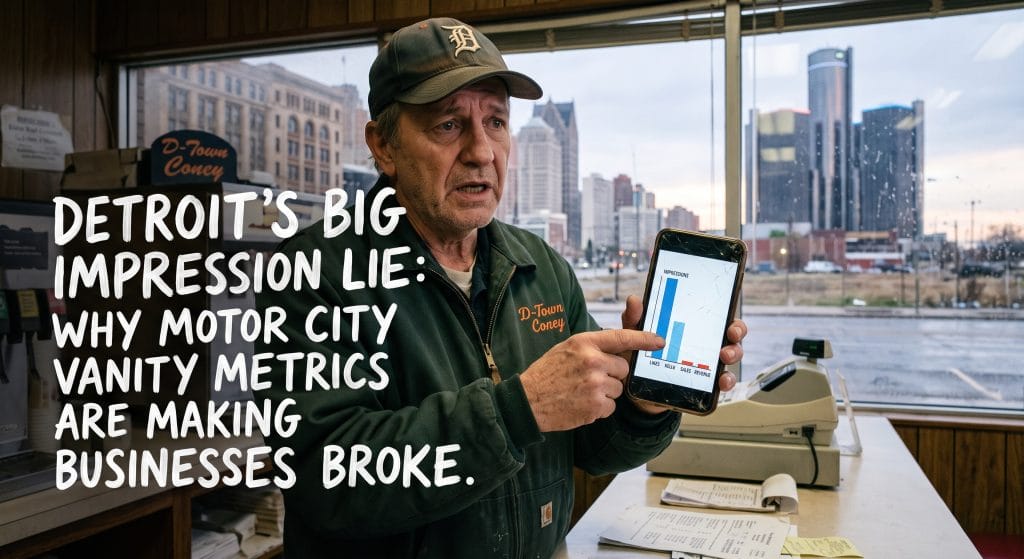
To see why standard digital marketing breaks down, look at Detroit. The city built its reputation on real output: horsepower, assembly line efficiency, and physical inventory. But when local dealerships, suppliers, and service firms moved online, many fell for vanity metrics.
Agencies handed Michigan business leaders reports boasting millions of impressions and high click-through rates. Meanwhile, showroom floors stayed quiet and margins shrank.
An impression is not a customer. Standard platforms count an impression the second a fraction of an ad loads on a screen, even if it sits at the bottom of a page, gets scrolled past in a fraction of a second, or gets loaded by a bot. Detroit businesses were paying thousands for billboards in empty alleys.
To build an ad campaign that drives revenue, companies need to drop vanity counts and focus on metrics tied to real outcomes. Cost Per Verified Visit tracks whether someone who saw an ad walked into a store or showroom. Cost Per Action measures real conversions like form submissions, calls, or sales. Cost Per Qualified Lead cuts out bot traffic to count actual consumer interest. Household Conversion Rate tracks how ad exposures across household devices lead to a final purchase.
Growth means moving past high impression counts and using targeting that turns digital attention into foot traffic and revenue.
Beyond search and social walls
Relying entirely on closed platforms like search engines or social feeds means trading control for convenience. Ad costs on major networks shift on platform auctions, while search engine bidding wars push keyword prices past profitability.
Consumer habits have shifted past static feeds and search bars anyway. People spend hours every day streaming shows, listening to podcasts on commutes, reading trade sites, and using mobile apps.
Full Force Ads skips social feeds and standard Google search networks. Instead, the platform connects advertisers to supply-side exchanges that cover over 95% of the web and mobile ecosystem. This programmatic approach lets brands meet buyers wherever they read, watch, or listen without relying on a single network's algorithm.
Full Force Ads media channels
Reaching modern buyers takes a presence across multiple media formats. Through Full Force Ads Advertising Solutions, companies can run campaigns across six core channels from one dashboard.
Streaming TV (Connected TV / CTV)
Streaming TV brings the impact of traditional TV into digital spaces. Brands can run unskippable ads on platforms like Hulu, Roku, Fire TV, Peacock, and YouTube TV. Unlike linear broadcast TV, CTV lets companies target specific households by location, income, purchase history, and lifestyle interests so money is not wasted on irrelevant households.
Digital video
Video grabs attention through sight, sound, and motion. Full Force Ads places video assets across high-traffic websites and mobile apps. Pre-roll plays before selected video content, while mid-roll runs during longer streaming clips. Outstream video expands inside article text as users scroll down the page, taking up screen space without blocking the reader.
Digital audio
Audio ads connect during screen-free moments like driving, working out, or doing chores. By running non-skippable audio spots on Spotify, Pandora, digital radio, and podcasts, brands reach listeners without interruptions.
Mobile advertising
The average adult spends hours every day on a phone. Full Force Ads runs mobile campaigns inside smartphone apps and mobile browsers. Combining mobile placements with location data lets brands trigger ads when a user is near a specific store or venue.
Display advertising
Display banners provide steady reach across news portals, trade publications, and niche websites. Display ads keep brand visibility high and serve as the base for cross-channel retargeting.
Native advertising
Native ads match the design, font, and layout of the publisher site. By fitting into news feeds and article streams, native ads avoid standard ad fatigue, leading to higher engagement and longer reading times.
Targeting solutions: precision over proximity
Running ads on good channels is only half the work. To drive sales, ads have to reach people who actually need the product or service. Full Force Ads adds targeted data layers to every campaign format.
                     +---------------------------------------+
                     |    FULL FORCE ADS MEDIA CHANNELS      |
                     |  CTV | Video | Audio | Display | Mobile|
                     +---------------------------------------+
                                         |
                                         v
                     +---------------------------------------+
                     |     PRECISION TARGETING LAYERS        |
                     +---------------------------------------+
                                         |
     +-------------------+---------------+---------------+-------------------+
     |                   |               |               |                   |
     v                   v               v               v                   v
+-----------+     +-------------+  +-----------+  +--------------+  +-----------------+
| Geofence  |     | Addressable |  | Site      |  | Search       |  | Contextual      |
| Precision |     | Household   |  | Retarget  |  | Intent       |  | Context Match   |
+-----------+     +-------------+  +-----------+  +--------------+  +-----------------+
Geofencing technology
Broad radial zones and ZIP codes waste budget on empty space or irrelevant homes. Full Force Ads uses spatial mapping to draw precise boundaries around specific physical buildings.
Advertisers can trace fences around competitor storefronts, auto dealerships, convention centers, trade shows, commercial complexes, municipal buildings, or universities.
When someone enters these boundaries with a smartphone, their anonymized device ID is captured. These users can then receive ads while on site and for up to 30 days after leaving.
Addressable household targeting
Addressable ads link offline customer data with online ad delivery. Companies can upload a physical mailing list like customer databases, prospect lists, or direct-mail targets into the system.
The platform matches those exact street addresses against location data to find connected devices in the home. Advertisers then run campaign messaging across every laptop, phone, tablet, and TV tied to that address.
Site retargeting
Fewer than 3% of first-time website visitors buy or convert on their first visit. Site retargeting catches the other 97%. By placing a pixel on your website, Full Force Ads identifies non-converting visitors and serves follow-up display, video, or native ads as those users browse other sites.
Search retargeting
Search retargeting targets users based on recent keyword searches across the web before they ever visit your site. If a prospect searches for terms related to your industry, the platform flags that user as an active buyer and serves ads across their personal media channels.
Contextual targeting
Contextual targeting places ads alongside relevant article content. Instead of relying on individual user profile data, contextual engines evaluate the text, topic, and tone of web pages in real time. For instance, an ad for a commercial roofing contractor can run inside articles discussing roof repair or storm damage.
Matching marketing goals with campaign execution
No single channel works best on its own. Successful campaigns mix specific channels with data layers based on primary business goals.
| Primary business goal | Recommended channel mix | Strategic focus |
| Local brand awareness | Geofencing + Display + Mobile | Capture foot traffic in tight geographic radiuses and reinforce local presence. |
| Conquesting competitors | Geofencing + Addressable | Target physical locations of rival businesses and serve direct offers to visitors. |
| Enterprise brand building | Streaming TV + Video + Audio | Maximize visual and auditory recall across household screens. |
| Driving website traffic | Display + Native + Search Retargeting | Intercept high-intent users actively researching relevant industry terms. |
| Re-engaging past visitors | Site Retargeting + Display + Video | Re-engage warm leads who left your website without taking action. |
| Customer list activation | Addressable + Streaming TV + Display | Turn direct-mail files or CRM records into digital ad targets across household devices. |
Full Force Ads vs. traditional programmatic vendors
Many traditional vendors force growing companies into high minimums and vague reporting. Full Force Ads provides direct access, flexibility, and foot-traffic attribution.
| Feature / capability | Typical programmatic vendor | Full Force Ads |
| Monthly budget minimums | $10,000+ per month minimum spend required | Flexible budgets built for businesses of all sizes. |
| Geographic precision | Radial miles or broad ZIP-code boundaries | Building-level mapping with fences shaped to exact building plans. |
| Performance reporting | Monthly static PDF reports with basic metrics | Transparent reporting with weekly breakdowns detailing site delivery and physical conversions. |
| Vendor management | Multiple disjointed platforms and points of contact | Unified platform with strategy, execution, and analytics under one roof. |
| Campaign onboarding | 4 to 6 weeks for account setup | Fast launch with campaigns live in 5 to 7 business days. |
| Contract terms | Mandatory 6 to 12-month lock-in agreements | Month-to-month contracts without long-term lock-ins. |
The Full Force Ads workflow: strategy to execution
Launching a multi-channel programmatic campaign follows four steps:
Self-serve control via FullForceAds.app
While many brands want a managed service, in-house marketing teams and agencies often prefer direct control over campaign operations.
For teams wanting direct access, FullForceAds.app serves as a self-serve programmatic portal.
Through FullForceAds.app, internal teams can:
Whether used as a managed service or operated through FullForceAds.app, the platform provides access to enterprise ad tech without extra agency bloat.
Taking action
Relying only on search ads and social feeds leaves businesses exposed to rising ad costs and shrinking returns. Growth requires diversifying media channels, using location-based targeting, and measuring campaigns against real-world actions.
By combining CTV, video, audio, display, mobile, and native ad channels with addressable and geofencing technology, Full Force Ads offers a programmatic framework built for scale.
To see how custom programmatic advertising can update your acquisition strategy, check out the Full Force Ads Advertising Solutions suite and schedule a demo today.