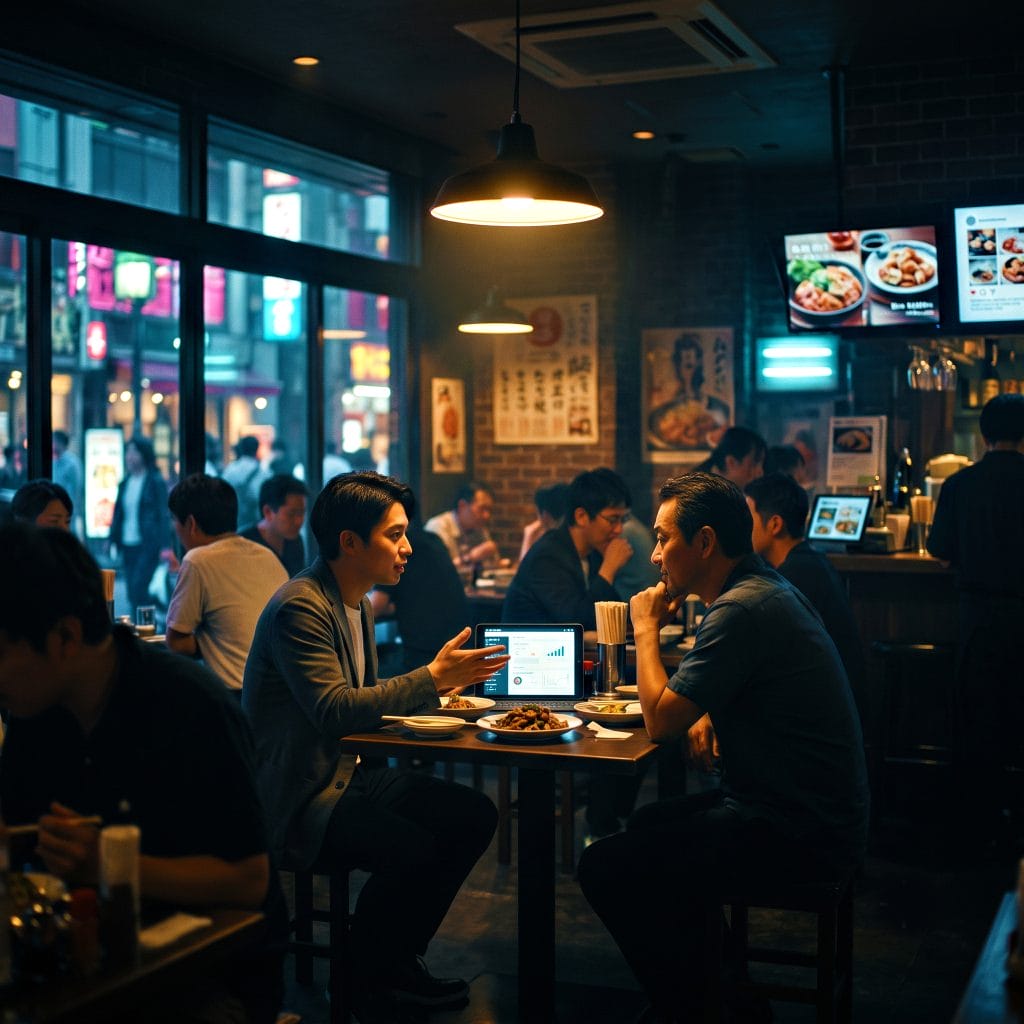
Traditional restaurant marketing doesn't work in cities like New York, Los Angeles, or Chicago. Billboards, generic social boosts, and mailers with no targeting behind them produce low returns, and it's not hard to see why: a single city block can have twenty restaurants competing for the same diner. Winning that diner means showing up right as they're deciding where to eat, not sometime before or after.
Programmatic advertising uses real-time bidding to place ads in front of specific diners at that decision point. Full Force Ads builds the multi-channel infrastructure that turns those ad impressions into people walking through the door.
City dwellers move between a lot of digital surfaces in a single day: podcasts on the commute, desktop displays at work, connected TV apps like Hulu or Roku at night. A restaurant that only shows up on one of those screens is missing the other two.
Programmatic streaming lets restaurants buy unskippable ad inventory on platforms like Fire TV and Roku. Instead of paying for a citywide broadcast spot, a restaurant can target households within three miles of its location, and video ads on local lifestyle sites back up that same message. Audio ads pick up the moments video and display can't reach, getting in front of people who are driving, on the subway, or at the gym. A fast-casual chain might run an audio spot at 11:15 AM aimed at office workers listening to focus playlists, landing in front of the lunch crowd before the rush starts.
Mobile, display, and native each do their own job. Mobile ads reach people while they're out and about, which drives same-day foot traffic. Display banners handle the retargeting work that keeps a restaurant's dishes visible after someone's already shown interest. Native ads are styled to match local food publications, so they read less like an ad and more like content, which tends to improve click-through.
Age and job title don't tell you where someone is eating tonight. Behavior does: where people go, what they search, what they click.
Geofencing draws a virtual boundary around a physical location and captures the device IDs of people who enter it. That opens the door to conquesting: a sushi restaurant in San Francisco can geofence competitor restaurants, hotels, or convention centers, then serve ads to everyone who walked through those boundaries over the following days. Addressable targeting works from the other direction. Restaurants upload a list of physical addresses, say, from a loyalty program or a corporate catering client list, and match those addresses to specific IPs and home devices, so a tailored offer only reaches the households it's meant for.
Retargeting closes the gaps where interest fizzled out. Someone might search "outdoor patios near me" on a lunch break, look at a menu, then get pulled away before booking. Search retargeting serves ads to people who recently typed in relevant queries, without the cost of bidding on search results directly. Site retargeting follows people who left a menu or reservation page without converting, showing them the dishes they were just looking at as they browse elsewhere. Contextual targeting adds another layer by reading the text of a page in real time, so if someone in Seattle is reading an article about local dining trends, the restaurant's ad runs inside that article.
| Goal | Channels | Audience | What it does |
|---|---|---|---|
| Local brand awareness | Mobile, display, geofencing | Broad radius, local foot traffic | Keeps the brand visible in the neighborhood |
| Competitive conquest | Geofencing, addressable, mobile | Visitors to rival restaurants | Presents an alternative right when someone's already out shopping around |
| Enterprise brand building | Streaming TV, video, audio | Higher-income, premium lifestyle audiences | Builds positioning with video and audio |
| Website and menu traffic | Display, native, search retargeting | People actively searching food-related terms | Sends existing demand to the menu page |
| Re-engaging lost traffic | Site retargeting, display, video | People who left the reservation or menu page | Brings warm leads back |
| Monetizing existing lists | Addressable, streaming TV, display | CRM records, past catering clients | Nurtures relationships that already exist |
Running campaigns across disconnected platforms creates three recurring problems.
The first is ad fatigue. When channels don't talk to each other, a diner can see the same ad twenty times in three hours across different apps and devices, which is more likely to annoy them than convert them. The second is broken attribution. Say a customer sees a TV ad Tuesday, hears an audio ad Wednesday, and clicks a display banner Thursday before booking; a disconnected system credits only the banner and misses the two touchpoints that actually moved them. The third is wasted time. Managing separate contracts, payment terms, and dashboards for each channel eats hours that could go toward the menu or the guest experience instead.
Full Force Ads runs streaming TV, video, audio, mobile, and display from one account, so restaurant groups aren't juggling five vendors to run one campaign.
Geofencing, addressable matching, and search retargeting are built into the platform, and inventory gets purchased only when a consumer meets specific intent criteria. Reporting shows ad spend, domain performance, and results. There's no long-term contract to sign and no large upfront commitment to make, and campaigns typically go live within five to seven business days of approval.
It starts with a discovery call, where the team looks at your brand's current footprint, regional customer acquisition costs, average check size, and growth goals. From there, Full Force Ads puts together a custom recommendation: a channel mix and targeting plan based on your specific market. Once you approve the strategy and creative, the campaign launches across the selected channels within five to seven business days. After that, the platform shifts budget away from underperforming placements toward whatever's actually driving results, with weekly reports showing what changed and why.
Most restaurant marketing still runs on broadcast-era targeting: same message, same audience, regardless of who's actually walking past the block that day. Programmatic changes that math. If you want to see what the channel mix and targeting plan would look like for your market, a discovery call is the place to start.