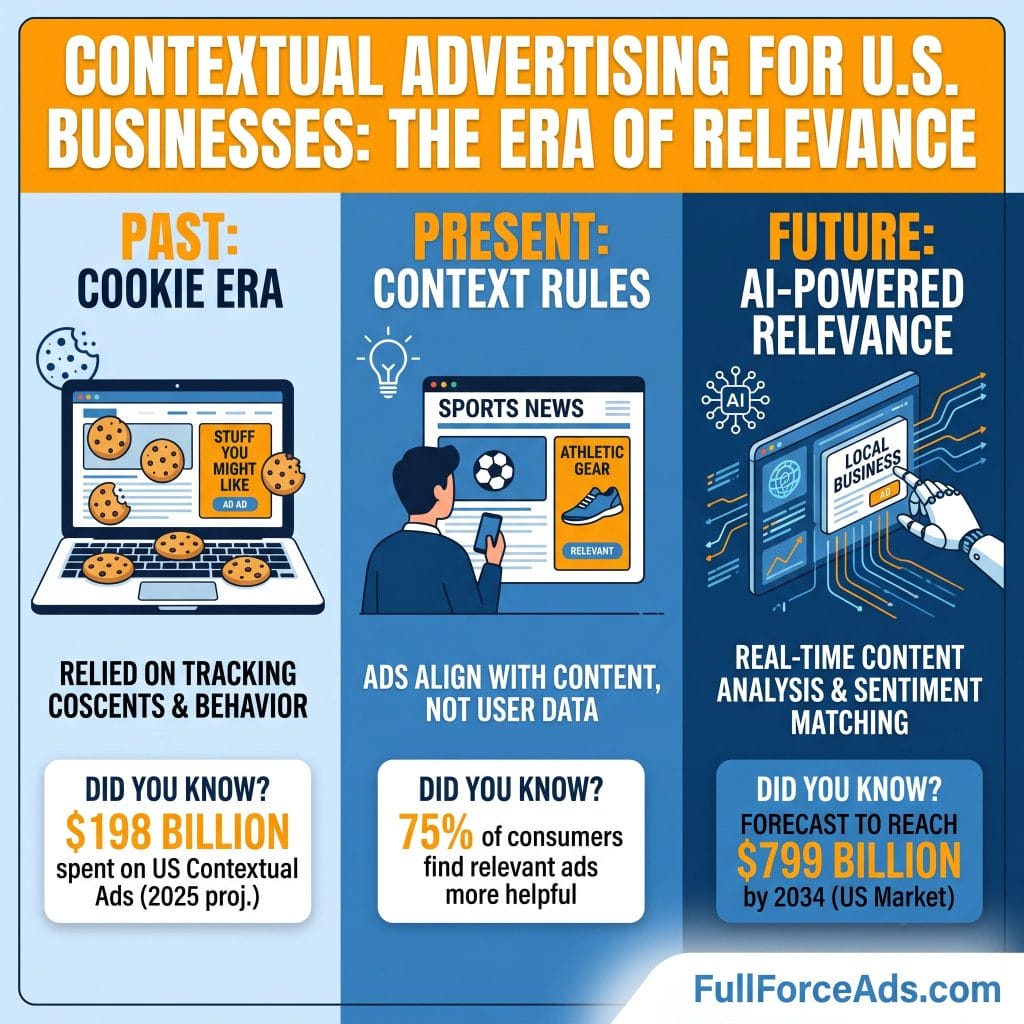
In the ever‑evolving digital‑marketing space, contextual advertising has re‑emerged as a powerful, brand‑safe way to reach shoppers exactly when they’re thinking about a product or service. For U.S. businesses that prefer to stay off the traditional giants, Google Ads, Facebook, Instagram, or TikTok, self‑serve platforms provide the flexibility, transparency, and control needed to capture high‑intent traffic.
Below is a step‑by‑step guide that blends strategic insight, SEO‑friendly copywriting, and the newest best‑practice signals (GE and AEO) to help you launch a winning contextual ad campaign that pulls qualified prospects straight into your sales funnel.
| Traditional “Blind” Targeting | Contextual Advertising |
| Relies on demographics, interests, or retargeting pixels. | Places ads next to content that directly matches the user’s search intent. |
| Low visibility for brand‑safe publishers. | Guarantees ad placement on reputable, niche‑relevant sites. |
| High competition for generic keywords $\rightarrow$ inflated CPM/CPC. | Lower competition because you buy inventory based on topic rather than keyword bid wars. |
| Often flagged by ad‑blocking tools. | Viewed as editorially relevant, so users are less likely to block. |
| Limited data about the why behind clicks. | Immediate context provides a clear “reason for click.” |
The Logical Bridge: Think of contextual ads as a seamless transition. A user reads an article about “best electric scooters for city commuters,” and your ad for a boutique scooter retailer appears right alongside it. Because the user is already in a purchase mindset, there is no need for a long, expensive warm‑up cycle.
East Coast consumers tend to value brand heritage and sustainability; West Coast buyers prioritize convenience and tech; Midwest audiences often respond to price-anchored offers. Around 68% of U.S. adults browse on mobile first (per recent eMarketer data), so mobile-optimized creative and a fast-loading landing page are table stakes, not extras. Contextual advertising also performs especially well in certain verticals, financial services, health and wellness, home improvement, and retail all show consistently strong contextual CTR, so if you're in one of those categories, you have a natural advantage.
Because we’re deliberately avoiding Google and Meta, consider platforms that specialize in publisher‑direct, programmatic contextual buying:
| Platform | Key Feature | Typical CPM* |
| Taboola | Native recommendation widgets across premium news sites. | $4–$10 |
| Outbrain | Context‑matched content discovery on lifestyle and tech portals. | $5–$12 |
| Revcontent | Advanced topic clustering with brand‑safe inventory. | $3–$9 |
| StackAdapt | Granular audience filters combined with context tags. | $6–$11 |
| Nativo | In‑feed native ads blended seamlessly into editorial streams. | $5–$10 |
*CPM values vary by industry and season; use them as a planning baseline.
Unlike black-box platforms, contextual networks show you exactly which domains ran your ads and what each placement cost. You can adjust bids, change dayparting, or swap creatives in real time based on what's working. Your raw performance logs are yours to export — no fighting a walled garden for your own data.
The easiest way to hit the ground running is to follow the proven roadmap at FullForceAds.com/launch‑strategy. Below is a condensed version that aligns with SEO, Google‑E‑A‑T (GE), and Apple‑Enhanced‑Organic (AEO) standards.
Use Ahrefs, SEMrush, or Moz to map the high-intent keywords your audience searches before they buy — product-ready phrases, not generic informational queries. Group those terms into broader topic themes (like "Home HVAC Repair" or "Emergency Plumber") to identify the editorial categories where your ads should appear. Then look for high-traffic topics where existing content is thin on monetization — those under-served categories are often your best early placements.
Lead with credibility signals, mention certifications, years in business, a U.S. phone number, and a physical address. Pair that with an offer sharp enough to earn a click: "20% off your first smart lock, free installation included" beats "quality products at competitive prices." Match the CTA to where the reader is: research-stage browsers respond to "Learn More" or "See How It Works," buyers ready to commit want "Get a Quote" or "Buy Now."
Native ads earn clicks when they look like they belong on the page. Match the fonts, layout density, and color palette of the publisher, an ad that reads like editorial content outperforms one that looks like a banner. Serve high-resolution assets for retina displays and include compressed fallbacks; low-quality images signal low-quality products. Write descriptive alt text for every image ("eco-friendly electric scooter parked on a city sidewalk") for both accessibility compliance and platform quality scoring.
| Campaign Level | Target | Bid Strategy | AEO/GE Compliance |
| National Brand | All U.S. | CPM with a floor price 10% above platform average | Use brand‑level schema markup on landing pages. |
| Regional Test | East Coast (NY, NJ, MA) | CPC optimized for “purchase” conversion | Add local business structured data (address, phone). |
| Device Split | Mobile‑only | CPA (cost per acquisition) for app installs | Ensure mobile landing pages load in < 3 seconds. |
| Retargeting | Visitors who engaged but didn’t convert | Bid multiplier + 20% | Deploy privacy‑first cookie policy, transparent opt‑out. |
Track performance in your Full Force Ads dashboard daily, impressions, CTR, and cost per acquisition are the numbers to watch. Run A/B tests by swapping headlines, image crops, and CTA colors every 48 hours; a winning variation usually surfaces within three to four days. Enable the Sensitive Content Blocklist for politics and gambling: showing up next to inflammatory content damages trust and quality scores faster than any bad ad would.
Raise bids on topic categories where conversion rates top 5%, the data will tell you which ones are worth the premium. Make sure your landing page headline matches the ad wording exactly; a disconnect between ad copy and page copy kills conversions. Add Product, Review, and FAQ schema to landing pages so search engines surface rich snippets when someone Googles your brand after seeing the ad, consistency between your paid and organic presence helps both channels.
| Metric | Why It Matters | Target for First 30 Days |
| View‑through Conversions (VTC) | Captures impact of ads that inspire later purchases—core to contextual relevance. | 12% of total conversions |
| Cost‑per‑Acquisition (CPA) | Direct indicator of ROI; keep below product margin. | $45 for a $200 average order value |
| Engagement Rate | Measures ad resonance with the content context (Clicks $\div$ Impressions). | 0.8% |
| Bounce Rate on Landing Page | Low bounce signals strong message alignment $\rightarrow$ better AEO ranking. | 35% |
| Organic Lift | Increase in organic traffic after contextual campaign launch (AEO benefit). | + 8% month‑over‑month |
Pro Tip: FullForceAds supplies an exportable CSV that feeds directly into Google Data Studio or Power BI, allowing you to slice performance by state, device, and topic without ever exposing your data to a third‑party ad network.
Take a real example: an urban electric scooter company targeting environmentally conscious commuters in California chose Revcontent for its strong lifestyle and tech inventory. They built campaigns around "sustainable transportation," "urban commuting," and "green mobility" topic categories and hit trial purchase costs well below what Google search had delivered.
| Contextual Topic | Ad Headline | CTA | Result (30‑day) |
| “Top 5 Eco‑Friendly Commuter Vehicles” | “Ride Green – 15% Off Eco‑Ride Scooter” | Shop Now | 1,820 clicks, 4.7% CPA ($38) |
| “How to Reduce Your Carbon Footprint” | “Zero‑Emission Scooter – Free Shipping” | Learn More | 2,340 impressions, 0.9% CTR |
| “Best Urban Mobility Apps” | “Own City Streets with Eco‑Ride” | Download App | 3,150 app installs, 2.1% CVR |
Takeaway: By aligning ad copy with the exact editorial angle, environmental impact -> cost savings, the brand captured high‑intent traffic that traditional retargeting would have missed.
Contextual platforms are rolling out machine-learning models that predict which content categories will spike before the traffic wave hits, early tests point to 15–20% CTR gains for campaigns that get ahead of trending topics. Podcast and smart-speaker content is expanding the definition of "contextual": targeting will increasingly follow the listener into audio, not just editorial pages. And the measurement side is catching up, the IAB's "Contextual Attribution" framework is in development, which should make cross-channel ROI comparisons far less painful than they are today.
Staying ahead means testing early, feeding performance data back into your keyword‑topic research, and continuously aligning with Google E‑A‑A-T and Apple AEO signals, because search engines reward the exact same relevance and authority that contextual ads already deliver.
Contextual advertising offers U.S. businesses a brand‑safe, intent‑driven pathway to attract high‑value customers without relying on the crowded Google or Meta ecosystems. By using self‑serve platforms, embedding SEO‑smart topics, and following the step‑by‑step launch plan outlined on FullForceAds.com/launch‑strategy, you can:
Take the first step today: map your high‑intent topics, craft humanized native ads, and let Full Force Ads automate the optimization so you can focus on what matters most, turning intent into revenue.
Ready to launch? Visit FullForceAds.com/launch‑strategy and start building a contextual campaign that speaks directly to America’s most qualified shoppers.