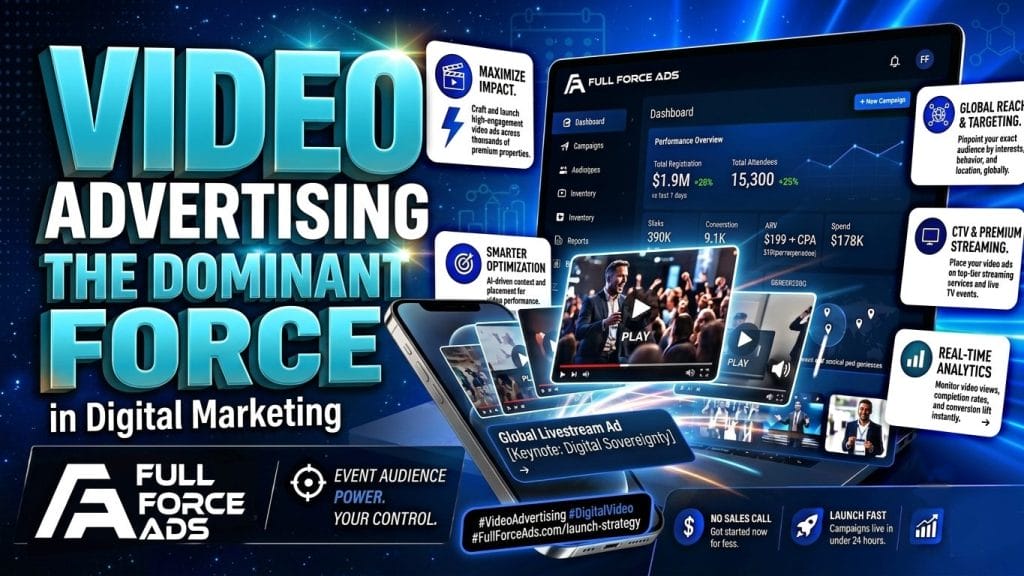
Video advertising has become the undisputed heavyweight of digital marketing. From short-form clips on TikTok to pre-roll ads on YouTube, from connected TV commercials to interactive shoppable videos, video advertising commands attention, drives engagement, and delivers results across every stage of the marketing funnel. As consumers increasingly favor video content over text and static images, advertisers who master video gain a notable competitive advantage in capturing and holding audience attention.
The growth of video advertising has been nothing short of extraordinary. Several converging trends have propelled video to the top of the digital advertising hierarchy.
Consumer Behavior Shifts: People are watching more video content than ever before. The average person watches over 100 minutes of online video per day. This consumption habits shift has naturally drawn advertising dollars toward video formats that meet consumers where they are already engaged.
Bandwidth and Technology: The widespread availability of high-speed internet, 4G/5G mobile networks, and powerful mobile devices has made video consumption seamless. Buffering and loading delays — once major barriers to video advertising — have largely been eliminated.
Social Media Video: Platforms like TikTok, Instagram Reels, and YouTube Shorts have normalized short-form video consumption and created massive audiences for video advertising. The vertical, full-screen, sound-on video experience has become the default content format for hundreds of millions of users.
Connected TV: The shift from traditional broadcast TV to streaming services has brought video advertising to the living room. Connected TV (CTV) advertising combines the impact of television with the targeting and measurement capabilities of digital advertising.
Declining Attention Spans: In an era of information overload, video captures and holds attention more effectively than any other format. A well-crafted video can communicate a brand story, demonstrate a product, and create an emotional connection in 15-30 seconds.
Video advertising encompasses a wide range of formats, each suited to different platforms, objectives, and audiences.
In-Stream Video Ads: These are the traditional video ads that play before, during, or after video content. Pre-roll ads play before the content, mid-roll ads play during longer content, and post-roll ads play after. YouTube is the largest platform for in-stream video advertising.
Out-Stream Video Ads: Out-stream video ads appear outside of video players — typically within article content or social media feeds. They auto-play as the user scrolls into view, providing a video experience without requiring the user to be watching video content.
Short-Form Video Ads: Short-form ads (6-60 seconds) dominate social media platforms. Designed for quick consumption in feeds, these ads hook viewers in the first few seconds and deliver a complete message before the user scrolls away.
Long-Form Video Ads: Longer video ads (2-5 minutes) are used for storytelling, product demonstrations, and brand-building. Connected TV and YouTube are common platforms for long-form video advertising.
Interactive Video Ads: Interactive ads allow users to engage with the video content — clicking on hotspots, answering questions, choosing story paths, or shopping products directly within the video. Interactive ads dramatically increase engagement and time spent with the brand.
Shoppable Video Ads: Shoppable videos integrate e-commerce functionality directly into the video experience. Viewers can tap on products featured in the video to learn more and make purchases without leaving the video player.
Connected TV (CTV) Ads: CTV ads are served through streaming TV platforms like Hulu, Roku, Peacock, and YouTube TV. They offer the cinematic impact of television with the targeting and measurement of digital advertising.
Over-the-Top (OTT) Ads: OTT ads are similar to CTV but are delivered through standalone streaming devices and apps. They reach cord-cutters who have abandoned traditional cable and satellite TV.
The video advertising ecosystem involves multiple players working together to create, distribute, and measure video ad campaigns.
Video Ad Networks: Ad networks specializing in video aggregate inventory from multiple publishers, making it easier for advertisers to reach large video audiences. Google Ad Manager is the largest video ad network.
Video DSPs: Demand-side platforms with video-specific capabilities allow advertisers to programmatically buy video ad inventory across multiple exchanges and publishers. They provide targeting, bidding, and optimization tools for video campaigns.
Video SSPs: Supply-side platforms help video publishers (websites, apps, CTV platforms) monetize their video inventory by connecting with multiple demand sources and maximizing revenue through automated auctions.
Creative Production Tools: A growing ecosystem of tools helps advertisers create video content at scale. From professional production platforms to AI-powered video creation tools, these enable advertisers to produce the video creative their campaigns demand.
Verification Tools: Video-specific verification tools ensure that video ads are served to real humans, appear in brand-safe environments, are actually viewable (not hidden below the fold), and complete playing.
Creating effective video advertising requires attention to the unique characteristics of the video medium and the platforms where it appears.
Hook Viewers Immediately: The first 3-5 seconds of a video ad are critical. With most platforms allowing users to skip after a few seconds, the opening must be compelling enough to earn continued attention. Start with motion, a provocative question, a bold statement, or an emotional moment.
Design for Sound-Off: Many social media users watch video with sound off. Ensure that video ads communicate effectively without audio by using captions, text overlays, and visual storytelling. Always test your ads with the sound off.
Optimize for Mobile: The majority of video consumption happens on mobile devices. Design video ads for vertical or square formats, use large readable text, and ensure that key visual elements are visible on small screens.
Keep It Concise: Shorter ads generally outperform longer ones, especially for awareness objectives. For social media, 6-15 seconds is often optimal. For connected TV, 15-30 seconds is standard. Reserve longer formats for audiences who have opted into watching.
Tell a Story: The most memorable video ads tell a story rather than making a direct sales pitch. Stories create emotional connections that drive brand recall and loyalty. Even a 15-second ad can tell a complete story with a beginning, middle, and end.
Include a Clear Call to Action: Every video ad should have a clear call to action that tells viewers what to do next. Whether it is "Shop Now," "Learn More," or "Follow Us," the CTA should be memorable and easy to act on.
Test Multiple Versions: Test different video lengths, opening hooks, creative approaches, and calls to action to identify what performs best. Even small changes — a different headline or a different opening shot — can significantly impact performance.
Match Format to Objective: Different video formats serve different objectives. Short, punchy ads work best for awareness. Longer, more detailed ads work better for consideration and conversion. Interactive ads drive engagement. Choose the format that aligns with your campaign goals.
Video advertising requires specific metrics that go beyond traditional display advertising measurement.
Video Views: The most basic metric, tracking how many times the video was played. However, not all views are equal — a view where the user watched 2 seconds is very different from one where they watched to completion.
View-Through Rate (VTR): The percentage of impressions that resulted in a video view. VTR measures how effectively the video creative captures attention.
Completion Rate: The percentage of viewers who watched the entire video ad. High completion rates indicate that the video content is engaging enough to hold attention throughout.
Cost Per View (CPV): The average cost of each video view. CPV is a key efficiency metric for video campaigns, particularly on YouTube where bidding is often on a CPV basis.
Video Engagement: Beyond views, engagement metrics track how viewers interact with the video — likes, comments, shares, clicks on interactive elements, and CTA clicks.
Brand Lift: Brand lift studies measure the impact of video advertising on brand awareness, ad recall, consideration, and purchase intent. These studies compare the attitudes of exposed viewers to a control group.
Attention Metrics: Advanced measurement tools track attention metrics like active viewing time, screen visibility, and audio status to provide a more subtle picture of how viewers actually engage with video ads.
Attribution: Video advertising attribution tracks the role of video views and clicks in driving downstream conversions. Multi-touch attribution models help credit video for its contribution to the customer journey.
Video advertising faces several challenges that advertisers must address.
Production Costs: Quality video production is more expensive than creating static display ads. However, the decline in production costs — driven by better tools, templates, and AI — is making video advertising more accessible to smaller advertisers.
Ad Blocking: Video ads, particularly pre-roll ads, are frequent targets of ad blockers. Advertisers must create video content that is compelling enough to earn views despite ad-blocking technology.
Viewability Concerns: Not all video ad impressions are actually visible. Ads may play below the fold, on background tabs, or in muted autoplay scenarios where the user never actually sees them. Viewability measurement and optimization are essential.
Platform Fragmentation: The diversity of video platforms — each with its own formats, specifications, and best practices — creates complexity. Advertisers must adjust their video creative for each platform, multiplying production and management effort.
Ad Skipping: Most video platforms allow users to skip ads after a few seconds. Creating ads that earn voluntary viewing beyond the skip point is a notable creative challenge.
Measurement Consistency: Different platforms measure video metrics differently. A "view" on YouTube (30 seconds) is different from a "view" on Facebook (3 seconds). Comparing performance across platforms requires careful normalization.
Video advertising is evolving rapidly, driven by technological innovation and changing consumer preferences.
AI-Generated Video: Artificial intelligence is making it possible to generate video ad creative at scale, including personalized videos tailored to individual viewers. AI can create variations of a base video, optimize elements in real time, and even generate entirely new video content from text prompts.
Interactive and Shoppable Video: The future of video advertising is interactive. Viewers will be able to click on products within videos, configure options, make purchases, and engage with immersive brand experiences — all without leaving the video.
Connected TV Dominance: As more households cut the cord and switch to streaming, connected TV advertising will continue to grow. CTV offers the best of both worlds — the impact of television and the precision of digital advertising.
Personalized Video: Advances in data and creative technology will enable truly personalized video advertising — ads that dynamically insert the viewer's name, show products they have viewed, reference their location, or reflect their specific interests.
Live Video Advertising: Live streaming creates opportunities for real-time video advertising. Brands can sponsor live streams, integrate products into live content, and interact with viewers during live events.
Virtual and Augmented Reality: VR and AR video advertising will create immersive brand experiences that go beyond traditional video. Viewers can virtually explore products, visit branded environments, and interact with 3D content.
Video advertising has earned its position as the dominant format in digital marketing by delivering unmatched engagement, emotional impact, and results. From six-second bumper ads to immersive connected TV experiences, video advertising offers formats and platforms to achieve virtually any marketing objective. As technology continues to evolve — with AI-powered creation, interactive experiences, and personalized content — the power and precision of video advertising will only grow. Brands that invest in video advertising excellence — creating compelling content, optimizing for each platform, and measuring what matters — will be best positioned to capture attention and drive results in an increasingly video-driven world.