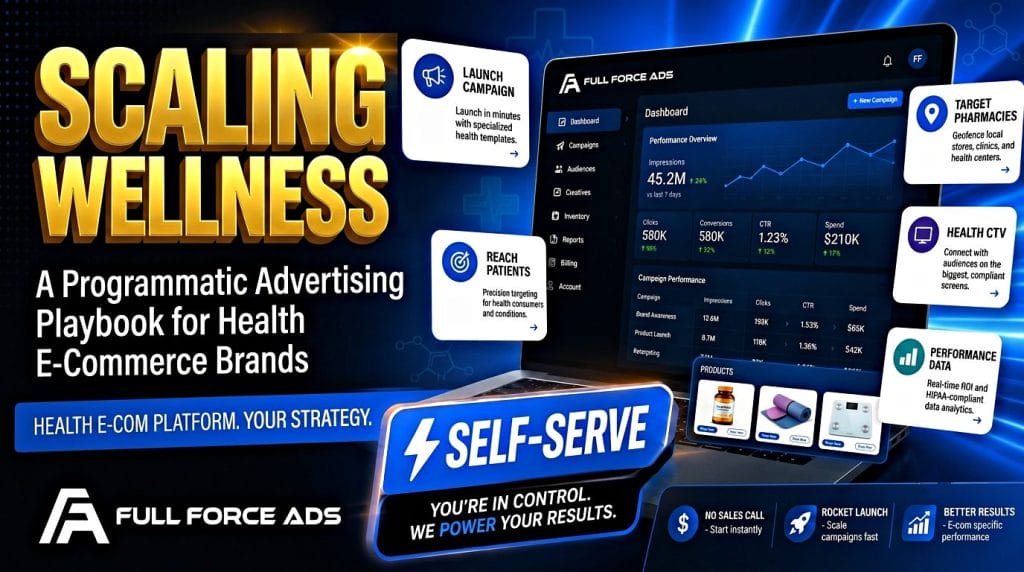
Selling supplements, clean skincare, or health tech online is a different animal from general e-commerce. Buyers in this space do their homework. They read labels, compare third-party test results, and scroll through reviews before they spend a dollar. They are not impulse shoppers; they are investing in their health.
Most of the time, the product itself is not the problem. The problem is getting it in front of the right people. Social media feeds are crowded, search ads keep getting more expensive, and privacy changes have made single-platform strategies unreliable. If your ad budget lives on one channel, you are exposed every time that channel changes its rules.
Programmatic advertising solves this by placing ads across multiple channels, all tied to real intent signals rather than guesswork. Here is how it works for health and wellness brands specifically.
When someone buys a wellness product, they are making a personal decision about their body. That raises the bar for trust. Your advertising has to clear two hurdles at once: it needs to feel credible and it needs to feel relevant to the buyer's specific situation.
Years of exaggerated health claims have made online shoppers cautious, and rightfully so. Your ads need to counter that skepticism head-on. Lead with clinical trials, doctor endorsements, and certifications like USDA Organic or Non-GMO Project Verified. Show real customer testimonials rather than generic star ratings.
Pair that credibility with a clear before-and-after story. If you sell an energy supplement, show the problem (afternoon crashes, coffee jitters) and the result (steady focus without the spike). And lower the risk of trying something new by putting your money-back guarantee, ingredient list, and cancellation policy front and center.
Your customers are not sitting in one place. They watch streaming TV after dinner, listen to podcasts during their morning workout, read health articles on their phone at lunch, and scroll through apps on their commute. A single-channel strategy misses most of those moments. Programmatic lets you show up across all of them from one campaign.
Streaming TV puts your video ads on platforms like Hulu, Roku, and Fire TV. You get the visual impact of a television commercial with the targeting precision of digital. That means you can reach health-conscious households specifically, without paying for the broad waste that comes with traditional broadcast.
Pre-roll and mid-roll video on premium publisher sites catch people when their attention is already focused. This format works well for explaining things that need a few seconds of context, like how a nutrient gets absorbed or what makes a fitness tracker different from the competition.
Wellness audiences are heavy podcast and playlist listeners. Audio ads on Spotify and Pandora reach them during screen-free moments: morning runs, commutes, cooking dinner. These are times when people are receptive to a message because they are not visually overwhelmed.
Native ads blend into the editorial look of the site they appear on. When your ad sits next to a health article or wellness blog post, it reaches someone already reading about the topic you sell into. That context does a lot of the persuasion work for you.
Banner ads and in-app placements are the workhorse of retargeting. They keep your brand visible as potential buyers browse other websites and apps. The cost per impression is low, so they are effective at maintaining presence without burning through budget.
Programmatic targeting cuts out wasted impressions and focuses spend on people who are either actively shopping or match a specific profile. Here is how the main methods break down:
| Method | What it does |
| Contextual targeting | Places your ads alongside health and wellness content. |
| Search retargeting | Serves ads to people who recently searched for relevant terms. |
| Addressable matching | Matches your offline customer data to digital screens. |
| Building-level geofencing | Targets devices at specific physical locations. |
Programmatic geofencing draws a virtual boundary around a specific building, not just a zip code. For health e-commerce, that means you can target people attending a fitness expo, walking into a supplement store, or visiting a wellness clinic. Once their device enters that zone, they get added to an audience you can advertise to for days or weeks afterward.
Addressable targeting connects your offline data to digital ads. You upload first-party data (customer shipping addresses, email opt-ins, mailing lists) into a privacy-compliant system. From there, you can serve display, video, or streaming TV ads directly to those households.
Search retargeting picks up people based on the keywords they have typed into search engines (things like "best natural sleep aids") and serves them display or native ads as they browse other sites. It captures buying intent outside of the search results page itself.
Site retargeting brings back the visitors who left your store without buying. Most first-time visitors do not convert, so keeping your brand in front of them with tailored product ads or educational content gives you a second and third chance to close the sale.
Good creative in this space is specific. Avoid generic words like "healthy" or vague promises. Focus on concrete benefits and back them up with proof.
[ High-res imagery: authentic lifestyle or clear product shot ]
HEADLINE: The Cleanest Way to Sustain Daily Energy.
SUBHEAD: Zero artificial sugars. Third-party tested.
[ Shop Certified Clean -> ] (High-contrast button)
Problem-Agitation-Solution (PAS): Start with the pain point (afternoon energy crashes, coffee-induced anxiety), make the reader feel it (that jittery feeling wrecking your focus and your sleep), then present the fix (an organic adaptogenic blend that delivers steady clarity without a crash). End with proof: "Third-party verified clean."
The direct hook: "If you are tired of supplement labels packed with synthetic binders, artificial dyes, and proprietary blends, it is time to simplify your routine."
At some point, every growing brand faces this question. Both paths work, but they come with different trade-offs.
An internal team gives you direct control over every decision. The trade-off is cost and hiring difficulty. Programmatic campaigns need media buyers, data analysts, copywriters, and designers. You also need to meet platform spending minimums and manage vendor contracts, which adds overhead fast.
A partner like Full Force Ads handles media buying, creative production, and reporting in one workflow. You get access to building-level geofencing, premium streaming inventory, and transparent performance data without needing to hire a full team or meet high spend minimums.
A solid rollout follows a predictable sequence:
Stealing from competitors: Use building-level geofencing combined with addressable ads to reach people visiting competitor stores or specific retail locations.
Recovering abandoned carts: Pair site retargeting with video and native display to pull lost shoppers back to checkout.
Growing brand recognition: Run streaming TV spots alongside digital audio ads across top podcast networks.
If you want to stop guessing and start putting your ad budget to work, check out our Full Force Ads advertising solutions and set up a strategy call.
Stop relying on a single social platform. Build campaigns across streaming TV, native content, audio, and display so you are not at the mercy of one algorithm.
Use precise targeting (geofencing, search retargeting, addressable data matching) to make sure your budget reaches people who are actually in the market for what you sell.
Lead with credibility in every ad. Ingredient transparency, real testimonials, and verifiable results beat vague wellness promises every time.
Pick a deployment model that fits your team. Whether you run campaigns through a self-serve platform or work with a managed agency partner, the goal is the same: launch fast, measure everything, and adjust based on real data.