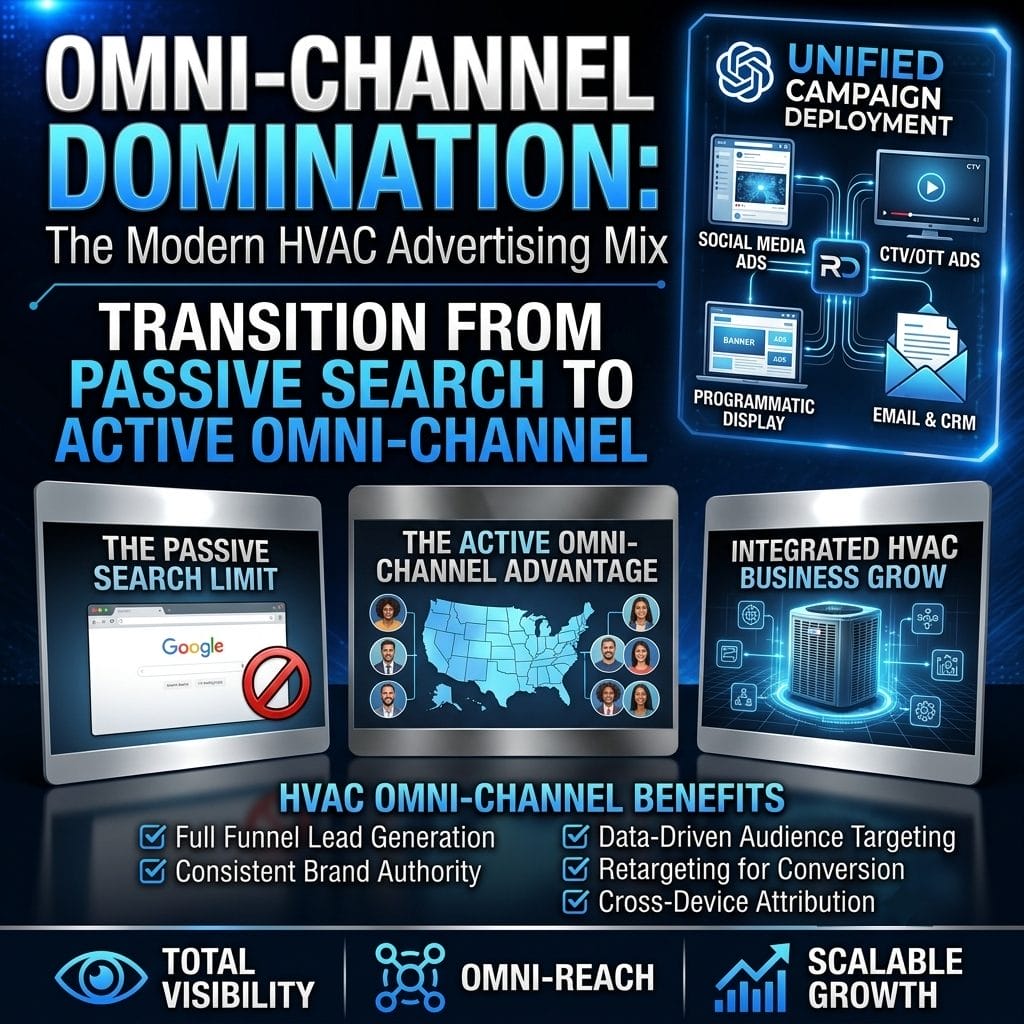
HVAC contractors have run the same marketing for years: phone books, then mailers, then Google Ads. When someone's AC dies in July, they search "AC repair near me," click the top result, and call. That worked until private-equity-backed HVAC roll-ups started flooding suburban markets and pushing cost-per-click past $50 or $100 in premium zip codes. Now you are in a bidding war against companies with ten times your ad budget, fighting for the same 3% of homeowners who have an active emergency right now.
A click is not a lead. And when your entire marketing budget goes toward capturing demand at the exact moment of equipment failure, you are paying top dollar for the smallest slice of the market. The better move is to build name recognition before the emergency happens, so homeowners call you directly instead of clicking whoever bid the highest that day. Programmatic advertising makes that possible across streaming TV, video, audio, mobile, and display, all from one platform.
Search ads are reactive. They only catch people who are actively looking right now. But the home services market breaks into three groups that matter for HVAC.
About 3% of homeowners are in active crisis. Their system just failed, they need same-day help, and they are searching right now. This is the only group Google Ads reaches well, and every HVAC company in your area is bidding on the same keywords.
About 7% are aware of a problem. They are noticing higher energy bills, uneven temperatures, or strange noises from the unit. They are not searching yet, but they are starting to think about it.
The remaining 90% have working systems and do not know your company exists. They are not searching for anything HVAC-related, but they will need service eventually, and when that day comes, they will call whoever feels most familiar.
Search only reaches the first group. To get in front of the other 97%, you need to show up across screens before the emergency happens. Building awareness during spring and fall shoulder seasons means that when a system does fail, those homeowners type your company name directly into their browser instead of searching a generic keyword. That is the difference between a $0 direct lead and a $75 Google click.
Programmatic advertising automates ad buying through real-time bidding. Instead of manually purchasing spots from individual TV stations or websites, the system places targeted ads in front of specific households within milliseconds. Your budget follows the homeowner across every screen they use throughout the day.
Streaming TV (CTV): Your video plays on the living room television through apps like Hulu, Peacock, Tubi, and Pluto TV. You can target by zip code, household income, home ownership, and even home age, so your ads reach the homeowners most likely to need HVAC work. The non-skippable format means your full message gets watched. For HVAC, this channel matters more than most industries because trust is everything. You are asking someone to let a stranger into their home to work on a system worth thousands of dollars. Seeing your branded technicians, your trucks, and real customer testimonials on a 65-inch screen builds that trust faster than any text ad.
Video: Pre-roll and mid-roll ads on smartphones, tablets, and laptops catch homeowners during daily browsing. Keep the creative practical: show your uniformed technicians, mention flat-rate pricing, highlight rapid response during extreme weather, and include real testimonials from local neighborhoods. These ads extend the same brand message from the TV screen to every other device in the house.
Audio: Spotify, Pandora, and podcast ads reach homeowners during commutes, yard work, and other screen-free moments. A 30-second spot about pre-season tune-ups or financing options plants the idea without competing for visual attention. Audio works well for HVAC because homeowners hear your name during everyday routines and start to associate it with reliability before they ever need to call.
Display and native: Banner ads keep your brand visible across websites and mobile apps at low cost per impression. Native ads take it further by matching the look of the site they appear on. A native ad on a local home improvement site with the headline "5 signs your furnace will not survive the winter" drives clicks to an educational page on your site that ends with a booking option for a pre-season inspection. Together, display and native form the backbone of your retargeting campaigns.
Running great creative to the wrong audience wastes your budget. Programmatic targeting layers data onto your campaigns so your ads reach homeowners who actually own property, match your income requirements, and live in your service area.
| Targeting method | How it works for HVAC |
| Geofencing | Draw virtual boundaries around competitor showrooms, home improvement stores, and new housing developments where builder warranties are expiring. When a phone enters that zone, the owner gets your ads for weeks afterward. |
| Addressable | Upload a list of past customers, inactive service accounts, or high-income homeowners with older properties. Match those addresses to household devices and run campaigns across their phones, laptops, and TVs. |
| Search retargeting | Target homeowners who searched terms like "furnace replacement cost" or "HVAC financing" even if they never visited your site. Reach them with display and video ads while they browse other sites. |
| Site retargeting | Follow up with homeowners who visited your website but left without calling or filling out a form. Serve offers like "$50 off diagnostic fee" or "0% financing available" to bring them back. |
Geofencing in detail: This is especially useful for HVAC. Fence competitor showrooms to catch homeowners shopping for quotes. Fence Home Depot and Lowe's HVAC aisles to reach DIYers who might realize the job is bigger than they thought. Fence new housing developments where builder-grade systems are 10 to 15 years old and starting to fail across thousands of units at the same time. After a phone enters any of these zones, that homeowner sees your ads for weeks across streaming TV, mobile, and display.
Addressable targeting in detail: Your existing customer list is one of your most useful assets. Upload past service customers, expired maintenance agreement holders, or homeowners in high-value zip codes with older homes. The system matches those physical addresses to the devices in each household, so you can run streaming TV, display, and audio campaigns directly to those homes without wasting impressions on renters or out-of-area traffic.
Different HVAC business priorities call for different campaign configurations. Here is how to set up your programmatic campaigns based on what you are trying to accomplish.
| Goal | Channel mix | Targeting approach |
| System replacements | Streaming TV + Video + Display | Target in-market homeowners with homes 10+ years old. Lead with financing options and energy savings. |
| Service agreement signups | Audio + Display + Native | Target past service customers and homeowners in your service area. Lead with annual tune-up pricing and priority scheduling. |
| Emergency repair calls | Mobile + Geofencing + Search retargeting | Target active searchers and geofence competitor locations. Lead with same-day availability and flat-rate diagnostics. |
| Commercial maintenance contracts | Addressable + Streaming TV + Display | Target property managers and commercial building owners. Lead with preventive maintenance programs and multi-unit pricing. |
Most HVAC companies do not have a marketing team, and juggling separate vendors for video, audio, geofencing, and display creates fragmented data and higher costs. Full Force Ads runs your entire advertising mix from one platform: streaming TV, video, audio, mobile, display, and native, all managed together with unified reporting.
The process starts with a discovery call to review your technician capacity, average ticket values for service versus replacement, and your highest-margin zip codes. From there, the team builds a channel and targeting plan based on your market data, defines geofencing boundaries, and layers in search retargeting. Campaigns go live across all channels within days, not weeks.
Weekly reporting shows exactly where your ads ran, how your budget was spent, and what customer actions followed. The team tests creative variations and shifts budget toward whatever is driving the most calls and bookings. There are no long-term contracts, and budgets flex month to month based on performance.
The HVAC companies that win over the next decade will be the ones who earn homeowner trust before a crisis hits. If your marketing only shows up when someone searches "AC repair near me," you are competing on price against every other contractor in the search results. Programmatic advertising gives you a different path: build brand recognition across streaming TV, mobile, audio, and display so homeowners already know your name when the furnace stops working. Contact Full Force Ads to see how it works for HVAC contractors and schedule a strategy session.