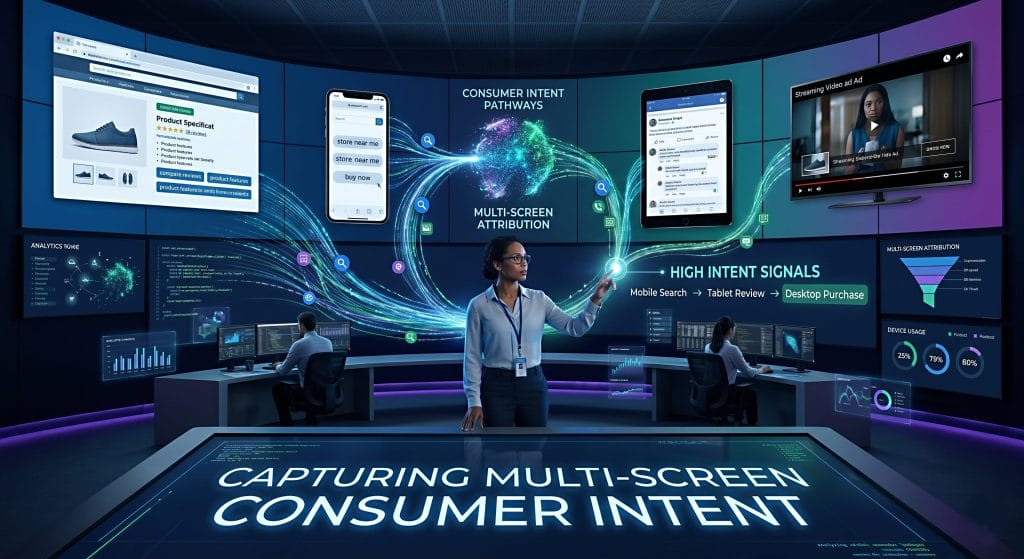
Consumers don't follow linear paths. They move between podcasts during commutes, blogs on their phones at lunch, desktops at work, and streaming TV at night. Their attention is split across multiple screens every day.
Buying more impressions or raising your volume doesn't fix that. You need campaigns that use behavioral data to reach people when they're actually receptive — and that requires running everything through a single programmatic system.
Full Force Ads consolidates streaming TV, digital video, audio, mobile, display, and native advertising into one system. We help businesses replace disconnected tactics with a unified strategy. You can view our frameworks on the Full Force Ads Advertising Solutions page.
Effective market persuasion means building brand recognition and capturing purchase intent at the same time. Here's how each channel contributes.
Cable TV usage keeps falling while Connected TV grows. By running ads on platforms like Roku, Fire TV, and Hulu, you get the emotional weight of a TV commercial combined with digital targeting. You can serve ads to specific household income tiers, business decision-makers, or consumers already showing interest in your category. It's your brand on the biggest screen in the house.
Outside the living room, attention shifts to laptops, tablets, and phones. Digital video uses pre-roll, mid-roll, and outstream placements across premium websites to reach users wherever they're watching. Video uses sight, sound, and motion to increase message retention.
When consumers drive, exercise, or work, their eyes leave the screen but their ears stay engaged. Programmatic audio campaigns reach listeners on Spotify, Pandora, and podcasts. The message goes straight to their headphones without competing with visual noise.
Smartphones go everywhere consumers go. Mobile advertising uses in-app placements, mobile web inventory, and location data to reach users based on real-time context. You serve a relevant call to action when the person can actually act on it.
Banner ads across websites offer cost-effective reach. Display keeps your brand visible between touchpoints and builds retargeting pools across channels. Staying visible means your business is in consideration when buyers are ready to make a decision.
Native ads match the visual format of surrounding editorial content on publisher websites. Because they read like articles, native placements generate higher click-through rates and build trust for technical or high-consideration products.
Media channels determine where your ads appear. Targeting determines who sees them. Here are the data strategies that cut wasted spending.
Geofencing connects physical behavior to digital ad delivery. The technology draws a virtual boundary around locations like competitor stores, trade shows, or corporate headquarters. When a consumer enters that zone with a smartphone, the system logs the device ID. You can then serve ads to that person during the event and continue reaching them across their devices afterward.
Addressable targeting lets you use your offline data for digital precision. You upload physical street addresses from a CRM or customer list and convert those locations into digital zones. The platform maps connected devices tied to those households so you can serve streaming TV ads, display graphics, and native content directly to those residents.
Paid search captures users on search result pages. Search retargeting finds those same high-intent individuals after they leave. If a prospect searched for a keyword related to your service, you can serve display or video ads to them as they browse other sites. This captures search intent at lower cost than standard keyword bidding.
Most first-time visitors leave without converting. Site retargeting lets you re-engage them with targeted messaging across TV, audio, or external websites after they go.
Contextual targeting analyzes the text, metadata, and themes on web pages to place ads next to relevant articles. An enterprise cybersecurity company, for example, can appear alongside news about data compliance — aligning the ad with what the reader is already thinking about.
Retargeting has real operational risks. Run it poorly and repetitive ads frustrate people and damage brand perception. Good retargeting requires strict frequency caps and exclusion rules.
Frequency capping limits how often a single user sees your ad within a given window. Without a unified dashboard enforcing those limits, a consumer might see your banner dozens of times a day. Advanced campaigns layer on sequential creative, shifting messaging from general introductions to specific testimonials over a multi-day sequence.
Post-conversion exclusion is non-negotiable. The moment someone fills out a form or makes a purchase, they need to be removed from retargeting pools immediately.
Many enterprise teams hire separate agencies for paid search, connected TV, audio, and geofencing. That fragmented model creates three problems: separate vendors bidding on the same inventory drive up your costs; fractured dashboards make tracking which channel actually drove a conversion nearly impossible; and platforms that don't share data in real time let users get oversaturated far past your frequency caps.
| Operational aspect | Fragmented vendor model | Full Force Ads unified model |
| Platform management | Multiple dashboards and logins | Single consolidated platform |
| Bidding strategy | Internal bidding conflict risk | Automated budget optimization |
| Frequency control | High risk of user oversaturation | Global capping across screens |
| Campaign velocity | Weeks of coordination required | Operational within 5-7 business days |
| Reporting | Fractured attribution data | Clear cross-channel weekly reports |
Working with a single programmatic partner removes that friction. Our infrastructure supports dynamic budget allocation — if audio outperforms native, we shift spend there the same day.
Getting campaigns live through our framework is a four-step process:
Channel mix decisions should follow your immediate objectives:
Your audience moves across streaming TV, podcasts, mobile apps, and premium websites every day. Full Force Ads provides the infrastructure to reach them with precision, budget flexibility, and clean reporting. Visit Full Force Ads Advertising Solutions to get started.