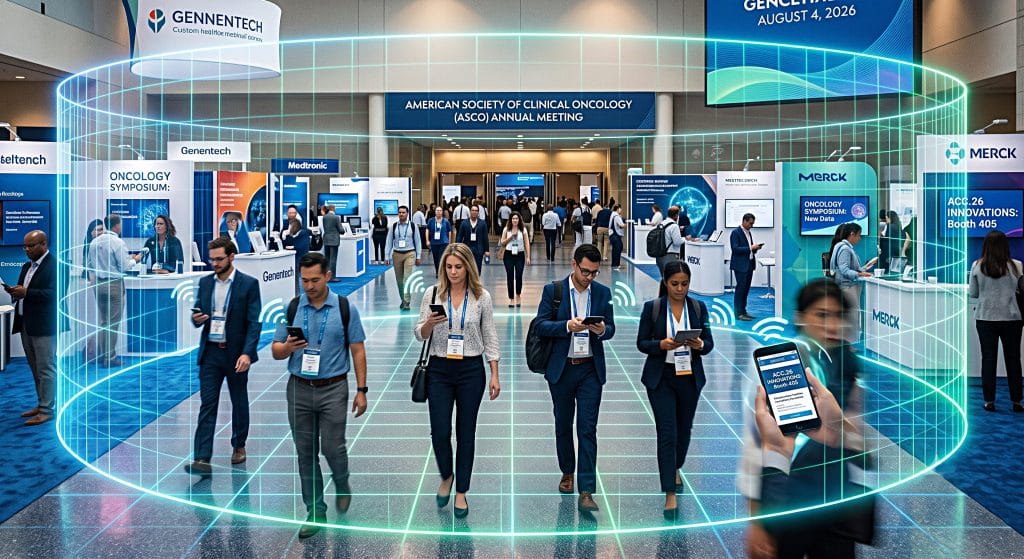
Medical conference geo-fencing gives pharmaceutical and medical device brands a direct digital channel to doctors while they attend major industry meetings. Annual gatherings like the American Society of Clinical Oncology (ASCO) or the American College of Cardiology (ACC) pull thousands of high-value physicians into a single building for three or four days. Healthcare companies spend millions renting booth spaces, building custom displays, and sponsoring lunch panels to get in front of these specialists.
Yet physical footprints run into predictable walls. Hallways get crowded, presentation schedules overlap, and physicians spend their downtime looking down at their phones rather than talking to sales reps in exhibit booths. At FullForceAds, our Sandy, Utah digital advertising agency team builds location-driven campaigns that solve this exact problem. By placing virtual boundaries around event venues, we help healthcare marketers connect with verified physicians on their mobile devices during the event and continue that conversation long after they fly home. To explore custom location campaigns for your upcoming event calendar, visit FullForceAds.com.
Medical conference geo-fencing is a location-based advertising tactic that creates a virtual perimeter around a physical venue to deliver targeted mobile ads to attendees.
┌─────────────────────────────────────────────────┐
│         Spatial & GIS Polygon Database          │
│  (Virtual Geofence Boundaries & Spatial Query)  │
└────────────────────────┬────────────────────────┘
                         │
                         ▼
┌─────────────────────────────────────────────────┐
│      Device Graph & Identity Resolution DB      │
│   (MAID / IP Matching & Deterministic Links)    │
└────────────────────────┬────────────────────────┘
                         │
                         ▼
┌─────────────────────────────────────────────────┐
│      Audience Data Lake & First-Party CRM       │
│   (B2B / B2C Attribute & Segment Enrichment)    │
└────────────────────────┬────────────────────────┘
                         │
                         ▼
┌─────────────────────────────────────────────────┐
│      Programmatic DSP & Ad Delivery Engine      │
│   (Real-Time Bidding & Multi-Screen Serving)    │
└────────────────────────┬────────────────────────┘
                         │
                         ▼
┌─────────────────────────────────────────────────┐
│        Attribution & Analytics Database         │
│   (Foot Traffic Lift, Conversion & ROAS Sync)   │
└─────────────────────────────────────────────────┘
When an attendee enters the designated boundary with a mobile device, location services—including GPS signals, Wi-Fi networks, and cell tower data—detect the device. Ad networks operating within mobile applications capture the device's Mobile Advertising ID (MAID), such as an Apple IDFA or Google Android Advertising ID.
Once captured, our proprietary execution engine at FullForceAds.app evaluates the device ID against professional datasets. If the device belongs to a verified healthcare provider, your campaign serves immediate display or video ads while the doctor is on site.
If you are planning media for an upcoming medical summit, reach out to our team at FullForceAds.com to audit your event schedule.
Geotargeting covers broad geographic boundaries, geo-fencing isolates specific physical structures in real time, and geo-framing collects device data from past events.
┌────────────────────────────────────────────────────────────────────────┐
│                        LOCATION TECH MATRIX                            │
├─────────────────┬──────────────────────────────────────────────────────┤
│ Method          │ Geographic Scope & Temporal Mechanism                │
├─────────────────┼──────────────────────────────────────────────────────┤
│ Geotargeting    │ Broad city limits, ZIP codes, or metro DMAs          │
│ Geo-Fencing     │ Micro-targeted polygons around active venues (Live)  │
│ Geo-Framing     │ Historical spatial data from past event dates        │
└─────────────────┴──────────────────────────────────────────────────────┘
Understanding these distinctions helps budget managers pick the right tool for each campaign goal:
Contact FullForceAds.com to see how combining real-time fencing with historical geo-framing builds a stronger audience list.
Custom polygon mapping traces exact building perimeter lines, preventing ad dollars from being wasted on passing street traffic or nearby non-event businesses.
Standard radial geo-fencing draws a simple circular radius (such as 500 meters or one mile) around a central point. In a dense city center like San Diego, Orlando, or Atlanta, a circular radius captures local residents, highway commuters, hotel staff, and patrons at neighboring restaurants.
   POOR: Circular Radius                 PREFERRED: Custom Polygon
 ┌─────────────────────────┐           ┌─────────────────────────┐
 │   Traffic / Commuters   │           │     Exhibition          │
 │     ┌─────────────┐     │           │  ┌───────────────────┐  │
 │     │ Convention  │     │           │  │   Convention      │  │
 │     │   Center    │     │           │  │     Center        │  │
 │     └─────────────┘     │           │  └───────────────────┘  │
 │   Adjacent Business     │           │                         │
 └─────────────────────────┘           └─────────────────────────┘
  Captures unwanted noise.               Traces exact architecture.
Precision congress targeting uses custom polygon mapping instead. Digital media strategists trace the precise architectural footprint of the exhibition floor, breakout auditoriums, host hotel lobbies, and official dining halls. This tight boundary isolates people inside the event environment so your ad spend targets actual attendees.
Want to eliminate wasted impressions on your next campaign? Speak with a media specialist at FullForceAds.com.
Mapping a congress requires setting up distinct spatial boundaries around convention halls, host hotels, and airport transit hubs, then matching ad messaging to daily schedule times.
                  ┌─────────────────────────────────────────┐
                  │         TRANSIT HUBS & AIRPORTS         │
                  │   Pre-Event Arrival & Post-Event Exit   │
                  └────────────────────┬────────────────────┘
                                       │
                                       ▼
┌──────────────────────────────────────┴──────────────────────────────────────┐
│                               MAIN CONVENTION                               │
│  ┌───────────────────────┐ ┌───────────────────────┐ ┌───────────────────┐  │
│  │     EXHIBIT HALLS     │ │    KEYNOTE THEATERS   │ │ POSTER PAVILIONS  │  │
│  │ (Booth Traffic / Demos)│ │ (Scientific Papers)   │ │ (Clinical Data)   │  │
│  └───────────────────────┘ └───────────────────────┘ └───────────────────┘  │
└──────────────────────────────────────┬──────────────────────────────────────┘
                                       │
                                       ▼
                  ┌────────────────────┴────────────────────┐
                  │     HOST HOTELS & EVENING VENUES        │
                  │     Dwell Time & Evening Receptions     │
                  └─────────────────────────────────────────┘
A complete spatial strategy splits the event city into three main zones:
Timing should align with the daily agenda. Between 07:00 and 09:00, run high-level awareness ads inviting doctors to your booth or morning symposium. During exhibit hours (09:00 to 16:00), switch to booth navigation aids and demonstration schedules. From 17:00 to 22:00, feature deeper clinical content, white paper downloads, or invitations to evening receptions.
Learn how to structure multi-zone campaign delivery for your brand at FullForceAds.com.
Identity resolution matches captured mobile device codes to National Provider Identifier (NPI) records, filtering out non-clinical staff and unverified attendees.
                     ┌──────────────────────────────┐
                     │ Captured Conference Device   │
                     │         (MAID Signal)        │
                     └──────────────┬───────────────┘
                                    │
                                    ▼
                     ┌──────────────────────────────┐
                     │ Identity Resolution Engine / │
                     │    Cross-Device Data Graph   │
                     └──────────────┬───────────────┘
                                    │
                                    ▼
                     ┌──────────────────────────────┐
                     │ Matches MAID to Verified NPI │
                     │      & AMA Taxonomy Data     │
                     └──────────────┬───────────────┘
                                    │
               ┌────────────────────┴────────────────────┐
               ▼                                         ▼
   [ VERIFIED TARGET HCP ]                   [ NON-HCP / UNVERIFIED ]
  • Medical Specialty Confirmed             • Filtered Out / Dropped
  • Prescribing Data Checked                • Zero Budget Wasted
  • Multi-Channel Retargeting Active
Convention centers host thousands of non-physicians during trade shows, including venue security, caterers, audiovisual crews, sales vendors, and family members. Showing ads to every active device inside the venue burns budget on non-prescribers.
To solve this, our platform integrates identity matching into the campaign workflow:
To review our physician verification process, contact the ad ops team at FullForceAds.com.
Healthcare location targeting stays compliant by focusing on B2B professional taxonomy data and avoiding consumer health tracking or patient location monitoring.
┌─────────────────────────────────────────────────────────────────────────┐
│                    COMPLIANCE & PRIVACY FRAMEWORK                        │
├────────────────────────────────────────┬────────────────────────────────┤
│ HIPAA & B2B Distinction                │ FTC & Location Privacy         │
│ • HCP marketing uses public NPIs.      │ • Uses anonymized MAIDs.       │
│ • Avoids mixing consumer health data.  │ • Requires opt-in SDK source.  │
└────────────────────────────────────────┴────────────────────────────────┘
Navigating privacy regulations requires clear operational boundaries:
Work with a compliant media team by booking a strategy call at FullForceAds.com.
An effective conference campaign spans three phases: pre-event audience warming, live on-site mobile ads, and post-event multi-screen retargeting across 90 days.
 [ PRE-CONGRESS ]          [ LIVE CONGRESS ]          [ POST-CONGRESS ]
(Days -14 to 0)            (Days 1 to 4)              (Days 5 to 90)
──────┬───────             ──────┬────────            ──────┬─────────
      │                          │                          │
      ├─ Geo-Framing Past        ├─ Real-Time Mobile        ├─ Multi-Screen
      │  Attendees               │  In-App Ads              │  Retargeting
      │                          │                          │
      ├─ Pre-Event Registration  ├─ Live Booth Wayfinding   ├─ CTV & Audio
      │  Match Lists             │  & Session Alerts        │  Streaming
      │                          │                          │
      └─ Teaser Messaging        └─ High-Intent NPI        └─ Sales Rep & CRM
Capture IntegrationUse historical geo-framing to reach doctors who attended last year's meeting. Run display ads highlighting your upcoming scientific presentations or guest speakers, driving advance registration for your satellite breakfast or dinner panels.
Deliver mobile display and native ads inside professional medical applications and news apps used by physicians during session breaks. Use dynamic directional creatives showing real-time distance to your booth (for example, "Visit Booth #1402 in South Hall for live robotic surgery demos").
The longest value from conference geo-fencing comes after the event ends. Once a verified doctor's device is resolved to an NPI, FullForceAds.app extends messaging across their home and clinical office environments:
Build an end-to-end conference strategy with our planning team at FullForceAds.com.
Measuring ROI requires combining digital delivery metrics, physician verification rates, and long-term prescription or device adoption data.
┌───────────────────────────────────────────────────────────────────────────┐
│                            MEASUREMENT MATRIX                             │
├──────────────────────┬──────────────────────┬─────────────────────────────┤
│  Digital Metrics     │  HCP Quality         │  Commercial Lift            │
│  • Impressions & CTR │  • Verified NPIs     │  • Prescribing Lift (TRx)   │
│  • Micro-Polygon CPM │  • Specialty Match % │  • Clinical Trial Enquiries │
│  • Ad Viewability    │  • Booth Conversion  │  • Rep Request Velocity     │
└──────────────────────┴──────────────────────┴─────────────────────────────┘
Track your campaign performance across three core areas:
To set up closed-loop attribution reporting for your campaign, connect with FullForceAds.com.
Launching a successful campaign involves seven structured steps:
┌───────────────────────────────────────────────────────────────────────┐
│                CONFERENCE GEO-FENCING LAUNCH PLAYBOOK                 │
├───────────────────────────────────────────────────────────────────────┤
│  [ ] Step 1: Define Target NPI Profile & Specialty Taxonomy            │
│  [ ] Step 2: Acquire Floor Plans & Build Micro-Polygon Coordinates    │
│  [ ] Step 3: Establish Identity Graph & NPI Resolution Integrations   │
│  [ ] Step 4: Develop Time-Fenced Creative Assets & Landing Pages      │
│  [ ] Step 5: Activate Live Multi-Channel Programmatic Bidding         │
│  [ ] Step 6: Transition Captured NPIs to 90-Day Post-Event Nurture     │
│  [ ] Step 7: Push Qualified Leads to CRM & Measure Rx Attribution      │
└───────────────────────────────────────────────────────────────────────┘Location-based digital media turns standard event sponsorships into measurable physician acquisition channels. By placing precise custom polygons around convention sites and verifying physician credentials through NPI matching, healthcare brands eliminate wasted impressions and maintain productive relationships with specialists long after the conference hall closes.
To start planning your next medical event campaign with our agency team in Sandy, Utah, contact FullForceAds.com today.