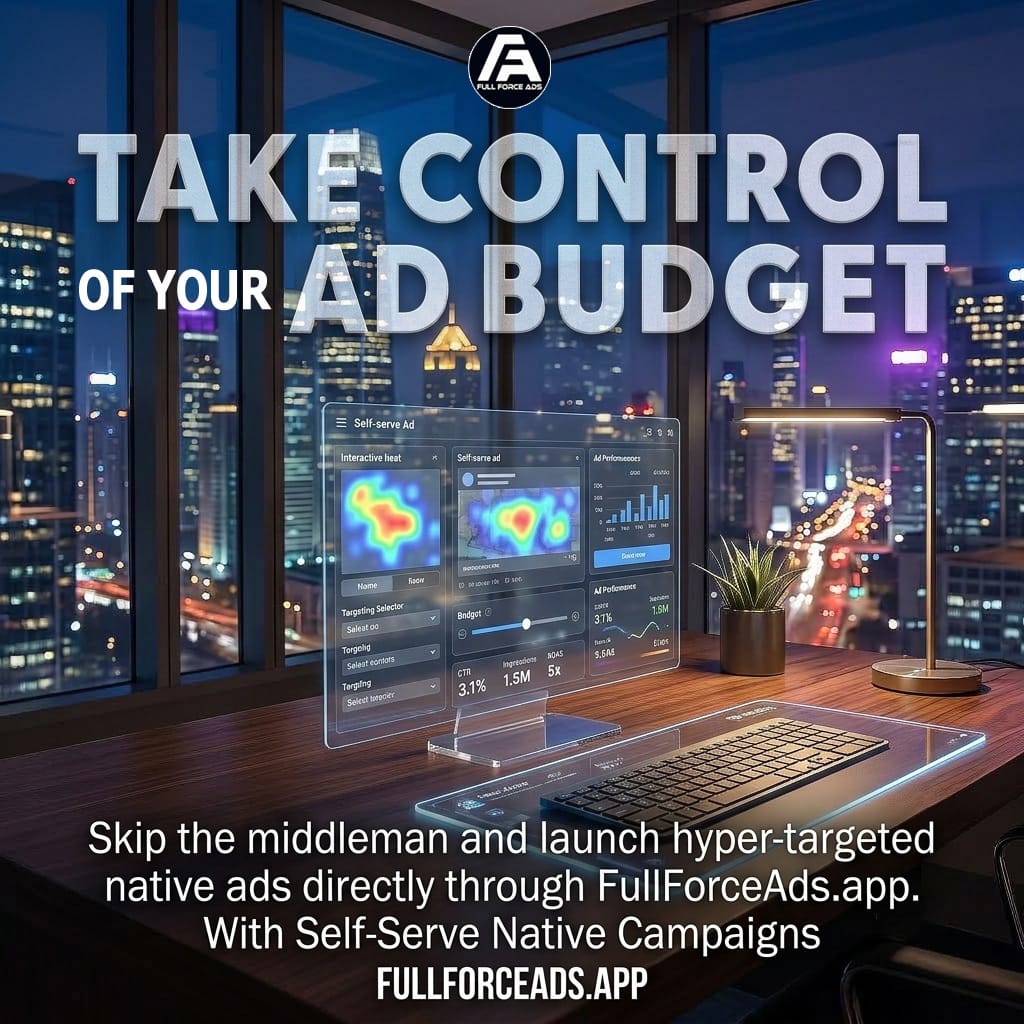
Self-serve native ad platforms like FullForceAds.app put you in control of your own campaigns. Because you are not locked into agency contracts or minimum spends, you can launch, test, and scale whenever you want.
| Stage | Budget share | What to focus on | Main metric |
| Testing | 20% | Broad audience targeting with multiple headlines and visuals | Click-through rate, CPC |
| Optimization | 50% | Cutting weak publisher sites and tightening geographic focus | Cost per lead, CPA |
| Scaling | 30% | Raising daily caps on the highest-performing publisher widgets | Return on ad spend, ROI |
Every year, thousands of growing businesses hit the same invisible wall. They launch a product, find their first customer base, and turn to traditional digital channels to scale up. For a short time, it works. Then customer acquisition costs jump, conversion rates plateau, and ad efficiency falls.
The initial reaction is usually predictable: double down on search text ads, throw more money at social media, or rework creative assets on platforms that hold a near-monopoly on web traffic.
The core issue for modern brands is rarely creative fatigue. It is channel saturation.
Most ad budgets remain trapped inside walled gardens, fighting rising costs per thousand impressions, tight privacy rules, and algorithms that prioritize platform margins over advertiser success. Yet most meaningful digital engagement happens elsewhere. Audiences stream shows on living room TVs, listen to podcasts during morning commutes, read industry news, and visit physical stores every day.
To break through performance plateaus, teams are changing how they build market share. Real growth takes an omni-channel approach that follows buyers across every screen, location, and medium.
This guide covers how unified programmatic media buying, location intelligence, household addressability, and cross-screen targeting let businesses step around standard ad limitations and drive measurable revenue.
The path to purchase is no longer linear. Modern consumers do not sit in front of one medium waiting to see an ad. Their days split across dozens of micro-moments on connected devices.
Here is a typical day for a target customer:
If your strategy relies strictly on social feeds or search queries, you miss most of the digital media consumed throughout that person's day.
When brands stick to a single medium, three main inefficiencies crop up:
Showing the same prospect ten banner ads a day on one social network leads to ad fatigue, active avoidance, and brand annoyance. Context matters just as much. Catching someone while they are actively researching or relaxing yields better conversion rates than interrupting them while they message friends. Finally, single-channel attribution creates an echo chamber. A customer might discover your business through a Streaming TV ad, look up your products on a desktop, and convert after reading a native article. Single-channel setups fail to connect these points.
For steady growth, brands need to look at the whole picture, building a presence on every screen while controlling targeting, budget split, and frequency caps from one place.
Effective omni-channel advertising is not about spending money on every platform you can find. It means placing specific ad formats where they naturally fit, using the strength of each medium to guide prospects down the funnel.
| Funnel Stage | Media Channels |
| AWARENESS | Streaming TV | Video |
| CONSIDERATION | Audio | Native Ads |
| CONVERSION | Mobile | Display |
Unifying these formats keeps your brand visible at every stage of the decision process.
Connected TV changed video advertising. It combines the visual scale of traditional television with the precise targeting and attribution of digital media.
High-definition TV ads run full screen on platforms like Roku, Fire TV, Hulu, and premium streaming services to ensure non-skippable viewability. Instead of buying broad demographics based on age or location estimates, streaming campaigns deliver ads directly to verified households that match your buyer profile. Viewers watch streaming TV in a relaxed, focused setting, leading to better message retention than fast-scrolling mobile feeds.
While Streaming TV holds the living room, digital video captures attention on desktop and mobile browsers. Pre-roll and mid-roll spots engage viewers right before or during web video content when attention peaks. Outstream formats insert video directly into articles and news feeds as readers scroll, creating natural engagement without disrupting the page.
Digital audio reaches prospects when screens are out of sight, such as during workouts, commutes, chores, or deep work. Targeted commercials run on Spotify, Pandora, podcast networks, and internet radio. Unlike visual channels where ads compete with screen clutter, audio gives your brand message undivided attention.
Mobile devices are central to daily routines. Reaching users in-app, on the mobile web, and through location tech keeps your business connected with audiences anywhere. Responsive visual ads run inside top applications and publishing platforms, while location features trigger ad delivery based on real-time movement, foot traffic, and physical store visits.
Banner ads across high-authority websites remain an efficient way to build brand exposure and keep your name top of mind. They establish broad visual reach across local, national, and industry publications while serving as the retargeting engine that brings past site visitors back to convert.
Many consumers ignore standard promotional banners. Native advertising gets around banner blindness by matching the design and tone of the host site.
Native ads mirror the typography and layout of online publications, presenting your message like recommended content instead of an intrusion. Because these placements offer real educational value inside content streams, they regularly draw higher click-through rates and deeper engagement than standard display banners.
Channels control where your message shows up; targeting determines who sees it. Modern programmatic platforms turn raw data into useful audience segments, putting your budget in front of high-value prospects.
| Geofencing | Addressable | Retargeting | Contextual |
| Physical location mapping and foot-traffic tracking | Direct street address matching across device ecosystems | Site history & Search intent mapping | Relevant article environment matching |
To get the best return, combine these five targeting approaches:
Every business works toward distinct goals. A local shop trying to increase foot traffic needs a different plan than a regional B2B company working to build a sales pipeline.
Here are pre-tested channel setups designed for specific business outcomes:
| Strategic Business Goal | Recommended Channel Mix | Primary Targeting Layer |
| Local Market Dominance & Foot Traffic | Geofencing + Mobile + Display | Physical Competitor Locations, Trade Zones |
| Competitor Conquesting | Geofencing + Addressable | Direct Competitor Stores, Industry Events |
| High-Impact Brand Building | Streaming TV + Video + Audio | Household Demographics, In-Market Behaviors |
| Qualified Website Traffic & Leads | Native + Display + Search Retargeting | Search Keyword Intent, Contextual Category |
| Re-Engaging Unconverted Leads | Site Retargeting + Display + Video | Web Funnel Step Drop-Offs |
| Account-Based Marketing (ABM) / CRM Outreach | Addressable + Streaming TV + Display | Verified Offline Address / Client Lists |
Managing modern digital advertising gets overwhelming quickly. Many businesses feel stuck choosing between complicated self-serve tools or traditional agencies with high minimum spend rules.
Full Force Ads takes a different route. Based in Utah, Full Force Ads works as a digital advertising partner that makes programmatic buying clear, flexible, and accessible for growing businesses.
| Traditional Agency Approach | Full Force Ads Platform Approach |
| Multiple disjointed vendors | Unified channel & targeting management |
| High spend minimums & lock-ins | Flexible, scalable campaign models |
| Delayed, non-transparent reporting | Clear, weekly performance analytics |
| Weeks required to launch campaigns | Live execution in 5-7 business days |
Running strong ad campaigns takes a practical process. Full Force Ads leads clients through four straightforward steps:
Some teams prefer a fully managed partnership where our team handles strategy and optimization, while others want direct control over their media buying.
If your team manages media in-house, or if you want to run native ad campaigns without agency management fees, FullForceAds.app provides a self-serve platform.
By registering at FullForceAds.app, media buyers, growth teams, and agencies get direct access to programmatic inventory:
Skipping middleman costs lets you control campaign setup, budget pacing, and audience options through a clean interface. You can set up native ads across major publications quickly, applying geofencing, audience behaviors, device settings, and contextual rules directly. You stay in control of your spend: start with daily caps, monitor live performance, and scale budget up as results come in.
Whether you choose a managed service or use the self-serve tools at FullForceAds.app, you retain control over how your brand grows.
Relying on crowded ad networks and single-channel strategies leads to shrinking returns. To build reliable growth, your business needs a unified strategy across the screens, platforms, and media where your customers spend their time.
Combining multi-screen placements (Streaming TV, Video, Audio, Mobile, Display, and Native) with location geofencing, household addressability, and retargeting turns digital advertising into a predictable growth driver.
Channel limits do not have to hold back your expansion.
To reach your target audience across every screen, explore full programmatic strategies with Full Force Ads Advertising Solutions, or launch self-serve native campaigns directly at FullForceAds.app.