Digital advertising is shifting. For over a decade, marketing teams used a simple playbook: put most of the budget into two main social and search networks, target broad demographics, and rely on each platform's algorithm to generate sales.
That approach is losing its edge.
Rising ad costs, stricter privacy rules, and audiences spread across dozens of apps and devices mean standard social and search ads do not work like they used to. People do not sit on a single social feed all day anymore. They stream shows on smart TVs, listen to podcasts while driving, check niche sites on their phones, and move through physical retail locations throughout the week.
Reaching buyers today requires showing up across all these different screens without managing ten different vendors or dealing with vague reports.
Full Force Ads, an agency based in Utah, helps brands run connected campaigns across Streaming TV (CTV), video, audio, mobile, display, and native channels. Marketing teams can work directly with our agency staff or run their own buys through FullForceAds.app, our self-serve advertising platform.
Here is how a unified ad strategy works and why it drives clearer returns.
A typical buyer moves across several devices and platforms before making a purchase:
Relying on one or two main ad platforms means reaching that buyer during a small sliver of their day. It also forces you to bid against thousands of competitors in overcrowded auctions where people ignore ads.
Managing separate vendors or isolated platforms creates three practical problems:
An integrated programmatic strategy fixes this by focusing on the audience instead of the platform. You buy access to your target buyers wherever they go online or offline.
To take someone from learning about your business to buying, ads need to fit the format where they appear. Full Force Ads structures campaigns across six core digital channels:
| Channel | Core strategic role | Ad formats & environments | Ideal funnel placement |
| Streaming TV (CTV) | High-visibility brand building with high video completion rates | Unskippable 15s & 30s ads on Roku, Fire TV, Hulu, Apple TV | Top of funnel (Awareness) |
| Digital Video | Sight, sound, and motion storytelling with direct interaction | Pre-roll, mid-roll, outstream video across news and niche apps | Top & middle of funnel |
| Digital Audio | Screen-free reach during daily routines | In-stream audio spots on Spotify, Pandora, and podcasts | Top & middle of funnel |
| Mobile & Location | Proximity targeting and quick engagement | In-app banners, location-aware pop-ups, mobile web units | Middle & bottom of funnel |
| Native Advertising | Blends directly into publication content | Recommended article blocks and sponsored content feeds | Middle of funnel (Consideration) |
| Display Banners | Retargeting base and ongoing brand exposure | Standard banner sizes across web publishers | Bottom of funnel (Conversion) |
Connected TV brings digital targeting to home television screens. Unlike traditional cable buys that rely on broad estimates, programmatic CTV targets specific households based on location, income, or buying behavior. Ads run on apps like Roku, Fire TV, and Hulu, where viewers finish the full commercial over 95 percent of the time.
Video gets attention quickly. Running short video spots across news sites and trade publications keeps your brand in front of active readers.
Audio reaches people when they are not looking at screens: driving, cooking, working, or exercising. Running unskippable audio spots on Spotify or podcast networks generates strong brand recall.
Mobile targeting places ads inside mobile apps and websites based on where someone is or where they have been in the physical world.
Native ads match the design of the site hosting them. Because they look like part of the surrounding content feed, readers click them more often than standard banner ads.
Display banners provide steady, cost-effective coverage. They remind visitors who saw your video or audio ads to take the next step.
You can view our Full Force Ads service lineup to see how these channels connect.
Showing up on the right screen is only part of the job. The real value comes from placing ads in front of people who are actually ready to buy.
Geofencing draws a virtual line around a physical building or property line. When someone enters that space with their phone, the system logs their device anonymously so you can serve them ads later.
If you have a list of physical addresses from a CRM, direct mail campaign, or target account list, addressable targeting links those physical locations to home IP networks.
Search engine ads get expensive when bidding on popular keywords. Search retargeting tracks people who searched for industry terms on major engines, then serves them video or display ads as they browse other websites. This reaches active buyers without paying search engine auction prices.
As tracking cookies become less common, contextual targeting scans the text on web pages using software that understands the topic and tone. A fleet management ad appears next to articles about supply chain logistics, keeping the ad relevant to what the user is reading.
Most first-time website visitors leave without filling out a form or buying anything. Site retargeting places ads in front of those past visitors on news sites, streaming apps, and podcasts to bring them back to your site.
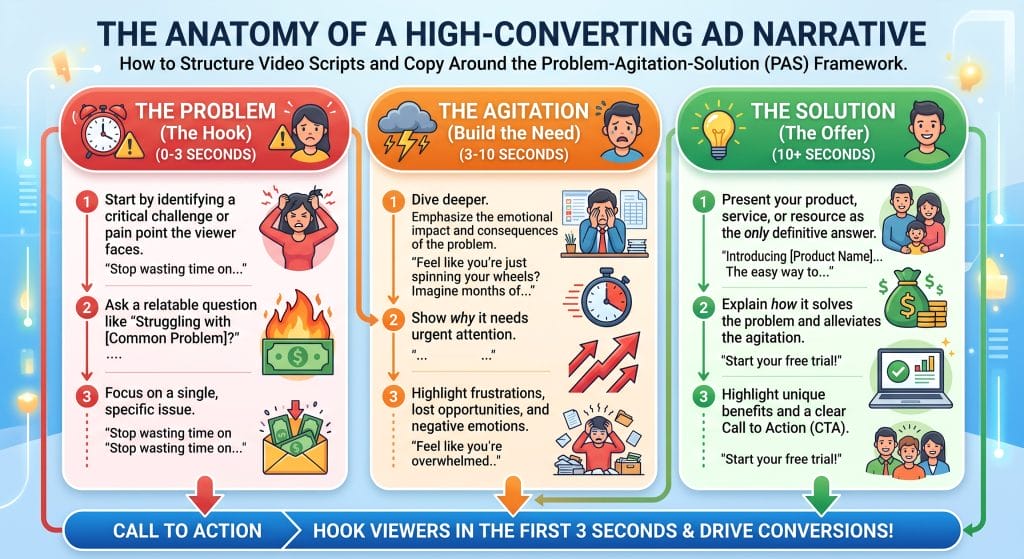
Good targeting fails if the ad itself feels like generic marketing. High-converting ads often use the Problem-Agitation-Solution (PAS) framework.
If an ad starts like a standard corporate brochure, people skip it. Lead with the specific frustration your buyer is dealing with.
After stating the problem, show why ignoring it makes things worse. Point out the wasted time, extra costs, or lost business caused by sticking with the old way of doing things.
Show how your product or service fixes the issue, then give one clear next step, like visiting a landing page or booking a short call.
Different business goals call for different channel combinations:
Full Force Ads supports both full agency management and direct self-serve access depending on how your team operates.
Our Utah team handles strategy, setup, and ongoing management:
In-house marketing teams and media buyers can use FullForceAds.app to manage campaigns directly:
Getting a multi-screen campaign running follows four basic steps:
Relying entirely on a couple of crowded social networks gets more expensive every year. Running connected campaigns across TV, audio, mobile, and web channels helps you reach buyers across all their devices with better precision and clearer tracking.
Schedule a demo with Full Force Ads to see how a connected programmatic strategy can work for your business.