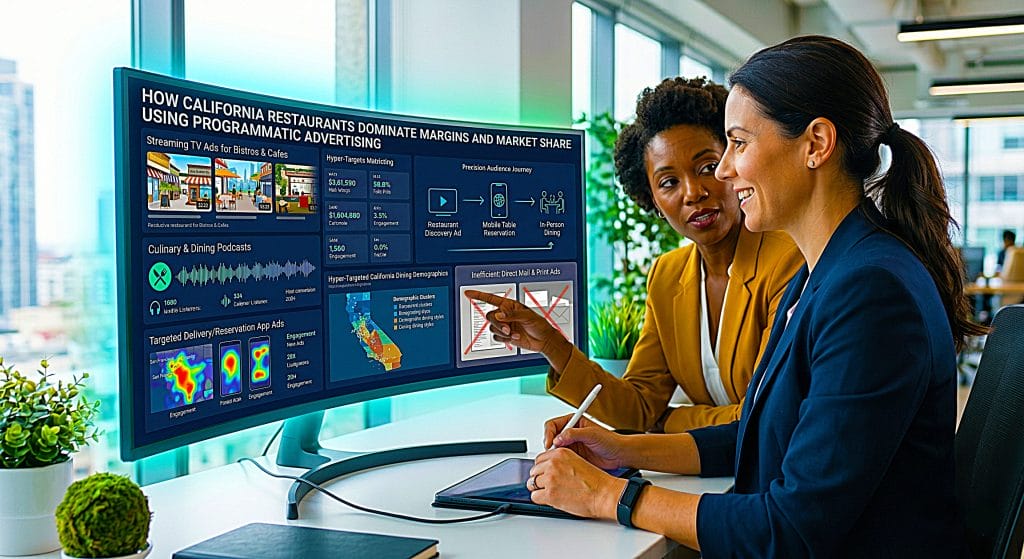
The California restaurant industry is a giant operating on thin margins. From San Francisco bistros to fast-casual taco spots along San Diego’s Interstate 5, hyper-competition and high costs define the market. Traditional marketing like static billboards, print mailers, or basic social media boosts wastes capital on audiences who will never visit your restaurant.
To win, California restaurant brands have to move to targeted programmatic advertising. Automating real-time ad space purchases across digital channels lets operators deliver messages at the exact moment a consumer decides what to eat.
Full Force Ads builds enterprise advertising campaigns that turn digital impressions into physical foot traffic. Whether you need to capture the lunch rush in downtown Los Angeles, drive weekend dinners in Orange County, or pull in the late-night crowd in Sacramento, this guide breaks down how programmatic advertising works for modern restaurants.
California is made up of mobile micro-markets defined by long commutes and a reliance on digital devices.
Californians are constantly moving along the 405, on BART, or through shopping plazas like the Irvine Spectrum. Their media consumption spans multiple screens throughout the day. When consumers are on the move, dining decisions are impulsive, often made inside a 30-to-60-minute window. Programmatic advertising uses real-time data signals (location, time, weather, app usage) to serve contextual ads during those decision windows.
Consumers split their attention across three primary screens:
A single banner ad isn’t enough. Repetition across multiple formats keeps your restaurant the default choice when hunger hits.
       [ The Omnichannel Loop ]
                  │
   ┌──────────────┼──────────────┐
   ▼              ▼              ▼
Streaming TV    Audio         Mobile
(Visuals)    (Commuters)   (Local Action)
Food takes visual appeal. Through Connected TV, your restaurant runs unskippable ads on platforms like Hulu. Unlike traditional broadcast television, programmatic streaming targets specific households. A Beverly Hills steakhouse can run ads only to households earning over $150,000 who are verified dining enthusiasts. Mobile pre-roll and outstream video ads add to that by reaching professionals checking the news in San Francisco or students in Santa Barbara.
California drivers spend millions of hours in traffic. Programmatic audio places targeted spots on streaming platforms and podcasts. A commuter on the 101 freeway at 5:30 PM hears a description of a family-style pizza special located two exits away, turning a frustrating commute into a dining solution.
Mobile and display banner ads run on smartphones and use location data to serve ads with "Get Directions" or "Order Now" buttons to users within a mile of your kitchen. Native advertising formats that content to match the editorial style of the host site, like a sponsored article titled "The Top 5 Brunch Spots in San Diego" on a local lifestyle blog.
Targeting solutions make sure your ads only show up in front of people with the intent and physical proximity to dine at your location.
Geofencing draws a virtual perimeter around precise real-world locations to serve ads to people inside or recently departing those areas.
[ Competitor Store ] ──> Customer Enters ──> Device ID Captured
                                                    │
                                                    ▼
[ Customer Phone ] <─── Serves Your Ad <─── Full Force Ads
Addressable targeting matches physical mailing lists (loyalty members, catering clients) to the digital devices running inside those households, serving ads across Connected TV and mobile screens. Search targeting serves display or video ads to users who type phrases like "best outdoor dining near me" or "authentic Thai food delivery" into search engines. Contextual targeting analyzes webpage text in real time, placing your ads alongside food blogs and local neighborhood guides.
California business owners face high labor costs and shifting ingredient prices. Programmatic advertising offers financial protections that legacy media can’t match.
Hiring separate vendors for social media, streaming ads, and search marketing causes fragmented data and inflated management fees. Full Force Ads pulls your campaign architecture into a single platform. That centralizes frequency capping, syncs messaging, and accounts for every dollar spent.
| Metric | Traditional Broadcast / Print | Programmatic Advertising |
| Audience Targeting | Loose geographical estimates | Household, location, and behavior data |
| Contract Commitments | Long-term, rigid contracts | Flexible, scalable budgets |
| Speed to Market | Weeks or months of lead time | Live across channels in 5 to 7 days |
| Reporting | Monthly estimates | Weekly transparent reports |
| Waste Elimination | High (paying for non-local views) | Absolute (paying only for targeted views) |
Traditional billboard and radio commitments lock your budget in place. Programmatic campaigns shift based on performance data. If mobile geofencing drives double the foot traffic of desktop display ads, we shift the budget to mobile instantly. Every week, you get reports tracking where your ads ran, who saw them, and the real-world foot traffic they generated.
Our onboarding process gets campaigns live without disrupting daily kitchen operations.
[ Discovery Call ] ──> [ Custom Strategy ] ──> [ Fast Launch ] ──> [ Weekly Reports ]
 (Analyze Goals)        (Targeting Mix)        (Live in 5-7 Days)     (Optimization)
Contact Full Force Ads today to book a demo and get a custom campaign recommendation.