Self-Serve →
Full Force Ads
Programmatic Advertising Blog >>
Retargeting 101: How to Win Back Dropped Conversions Without Annoying Users

Retargeting 101: How to Win Back Dropped Conversions Without Annoying Users

Posted on October 21, 2026

Every marketer knows the sinking feeling of watching high-intent website traffic walk away.

You spend real money pulling potential buyers to your site. They browse product pages, scan service details, maybe drop an item into their cart, and then close the tab. Over 97% of first-time visitors leave without buying. They get interrupted by an email, decide to research competitors later, or get pulled away from their phones before finishing checkout. When you do not have a system to catch those people, you hand warm leads to your competitors.

That recovery system is retargeting, sometimes called remarketing. It has a bad reputation because poorly run campaigns act like digital nuisances, chasing users across the web with the same banner ad thirty times a day. That style annoys people and damages your brand. When run with care and good network access, retargeting works as a quiet reminder that brings undecided buyers back into your pipeline.

1. Why High-Intent Users Drop Off

To fix funnel leaks, you have to look at why people leave before buying. Drop-offs rarely mean someone dislikes your offer. They usually happen because of basic digital friction:

  • Distractions: Online attention spans are fragmented. Someone checking out your service on a train home gets interrupted long before they pull out a credit card to fill in a form.
  • Hesitation: Complex purchases take time. Buyers pause to check reviews, compare pricing, or talk to team members.
  • The "later" trap: Undecided buyers usually mean to come back tonight or tomorrow. Without a direct reminder, "later" becomes "never."
  • No immediate reason to buy: If your page does not give someone a reason to act today, they default to doing nothing.

Uncaptured traffic inflates customer acquisition costs. Money spent on first-touch ads or search placement goes down the drain the moment a visitor walks away for good. Retargeting protects that initial ad spend. Re-engaging warm visitors gives you higher click-through rates and lower costs per acquisition than cold outreach.

2. The Mechanics Behind Retargeting

Under the hood, retargeting relies on tracking pixels, search data, and addressable matching.

Site Retargeting

A pixel on your site tracks user movement and splits visitors into groups based on intent:

  • Homepage visitors see general brand messaging.
  • Product and service page visitors see case studies or specific feature breakdowns.
  • People who leave at the pricing or checkout page get direct offers, risk-free trials, or customer reviews.

Search Retargeting

Targets users based on what they search elsewhere on the web. When someone searches terms relevant to your business, search retargeting shows visual, video, or audio ads to those exact users as they browse news sites, blogs, and streaming apps.

Addressable and Location Retargeting

Geofencing draws virtual boundaries around real places, like trade shows or competitor locations, to capture device IDs for later ad targeting. Addressable retargeting takes a physical customer mailing list and matches street addresses to home internet networks, letting you run digital ads directly to specific households.

3. Five Rules for Non-Annoying Retargeting

If you want to bring back dropped leads without damaging customer goodwill, stick to five rules:

  1. Cap your frequency: Showing an ad 25 times a day causes ad fatigue and turns people off. Cap impressions at 3 to 5 per user per day across all channels combined.
  2. Use burn pixels: Nothing wastes ad dollars faster than targeting people who already bought from you. Place a burn pixel on your thank-you page so recent buyers drop off the sales sequence and move into onboarding or cross-sell groups.
  3. Tell a story in sequence: Running the same static graphic for a month straight creates visual burnout. Structure your campaign over time:
    • Days 1–3: Show simple brand reminders and primary value points.
    • Days 4–7: Switch to social proof, including customer quotes, ratings, and case studies.
    • Days 8–14: Offer risk-reversal options, like money-back guarantees, free consultations, or live demos.
    • Days 15–30: Use clear, urgent calls to action to close remaining hesitant prospects.
  4. Match creative to page activity: A visitor who spent ten minutes on a specific software spec page should see creative highlighting that exact software unit, not a generic slogan.
  5. Vary your channels and ad types: If a prospect ignores three display ads on a laptop, a fourth display ad on the same screen will not change their mind. Re-engage them through Connected TV, Digital Audio, mobile apps, or native content feeds while they are relaxed and receptive.

4. Reaching People Across Screens

People split screen time across TV apps, phones, work laptops, and audio services. Platforms like Full Force Ads provide access to these placements through a single hub:

  • Streaming TV (CTV / OTT): Run unskippable spots on Roku, Amazon Fire TV, and Hulu. Someone who looked at your website on a work computer can see your 15-second spot on their living room TV that evening.
  • High-impact video: Run pre-roll and mid-roll video spots across news sites and mobile apps to re-engage prospective buyers visually.
  • Digital audio: Reach people while they drive, cook, or exercise. Audio spots run across Spotify, Pandora, and podcast networks, reaching audiences in environments without ad blockers.
  • Mobile apps: Engage users inside mobile games and news feeds using location data and mobile-formatted ad units.
  • Display banners: Place display graphics across millions of publisher sites to maintain steady, cost-effective awareness.
  • Native ads: Match the visual format and layout of surrounding news articles, drawing higher click-through rates from analytical, reader-heavy audiences.

5. Strategic Playbooks

Channel selection depends on what your business wants to accomplish:

Business GoalChannel MixPractical Strategy
Local Brand AwarenessGeofencing + Display + MobileTarget local foot traffic and nearby mobile devices within a set radius.
Competitor ConquestingGeofencing + AddressableTarget physical competitor locations and mailing lists with direct comparison offers.
National Brand BuildingStreaming TV + Video + AudioBuild visual and audio touchpoints across TV screens and audio apps.
High-Volume Web TrafficDisplay + Native + Search RetargetingCapture active search intent across the open web and drive traffic using blended native ads.
Past Visitor RetargetingSite Retargeting + Display + VideoRe-engage warm site abandoners across screens using timed sequential creative.
Target a Known ListAddressable + Streaming TV + DisplayUpload CRM database lists to target specific physical households on TV and web networks.

6. How Full Force Ads Works

Full Force Ads is an agency based in Utah that manages omnichannel ad campaigns. Instead of reselling third-party ad network packages, they run their own software platform, FullForceAds.app, giving media buyers direct control to launch and track programmatic ad buys.

How they operate:

  • Single-platform management: They run, test, and adjust campaigns across Streaming TV, Video, Audio, Mobile, Display, and Native from one central interface.
  • Targeted audience groups: They build audience groups using Geofencing, Addressable list matching, Search Retargeting, and Site Retargeting to target real prospective buyers rather than empty impression numbers.
  • Detailed reporting: Weekly performance summaries show exact ad placements, target devices, geographic areas, and verified conversions.
  • Flexible budgets: Campaigns run on flexible budgets without forcing long-term contract lock-ins.
  • Quick setup: Campaigns usually go live within 5 to 7 business days of creative approval.

7. Onboarding Process

Getting started with a multi-channel retargeting strategy follows a simple four-step setup:

  1. Discovery: A conversation to review revenue targets, customer profiles, past ad results, current budgets, and key drop-off points in your conversion flow.
  2. Strategy recommendation: A custom media plan showing recommended channel splits across TV, Display, Mobile, or Audio alongside a retargeting schedule.
  3. Campaign launch: Operations deploys the ad campaigns across programmatic exchanges within 5 to 7 business days.
  4. Optimization and tracking: Continuous adjustments to bid rates, creative rotations, and audience settings, accompanied by weekly reporting updates.

Combining clear sequential messaging, conservative frequency limits, and programmatic media channels helps you turn lost traffic back into active leads while protecting your brand reputation.

How to Set Up Retargeting Campaigns That Bring Back Lost Sales

The average online store converts only 2% to 3% of first-time visitors. Up to 97% of people who land on your site walk away without buying or signing up.

Most of them did not hate your offer. A phone call interrupted them, they wanted to check prices on another site, or they simply were not ready to buy on their first visit.

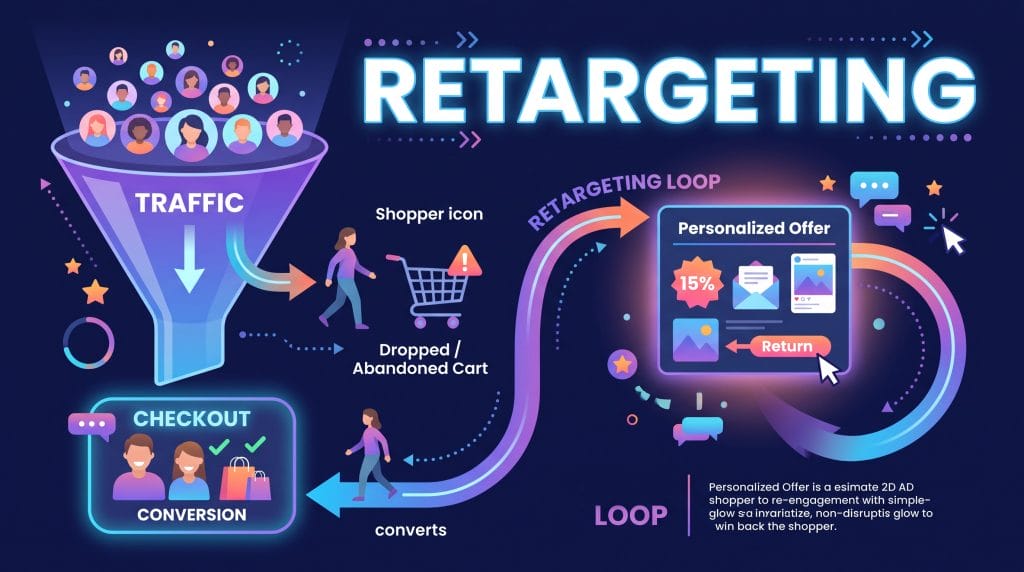
Retargeting gives you a second chance at those shoppers. The tricky part is staying visible without becoming annoying. Ads that chase someone around the internet for three months after they bought the product waste ad budget and frustrate customers.

Here is how to set up retargeting campaigns that bring back lost sales while respecting user experience.

Why Initial Traffic Bounces

First-time visitors rarely buy right away because of friction, not a complete lack of interest.

  • Trust gap: They do not know your shipping speeds, return rules, or brand reputation yet.
  • Interruptions: Mobile users get pulled away by text messages, phone calls, or app notifications mid checkout.
  • Comparison shopping: High-consideration purchases take time. People leave to read reviews, search for discount codes, or compare alternatives.

Retargeting closes this gap. Because these people already know who you are, retargeting ads usually get higher click rates and lower acquisition costs than cold prospecting.

Technical Guardrails: Burn Pixels and Frequency Limits

Set up basic rules before writing copy or designing banners. Overexposure turns interested shoppers into annoyed former prospects fast.

Burn Pixels and Exclusion Lists

A burn pixel is a tracking snippet on your order confirmation or thank-you page. It removes buyers from your active retargeting pools immediately. Exclude recent buyers (such as purchases in the last 30 days or lead submissions in the last 60 days) from top and mid-funnel campaigns. You can move them into a separate cross-sell list later instead of showing them the exact product they just ordered.

Frequency Capping

Frequency capping limits how many times an individual sees your ad each day across platforms like Meta, Google Display, and TikTok.

Audience LevelIntent LevelRecommended Frequency CapGoal / Strategy
Cart AbandonersHigh Intent3 to 5 impressions per dayQuick recovery
Product ViewersMid Intent1 to 2 impressions per dayStay visible without crowding feeds
Blog ReadersLow Intent3 to 5 impressions per weekLight brand reinforcement

Hard Cutoff Rule: Set a hard cutoff at 14 to 30 days. If someone has not bought after 30 days of targeted messaging, pause the ads to avoid wasting budget.

Audience Segmentation by Intent

Serving the same generic ad to every visitor is wasteful. Group your audience by how far they went on your site.

  • Low intent (Homepage and blog visitors): These visitors read an article or left the homepage in under 30 seconds. The goal here is basic brand building. Show them blog posts, your founding story, or press coverage rather than pushing hard sales.
  • Low to mid intent (Category and product page viewers): These users clicked specific products, selected size options, or spent over a minute browsing catalog pages. Serve dynamic product ads showing the exact items they viewed, paired with customer reviews or product details.
  • High intent (Cart and checkout abandoners): These people added items to their cart or started entering shipping details, then left. Use direct calls to action, address objections around shipping or returns, or offer temporary incentives.

Sequential Messaging Over Time

Do not show "Forgot something?" ads for two straight weeks. Adjust your message based on how many days have passed since the person bounced.

Days 1 to 3: Gentle Reminders

Remind them of what they left behind. Highlight core benefits like sustainable materials, customer support, or shipping thresholds.

Sample copy: "Life gets busy. We saved your cart so you can pick up where you left off."

Days 4 to 7: Reviews and Guarantees

Focus on social proof to address lingering hesitation. Use customer reviews, press badges, or guarantee details.

Sample copy: "See why over 10,000 customers rely on [Product Name]. Try it risk free with our 30-day money-back guarantee."

Days 8 to 14: Time-Bound Incentives

Close the loop before intent vanishes completely. Use a minor promo code or stock notice.

Sample copy: "Still thinking it over? Use code TAKE10 for 10% off. Offer expires in 48 hours."

Launch Checklist

  1. Pixel verification: Test that base, AddToCart, InitiateCheckout, and Purchase events fire accurately on both desktop and mobile devices.
  2. Audience exclusions: Confirm past buyers are excluded from standard campaigns.
  3. Impression caps: Keep high-intent impressions to 5 or fewer per user per day.
  4. Creative setup: Prepare dedicated assets for dynamic product ads, social proof, and direct offers.
  5. Performance metrics: Keep an eye on click rates and return on ad spend. If click rates drop while impression frequency rises, update the creative or shorten your time windows.
retargeting
FULL FORCE ADS
Our team is made up of seasoned members of the digital media community devoted to supporting our clients.
Sandy, UT
800-685-5776
cross linkedin facebook pinterest youtube rss twitter instagram facebook-blank rss-blank linkedin-blank pinterest youtube twitter instagram