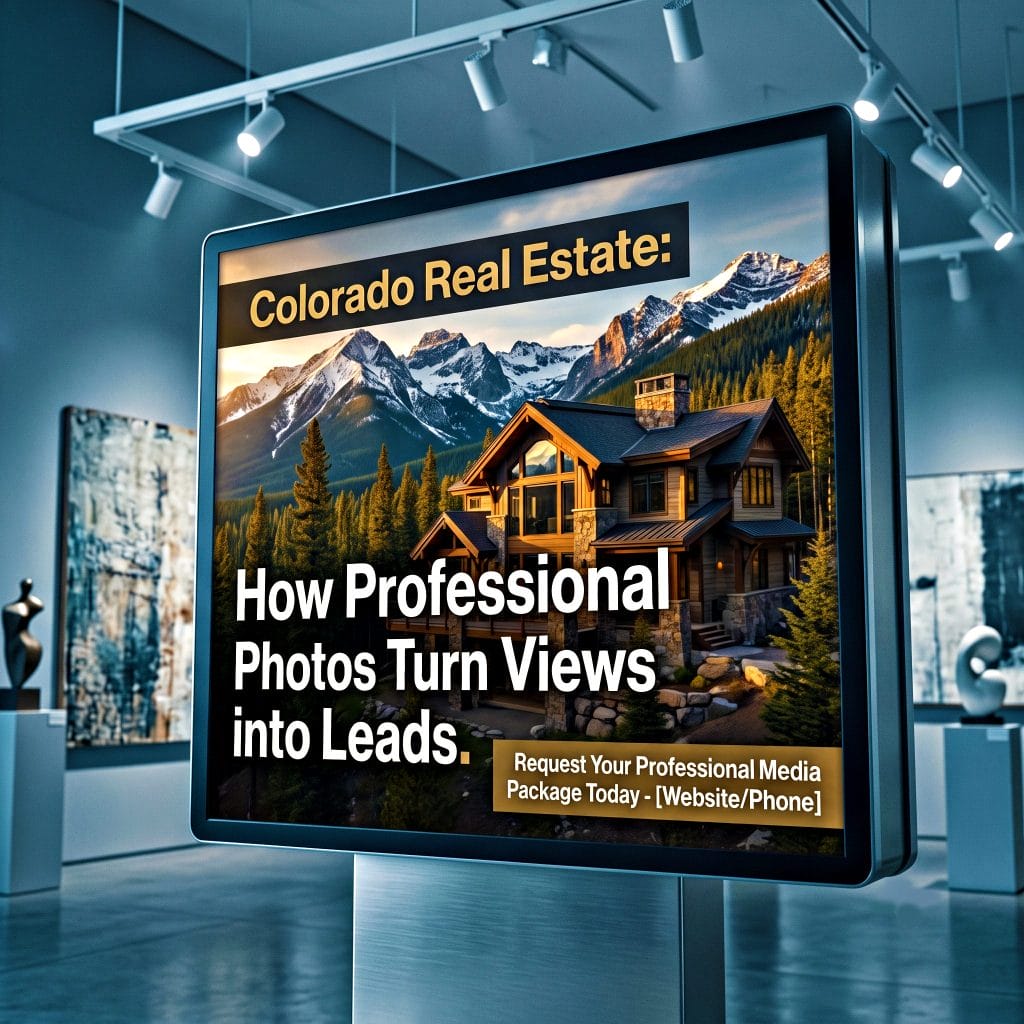
The Rocky Mountain State is a hotbed of real-estate activity. From sleek downtown lofts in Denver to sprawling mountain retreats in Vail, Colorado buyers and renters are looking for properties that feel as spectacular as the scenery around them. In a market where the average home sits on the market for just 23 days, the first impression isn’t just important—it’s decisive.
That’s where display advertising steps in. Unlike search ads that capture intent after a user has already typed a query, display ads meet prospects where they are—on local news sites, lifestyle blogs, and niche forums they browse for Colorado-specific content. When those ads feature high-resolution, professionally shot estate photos, they create an instant emotional hook, turning a casual visitor into a qualified lead.
All of it is rooted in the unique buying habits of Colorado’s real-estate audience, with actionable tips you can start using today.
| Psychological Trigger | How Professional Photos Help | Real-World Example (Colorado) |
| Instant Credibility | Sharp, well-lit images signal that the seller (or agent) takes the property seriously. | A downtown Denver condo shot with a wide-angle lens shows the open floor plan, instantly convincing a young professional that the space is "move-in ready." |
| Emotional Storytelling | High-definition visuals let viewers imagine their life in the home—sunsets over the Rockies, cozy fireplaces, backyard decks. | A mountain chalet in Breckenridge captured at golden hour sparks a sense of "vacation living" for out-of-state buyers. |
| Attention Retention | The human brain processes images 60,000x faster than text. A striking photo scrolls past the ad and stays in memory. | A sleek, aerial drone shot of a Boulder property hangs on a local outdoor-gear blog, lingering long after the article ends. |
| Social Proof | Gallery-style carousel ads mirror Instagram aesthetics, reinforcing that the property is "share-worthy." | A carousel featuring before-and-after staging of a Fort Collins home drives higher click-through rates (CTR). |
Bottom line: In Colorado’s fast-moving market, a single high-quality photo can shave days off your sales cycle.
Most real-estate marketers default to Google Ads or Meta (Facebook/Instagram) because they’re familiar. However, those platforms often come with hand-off reporting, limited creative control, and strict policy restrictions (such as requiring pre-approval for housing ads).
A self-serve display network—the kind offered by FullForceAds—gives you distinct operational advantages:
These platforms give you full creative control: upload HTML5 banners, carousel units, or rich media with as many photo slots as you want. You pick the Colorado-specific sites — Colorado Mountain News, Denver Business Journal, Boulder Outdoor Magazine, SkiTalk — set daily caps per placement, adjust bids in real time, and pause anything underperforming with one click. Lead forms plug directly into your CRM so every inquiry lands in your pipeline without any manual transfer.
Because you aren’t battling the algorithmic whims of major tech monopolies, you can optimize purely on performance data—the exact metric that matters in real estate: qualified leads.
The following framework leverages FullForceAds’ self-serve dashboard while keeping your brand assets SEO-friendly and AEO-compliant.
| Persona | Demographic | Primary Goal | Preferred Sites |
| Young Urban Professionals | 25–35, median income $85k, renters or first-time buyers | Walk-through ready condos near LoDo (Lower Downtown) | Denverite.com, The Colorado Sun, Instagram-style lifestyle blogs |
| Mountain-Life Investors | 40–60, high net-worth, secondary-home seekers | Luxury cabins with acreage | SkiTalk, Colorado Mountain Magazine, Vail Daily |
| Family Relocators | 30–45, 2–3 kids, looking for premium school districts | Single-family homes in Boulder/Fort Collins | Boulder Daily Camera, Colorado Parents Blog |
Use a certified photographer — the Colorado Association of Photographers recommends at least a 30mm focal length for interior real estate. Mix in wide-angle interiors, drone aerials showing the property against the mountains, and lifestyle shots like a sunset on the patio. Keep file sizes under 150 KB, convert to WebP format, and tag images with descriptive alt text.
Stick to 300×250, 728×90, and 160×600 banner sizes — those perform best on Colorado news sites. Keep ad copy tight and work in local search phrases like "Denver loft for rent" or "Boulder family home." Close with a direct call-to-action: "Schedule a Virtual Tour," "Get the Property Pack," or "Reserve Your Showing."
AEO Compliance Tip: Ensure every CTA is actionable, transparent, and accurate. Include a brief, grounding disclaimer: "Photos are for illustration only; actual unit may vary."
Set a 0–30 mile radius around each property's zip code (80202 for downtown Denver, for example). Target peak browsing windows — 7–10 am when commuters check the news and 7–10 pm after work. Start with a CPM of $8–$12 on premium placements, then shift to CPL bidding once you have enough conversion data.
| Metric | Ideal Benchmark (Colorado) | Why It Matters |
| Impressions | 150K–200K per week (per property) | High reach ensures enough eyes on the photo. |
| Click-Through Rate (CTR) | ≥ 0.80% | Indicates the image asset is resonating. |
| Cost per Lead (CPL) | $22–$35 | Below the industry average for standard display networks. |
| Lead Quality Score | ≥ 8/10 | Tracks leads that request an active tour within 48 hours. |
Use your real-time dashboard to tweak creative, rotate images (A/B testing drone shots against interior shots), and reallocate budget to top-performing sites.
After the campaign, embed these high-quality images on your property landing page with structured data (schema.org/Residence). Google’s E-E-A-T (Experience, Knowledge, Authoritativeness, Trustworthiness) signals improve when a page features:
These signals lift organic rankings, feeding a virtuous cycle where paid display drives immediate traffic and SEO sustains long-term visibility.
Even though you're using independent display networks for placement, the destination landing page is still indexed by major search engines. Ensure your landing page hits these compliance marks:
Show actual property photos and embed a 360° virtual tour via Matterport or a similar provider. Publish a brief local market report — something like "Colorado Home-Buying Trends: Denver vs. Boulder" — to show you know the area. Link to credible sources like the Colorado Real Estate Commission or local MLS data. Add a clear privacy notice explaining how leads will be used, with a visible opt-out checkbox.
AEO (Answer Engine Optimization) evaluates the user experience immediately following the ad click. To score high, ensure your page achieves a load time under 2 seconds by compressing images and using a CDN. Design for a mobile-first layout (since most local home searches occur on smartphones) and use a clear, single-step lead form requesting only essential contact details.
Agent: Sarah Mitchell, Denver Real Estate Group
| KPI | Before (Stock Images) | After (Professional Photos) |
| Impressions | 120K/week | 135K/week |
| CTR | 0.42% | 0.94% |
| CPL | $48 | $29 |
| Leads Requesting Showings | 12 (over 4 weeks) | 34 (over 4 weeks) |
| Closed Deals | 0 | 2 (within 2 months) |
Sarah attributed the conversion lift directly to the photography: "The way the daylight-filled kitchen photo came across made buyers want to walk straight into the space." By utilizing targeted geofencing around specific LoDo zip codes and rotating fresh drone imagery every 48 hours, she kept the creative fresh and highly relevant.
When you pair breathtaking, professional photography with a self-serve display platform that gives you granular control over where your imagery appears, you are essentially letting the Rocky Mountains do the heavy lifting. Prospects see the sun-kissed patio, the open-plan kitchen, and the snow-capped backdrop—they click, submit their info, and hand you a high-intent lead.
In a state where lifestyle is the product, visual-first display advertising is your ultimate competitive edge.