Mid-market business owners and marketing directors often fall for an optical illusion. You look at growth metrics, check your quarterly ad spend, and convince yourself that splitting budget between Google search keywords and Meta social feeds gives you a complete digital footprint.
A decade ago that setup scaled companies. The digital environment has since broken that assumption. Consumer attention fragments across thousands of independent environments every day. Your prospects stream news on a connected TV app, listen to podcasts during their morning commute, browse industry blogs at lunch, and read articles on independent publisher sites in the evening. If your advertising stays locked inside Big Tech walled gardens, you miss most of their daily media consumption.
Full Force Ads removed the barriers that kept smaller organizations out of enterprise-grade programmatic, the high minimums, long-term contracts, and opaque agency layers. They opened cross-screen advertising to companies that move fast and need measurable returns.
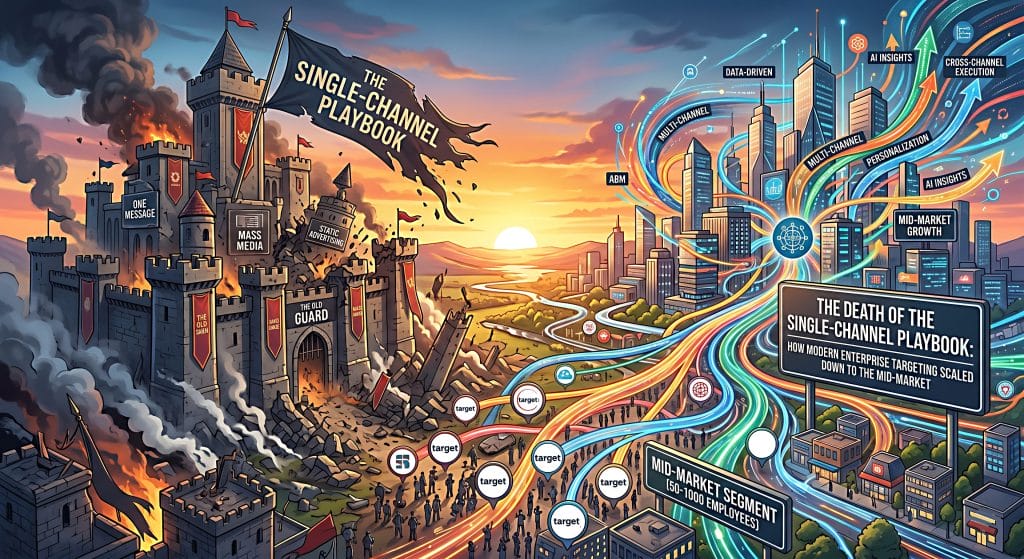
Buying media in fragments through separate vendors makes your budget work against itself. You over-index on the same users, overpay for isolated ad formats, and lose visibility on cross-device attribution. An integrated digital campaign coordinates your message across five foundational channels from a unified control center.
Programmatic CTV lets brands run targeted, unskippable video on Hulu, Peacock, Roku, and Pluto TV matched against specific audience profiles. You're not paying to reach an entire zip code the way linear TV requires — you're buying verified viewers. When a household matching your ideal buyer profile turns on their streaming device, your ad runs.
Pre-roll and mid-roll video placements capture attention across mobile apps and desktop browsers when users are actively engaged with digital content. Digital audio extends reach to screen-free hours on Spotify, Pandora, podcasts, and digital radio — maintaining brand frequency during commutes, workouts, and other moments when visual ads can't reach your audience.
Mobile inventory reaches users on their phones using real-time location data alongside behavioral filters. Standard display banners build retargeting pools and frequency at low cost across premium web properties. Native ads mirror the editorial look of the host publisher, earning higher click-through rates and stronger mid-funnel engagement than standard banner formats.
Moving past age and gender demographics into programmatic targeting layers means every ad dollar buys real human attention with genuine commercial intent.
| Targeting method | How it works | Primary objective |
| Geofencing | Traces polygon boundaries around physical locations to capture mobile device IDs. | Conquesting competitor foot traffic, capturing event attendees, local awareness. |
| Addressable | Matches physical street address databases to cross-device IP and digital footprints. | Household-level targeting with zero impression waste. |
| Search retargeting | Serves programmatic ads on the open web based on keywords typed into major search engines. | Capturing in-market buyers at peak intent without paying inflated search click costs. |
| Site retargeting | Tags website visitors with a pixel to follow them across the web after they leave. | Converting warm prospects who didn't act on their first visit. |
| Contextual | Places ads next to content matching the ad's subject matter. | Privacy-compliant targeting aligned to niche industry content. |
Standard geographic targeting draws a blunt radius around a point on a map — pulling in highways, parking lots, and residential blocks with no commercial relevance. Advanced geofencing traces exact, building-level polygons. You can outline a competitor's showroom floor, a convention center during an industry event, or a specific retail block. Every device that enters that polygon gets tagged and can be retargeted with video, display, and native ads across every screen they use for days after the visit.
Physical direct mail reaches specific houses but comes with printing costs, distribution delays, and a high probability it goes straight to recycling. Addressable programmatic maps your customer or prospect address list to the internet router IPs and connected device profiles inside those properties. Your video, audio, and display ads then run on the streaming TVs, laptops, tablets, and phones in those exact households — no zip-code approximations required.
Most businesses limit themselves to basic site retargeting — showing ads to people who already visited their homepage. That recaptures lost visitors but ignores buyers who haven't found your site yet. Search retargeting fills that gap by tracking keyword queries in real time. When a user searches for your industry terms on any major search engine, then leaves to browse the open web, your display, video, or native ad appears. You capture high-intent traffic at a fraction of the cost-per-click you'd pay bidding directly on those terms.
Paid channels aren't silos. If your Google specialist doesn't communicate with your social buyers, and your programmatic DSP runs in a separate vacuum, your campaigns will cannibalize each other's audiences and send conflicting messages. Treat every digital platform as a coordinated lever inside one execution strategy.
Paid search harvests existing bottom-of-funnel demand but is capped by baseline search volume. To break that ceiling, use programmatic streaming TV, video, and targeted audio to generate upper-funnel awareness across the open web. That surge in programmatic impressions creates a corresponding lift in branded search activity, building a self-reinforcing cycle across channels.
Traditional agencies require long onboarding runways, extensive tech-stack configurations, multi-year contracts, and opaque markups before a single impression runs. Full Force Ads operates as an agile execution layer built for speed and flexibility.
Applying a brand-building channel mix to a short-term direct response goal burns capital. Applying direct response tactics to a long-term brand value objective hits a wall fast. Match your channel choices to your near-term strategic goals.
Goal: dominate a specific geographic footprint and drive foot traffic to physical retail locations. Channel mix: geofencing, mobile, display. Draw precise polygon geofences around competitor locations, target venues, and high-traffic areas. Push high-frequency mobile and display banners to captured devices after they enter those zones. Use location attribution to track how many ad-exposed users walk into your business location.
Goal: intercept active buyers who are evaluating or purchasing from your direct competitors. Channel mix: geofencing, addressable targeting. Geofence competitor storefronts, offices, or distribution hubs to capture device IDs. Cross-reference that data against addressable residential databases and run a coordinated campaign across every screen — connected TVs, laptops, phones — inside those households.
Goal: build market authority and stay in consideration for high-value contracts. Channel mix: streaming TV, video, digital audio. Secure unskippable placements on Hulu, Roku, and Peacock targeted at households matching your ideal buyer demographics. Reinforce that visual narrative with mid-roll video across mobile devices. Maintain brand frequency via podcast networks during screen-free hours.
Goal: drive qualified traffic with purchase intent to digital conversion pages. Channel mix: search retargeting, native, standard display. Deploy open-web search retargeting to show native and banner ads to users who searched your core industry keywords. Use native placements that mirror the look of digital publications to reach users reading contextually relevant content.
The cost of staying with the status quo is real. Pouring your digital budget into traditional search and social silos while ignoring programmatic, cross-device media means overpaying for limited visibility.
Your competitors are building programmatic networks right now — following buyers across every screen they own, geofencing your locations, and serving personalized creative to your best prospects. Every day you don't diversify is another day your brand gets squeezed out of the digital spaces where your audience spends time.
Scaling your advertising doesn't require taking on financial risk or locking into rigid contracts. Partnering with Full Force Ads gives your team direct access to enterprise-grade targeting at flexible spend levels. Visit Full Force Ads Advertising Solutions to start your discovery call.